Cuban Missile Crisis Management
Kennedy's measured naval quarantine and secret diplomacy with Khrushchev in October 1962 averted nuclear war over Soviet missiles in Cuba.
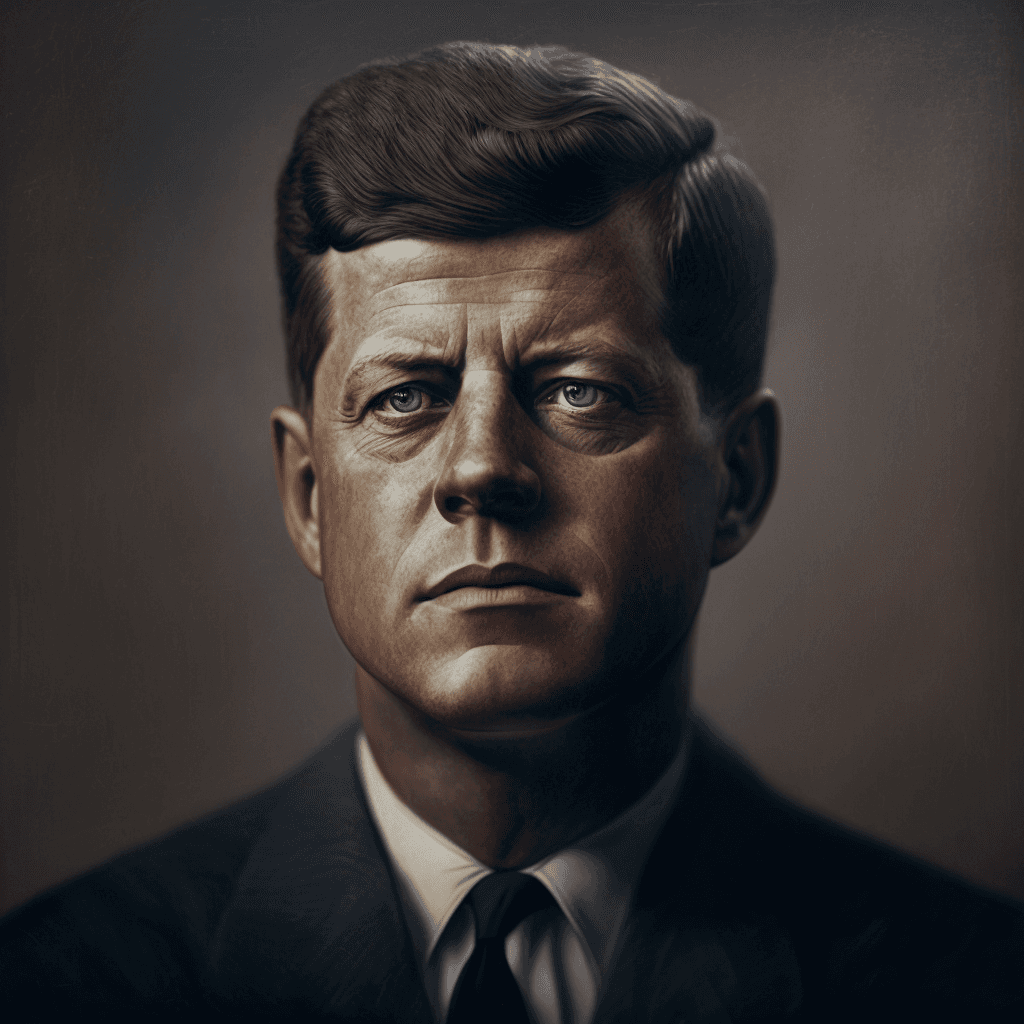
1917–1963
35th U.S. President • Statesman
John Fitzgerald Kennedy was born in 1917 into a wealthy Irish Catholic family in Brookline, Massachusetts. After service in the Pacific during World War II, he entered Congress and then the Senate, building a reputation as a articulate Cold War liberal. His 1960 presidential campaign, aided by televised debates, made him the youngest person elected to the office and the first Catholic president of the United States.
In office Kennedy confronted nuclear confrontation during the Cuban Missile Crisis, expanded the space race by pledging a manned Moon landing, created the Peace Corps, and sent military advisers into Vietnam. Domestically he proposed civil rights legislation and tax cuts, though many signature programs passed under Lyndon Johnson after his death. His rhetoric—'ask not what your country can do for you'—projected vigor and global engagement at a moment when television was reshaping political life.
On November 22, 1963, Kennedy was assassinated in Dallas, Texas. The shock of his murder, the subsequent Warren Commission report, and enduring public fascination with his family turned his thousand-day presidency into one of the most mythologized chapters of twentieth-century American history.
1917 — Birth in Brookline. Kennedy was born into the politically ambitious Joseph P. Kennedy family, the second of nine children.
1943 — PT-109 Service. As a Navy lieutenant in the Solomon Islands, he led survivors to safety after his patrol torpedo boat was sunk by a Japanese destroyer.
1960 — Presidential Election. He narrowly defeated Richard Nixon, benefiting from strong organization, Catholic turnout, and the first nationally televised debates.
1962 — Missile Crisis. Thirteen days of confrontation with the Soviet Union over Cuba brought the world closer to nuclear war than at any point in the Cold War.
1963 — Assassination in Dallas. Shot while riding in a motorcade, Kennedy died within hours; Vice President Johnson was sworn in aboard Air Force One.
Key moments across this figure's life and legacy
1917
Kennedy was born into the politically ambitious Joseph P. Kennedy family, the second of nine children.
1943
As a Navy lieutenant in the Solomon Islands, he led survivors to safety after his patrol torpedo boat was sunk by a Japanese destroyer.
1960
He narrowly defeated Richard Nixon, benefiting from strong organization, Catholic turnout, and the first nationally televised debates.
1962
Thirteen days of confrontation with the Soviet Union over Cuba brought the world closer to nuclear war than at any point in the Cold War.
1963
Shot while riding in a motorcade, Kennedy died within hours; Vice President Johnson was sworn in aboard Air Force One.
Landmarks that define this figure's contribution to history
Kennedy's measured naval quarantine and secret diplomacy with Khrushchev in October 1962 averted nuclear war over Soviet missiles in Cuba.
His 1961 address to Congress committed the nation to landing astronauts on the Moon before 1970, accelerating U.S. space exploration.
Established in 1961, the volunteer program sent Americans abroad to promote development and cross-cultural understanding.
Signed in 1963 with the Soviet Union and United Kingdom, the treaty banned nuclear tests in the atmosphere, outer space, and underwater.
Notable details about this historical figure
How this figure shaped the world we inherit
Kennedy's presidency crystallized the early 1960s image of American confidence at the height of the Cold War. His handling of Cuba, commitment to space exploration, and assassination left a lasting mark on U.S. foreign policy, civil rights momentum, and the way mass media frame presidential leadership.
Enduring influence across generations
Kennedy's presidency crystallized the early 1960s image of American confidence at the height of the Cold War. His handling of Cuba, commitment to space exploration, and assassination left a lasting mark on U.S. foreign policy, civil rights momentum, and the way mass media frame presidential leadership. Assassination in Dallas (1963) remains a defining moment in John F. Kennedy's enduring reputation.
Explore more profiles from the same era or field
Curated educational resources for further study
Start a private conversation and explore their wisdom through Historical Collection AI.