War and Peace
Published an epic novel blending fictional characters with Napoleon's 1812 campaign, redefining historical fiction.
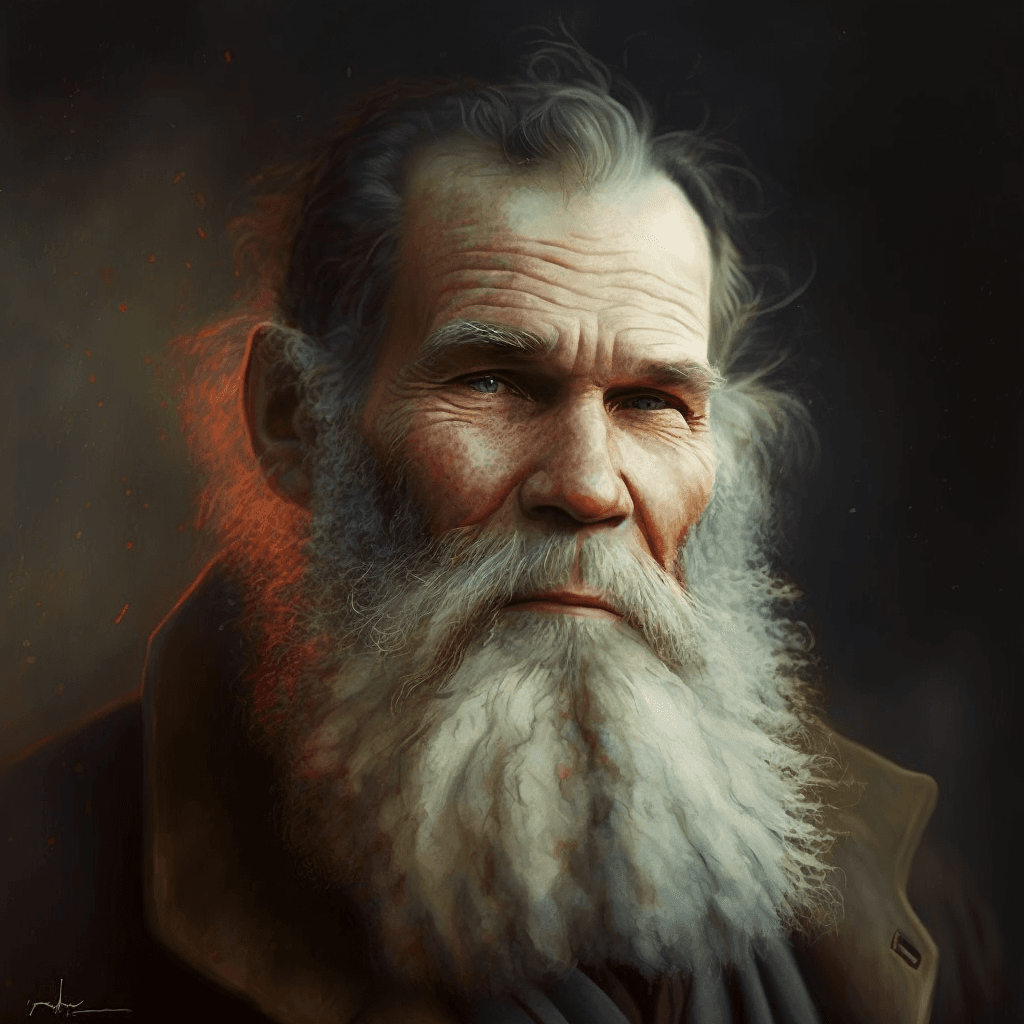
1828–1910
Novelist • Author of War and Peace
Leo Tolstoy was born Lev Nikolayevich Tolstoy on 9 September 1828 at Yasnaya Polyana, his family's estate in Tula Province south of Moscow. Orphaned young, he was raised by relatives and studied law at Kazan University before abandoning formal education, gambling, and serving as an artillery officer in the Caucasus and Crimean War. Those early years supplied material for the Sevastopol Sketches and autobiographical tales of youth, guilt, and restless searching. Tolstoy returned to Yasnaya Polyana in the 1850s determined to improve the lives of serfs on his land, yet he remained entangled in the privileges of noble birth even as he documented peasant speech and custom with ethnographic attention. Marriage to Sofya Behrs in 1862 brought domestic stability and thirteen children, while she copied and managed the manuscripts of his vast creative projects.
Between 1865 and 1869 Tolstoy composed War and Peace, a panoramic novel interweaving fictional families with Napoleon's 1812 invasion of Russia, and he followed it with Anna Karenina (1875–1877), a study of adultery, railway modernity, and spiritual crisis centered on a doomed aristocratic heroine. His technique combined omniscient narration with interior psychology decades before literary modernism named such methods. A moral breakdown in the late 1870s led him toward radical Christianity, pacifism, vegetarianism, and condemnation of private property, church ritual, and state violence. He renounced copyright on later works, wore peasant dress, and wrote essays such as What Is Art? and The Kingdom of God Is Within You that influenced Gandhi and global nonviolent movements. The Russian Orthodox Church excommunicated him in 1901, yet his estate became a pilgrimage site for disciples who attempted to live by his ascetic teachings.
Tolstoy's final years were marked by flight from home at eighty-two, dying at Astapovo railway station on 7 November 1910 after leaving Yasnaya Polyana in secret, pursued by family and followers alike. His novels entered world literature through translations that shaped how readers imagined nineteenth-century Russia, and filmmakers repeatedly adapted his plots from silent cinema onward. Literary critics rank him among the supreme realists for his ability to render battle, childbirth, and dinner conversation with equal precision. Philosophically, his turn toward ethical rigor inspired civil disobedience theory and debates about whether art must serve moral reform. Soviet authorities later claimed and contested his heritage, while dissidents cited his anti-statism. Today Tolstoy remains central to discussions of narrative scale, conscience, and the writer's responsibility to society.
1828 — Born at Yasnaya Polyana. Born into the Russian nobility on the family estate in Tula Province.
1869 — War and Peace Completed. Finished his monumental novel of Napoleon's invasion and Russian society.
1877 — Anna Karenina Published. Released his novel of adultery and social hypocrisy in serialized form.
1901 — Excommunicated. The Russian Orthodox Church formally excommunicated him for his religious dissent.
1910 — Death at Astapovo. Died at a railway station after leaving home on a final spiritual journey.
Key moments across this figure's life and legacy
1828
Born into the Russian nobility on the family estate in Tula Province.
1869
Finished his monumental novel of Napoleon's invasion and Russian society.
1877
Released his novel of adultery and social hypocrisy in serialized form.
1901
The Russian Orthodox Church formally excommunicated him for his religious dissent.
1910
Died at a railway station after leaving home on a final spiritual journey.
Landmarks that define this figure's contribution to history
Published an epic novel blending fictional characters with Napoleon's 1812 campaign, redefining historical fiction.
Crafted a tragic portrait of aristocratic society, modern transport, and personal desire that became a global literary classic.
Developed a radical Christian pacifism that influenced Gandhi and international nonviolent resistance theory.
Pioneered psychological depth and panoramic social description that shaped the nineteenth-century European novel.
Notable details about this historical figure
How this figure shaped the world we inherit
Tolstoy's novels set standards for realistic depiction of war, family, and social change, while his ethical writings linked Russian literature to global pacifist politics. Gandhi acknowledged The Kingdom of God Is Within You as pivotal to his thought, and Tolstoy's example raised enduring questions about wealth, art, and the writer's duty to truth.
Enduring influence across generations
Tolstoy's novels set standards for realistic depiction of war, family, and social change, while his ethical writings linked Russian literature to global pacifist politics. Gandhi acknowledged The Kingdom of God Is Within You as pivotal to his thought, and Tolstoy's example raised enduring questions about wealth, art, and the writer's duty to truth. Death at Astapovo (1910) remains a defining moment in Leo Tolstoy's enduring reputation.
Explore more profiles from the same era or field
Curated educational resources for further study
Start a private conversation and explore their wisdom through Historical Collection AI.