The Persistence of Memory
Painted melting clocks in a Catalan landscape, creating one of Surrealism's most reproduced and parodied images.
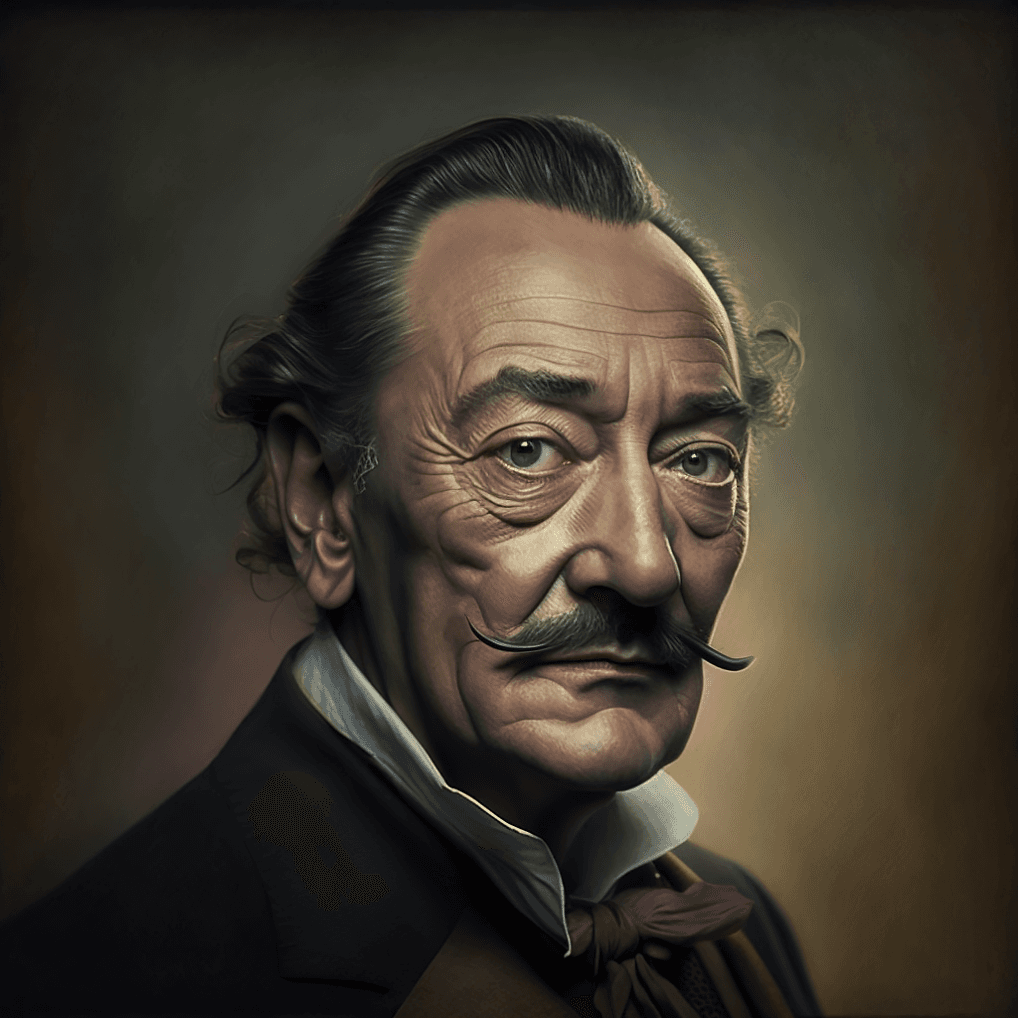
1904–1989
Painter • Surrealist • Visionary
Born in 1904 in Figueres, Catalonia, Salvador Domingo Felipe Jacinto Dalí i Domènech showed precocious talent at the Madrid art academy before embracing Surrealism in Paris alongside André Breton, Luis Buñuel, and Gala Éluard, who became his wife and muse. His 1929 film *Un Chien Andalou*, with its slashed eye sequence, announced a sensibility that treated the unconscious as raw material.
Dalí's paintings—*The Persistence of Memory*, *Soft Construction with Boiled Beans*, *The Elephants*—combined hyper-real draftsmanship with irrational juxtapositions. He pioneered the 'paranoiac-critical method,' deliberately inducing hallucinatory states to access imagery. Expelled from the Surrealist group for commercialism and political provocations, he built a global brand through print editions, jewelry design, and flamboyant public appearances.
In later decades Dalí turned to nuclear mysticism, holography, and a museum-theater in his hometown. He died in Figueres in 1989, leaving a body of work that critics still debate—genius, showman, or both—but that undeniably expanded how modern art engages dreams, science, and celebrity.
1904 — Born in Figueres. Raised in Catalonia; early drawings suggested the meticulous realism that would underpin his surreal visions.
1929 — Joins Surrealist Circle. Met Gala and exhibited with Paris Surrealists; painted *The Persistence of Memory* three years later.
1936 — London International Surrealist Exhibition. Delivered a lecture in a diving suit, embodying the theatrical persona that rivaled his canvases.
1940 — Moves to United States. Spent the war years in America, designing for fashion, ballet, and Hollywood while painting major works.
1989 — Death in Figueres. Buried in the museum he created; remains among the best-known—and best-selling—artists of the modern era.
Key moments across this figure's life and legacy
1904
Raised in Catalonia; early drawings suggested the meticulous realism that would underpin his surreal visions.
1929
Met Gala and exhibited with Paris Surrealists; painted *The Persistence of Memory* three years later.
1936
Delivered a lecture in a diving suit, embodying the theatrical persona that rivaled his canvases.
1940
Spent the war years in America, designing for fashion, ballet, and Hollywood while painting major works.
1989
Buried in the museum he created; remains among the best-known—and best-selling—artists of the modern era.
Landmarks that define this figure's contribution to history
Painted melting clocks in a Catalan landscape, creating one of Surrealism's most reproduced and parodied images.
Collaborated with Buñuel on a silent film whose shocking imagery established Surrealist cinema.
Developed a creative technique exploiting delusion and double images to generate novel visual forms.
Designed a museum housing his major works, turning his birthplace into a permanent monument to his imagination.
Notable details about this historical figure
How this figure shaped the world we inherit
Dalí brought Freudian dream imagery into mainstream visual culture and proved that avant-garde art could thrive as popular spectacle. His influence spans advertising, fashion, film, and digital media, where surreal juxtaposition remains a primary creative vocabulary.
Enduring influence across generations
Dalí brought Freudian dream imagery into mainstream visual culture and proved that avant-garde art could thrive as popular spectacle. His influence spans advertising, fashion, film, and digital media, where surreal juxtaposition remains a primary creative vocabulary. Death in Figueres (1989) remains a defining moment in Salvador Dalí's enduring reputation.
Explore more profiles from the same era or field
Curated educational resources for further study
Start a private conversation and explore their wisdom through Historical Collection AI.