Founded Psychoanalysis
Developed free association, transference analysis, and dream interpretation as systematic methods for treating neurosis.
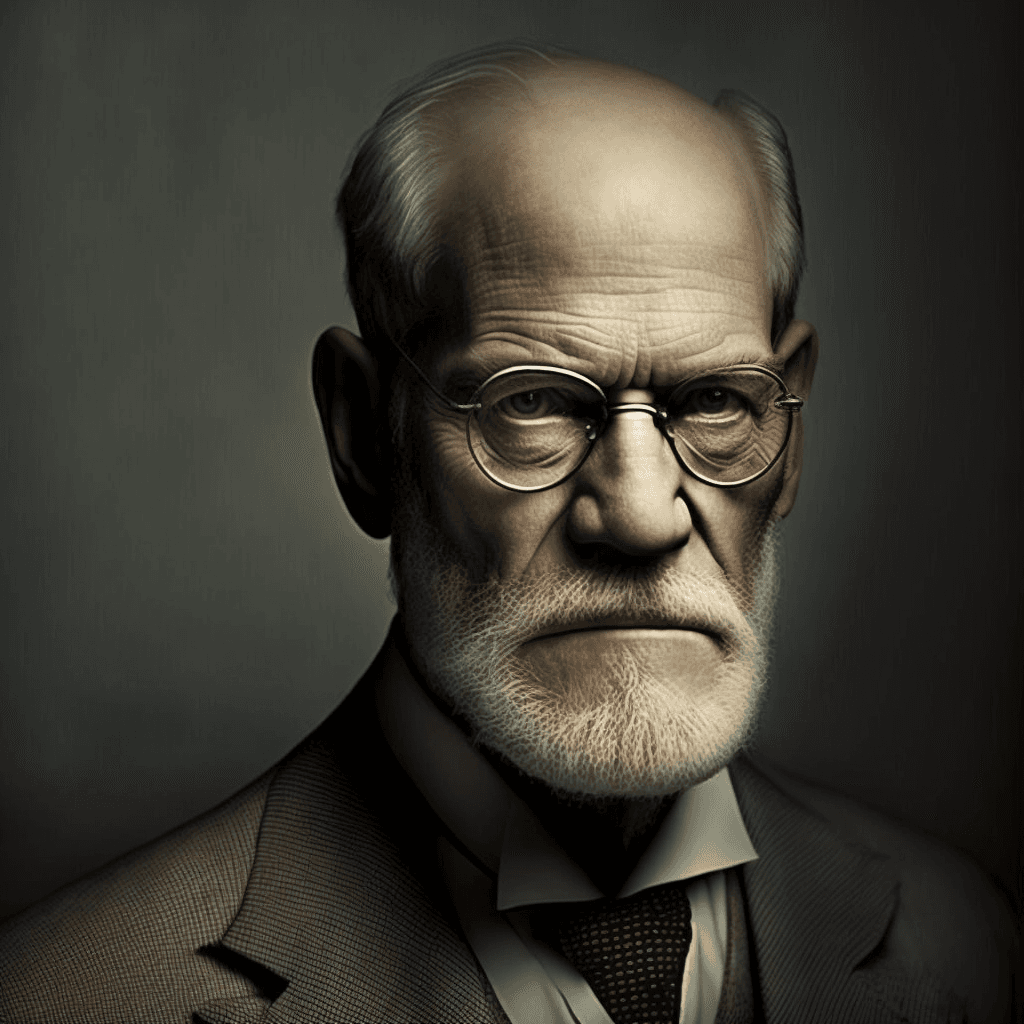
1856–1939
Psychoanalyst • Pioneer of the Unconscious
Born in 1856 in Freiberg, Moravia, Sigmund Freud moved to Vienna as a child and trained as a neurologist under Jean-Martin Charcot in Paris, where hysteria studies suggested mental illness had psychological roots. In private practice he collaborated with Josef Breuer on *Studies on Hysteria* (1895), introducing the 'talking cure' and the concept of repressed memory.
Freud's mature theory posited id, ego, and superego; infantile sexuality; and dream symbolism as windows into unconscious conflict. Works like *The Interpretation of Dreams* (1899), *The Psychopathology of Everyday Life*, and *Civilization and Its Discontents* extended analysis from clinical patients to culture, religion, and art. He founded the Vienna Psychoanalytic Society and survived professional schisms with Alfred Adler and Carl Jung.
Nazism forced Freud to emigrate to London in 1938; he died there in 1939 of jaw cancer after decades of surgery. Many specific claims—Oedipal theory, penis envy—are now disputed, yet his emphasis on unconscious motivation, defense mechanisms, and therapeutic dialogue remains embedded in psychiatry, psychotherapy, and everyday language.
1856 — Born in Freiberg. Family relocated to Vienna; he excelled in classical languages before entering medical school.
1895 — Studies on Hysteria. With Breuer, published case studies establishing cathartic talking therapy as treatment for hysteria.
1900 — The Interpretation of Dreams. Released his major work on dream analysis, initially selling poorly but eventually transforming psychology.
1908 — First International Psychoanalytic Congress. Gathered followers in Salzburg, institutionalizing psychoanalysis as a global movement.
1939 — Death in London. Died in exile after fleeing Nazi annexation of Austria; his daughter Anna continued developing ego psychology.
Key moments across this figure's life and legacy
1856
Family relocated to Vienna; he excelled in classical languages before entering medical school.
1895
With Breuer, published case studies establishing cathartic talking therapy as treatment for hysteria.
1900
Released his major work on dream analysis, initially selling poorly but eventually transforming psychology.
1908
Gathered followers in Salzburg, institutionalizing psychoanalysis as a global movement.
1939
Died in exile after fleeing Nazi annexation of Austria; his daughter Anna continued developing ego psychology.
Landmarks that define this figure's contribution to history
Developed free association, transference analysis, and dream interpretation as systematic methods for treating neurosis.
Published in 1899, argued that dreams express disguised wishes, launching modern depth psychology.
Introduced concepts of repression, sublimation, and the structural model of id, ego, and superego.
Analyzed religion, war, and art in essays that influenced anthropology, literary criticism, and social theory.
Notable details about this historical figure
How this figure shaped the world we inherit
Freud altered how modern societies discuss desire, guilt, and mental illness, supplying vocabulary from 'Freudian slip' to 'defense mechanism.' Clinical psychoanalysis has been partly superseded by neuroscience and cognitive therapy, but his questions about hidden motivation continue to shape fiction, film, advertising, and the humanities.
Enduring influence across generations
Freud altered how modern societies discuss desire, guilt, and mental illness, supplying vocabulary from 'Freudian slip' to 'defense mechanism.' Clinical psychoanalysis has been partly superseded by neuroscience and cognitive therapy, but his questions about hidden motivation continue to shape fiction, film, advertising, and the humanities. Death in London (1939) remains a defining moment in Sigmund Freud's enduring reputation.
Explore more profiles from the same era or field
Curated educational resources for further study
Start a private conversation and explore their wisdom through Historical Collection AI.