Operatic Masterpieces
Created landmark operas blending dramatic insight with musical innovation.
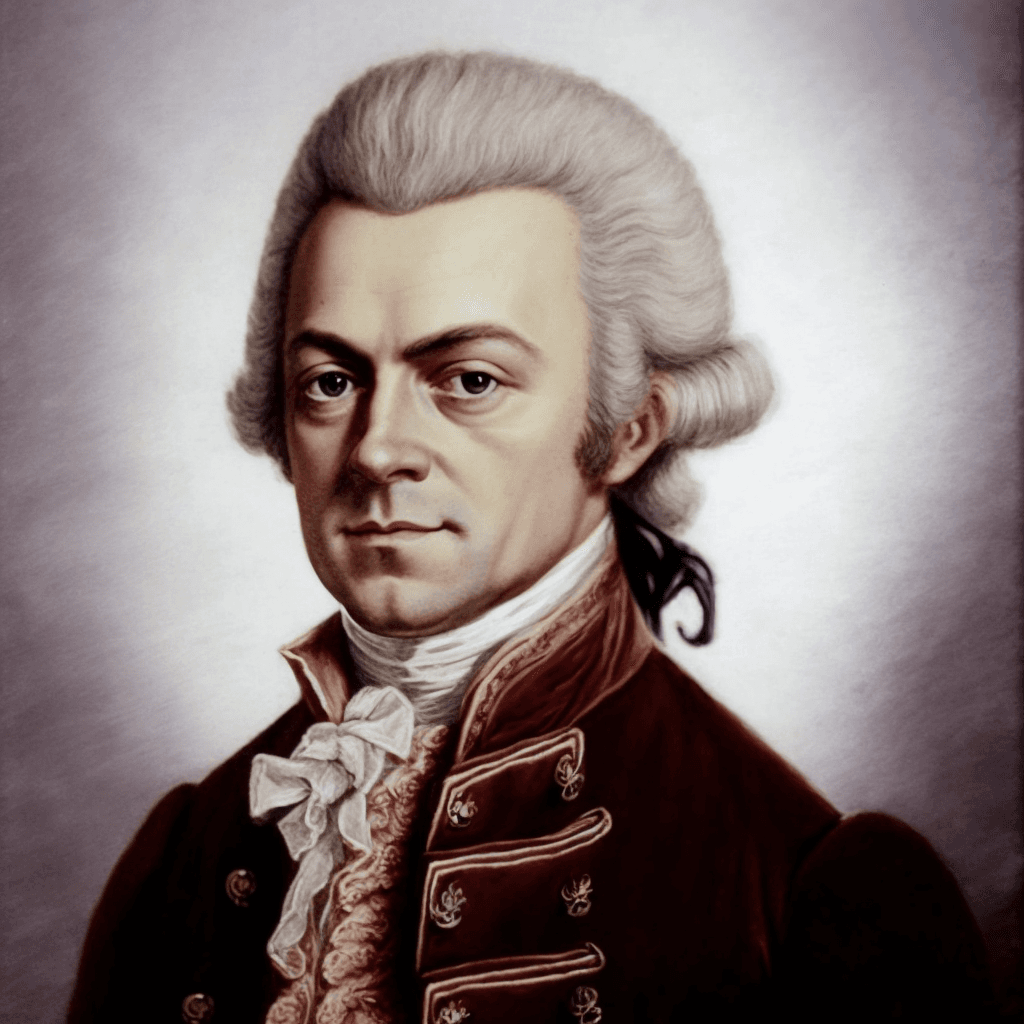
1756-1791
Composer - Virtuoso - Operatic Master
Wolfgang Amadeus Mozart was born in Salzburg and displayed extraordinary musical ability in early childhood under the instruction of his father Leopold. Extensive tours across European courts exposed him to diverse styles, patrons, and performance traditions. By adolescence he was composing symphonies, concertos, and sacred works of unusual sophistication.
As an adult in Vienna, Mozart pursued greater independence from court employment, composing operas, chamber music, and piano concertos that combined formal elegance with dramatic intensity. Works such as The Marriage of Figaro, Don Giovanni, and The Magic Flute expanded operatic characterization and musical structure. His writing balances clarity and complexity in ways that remain central to classical pedagogy.
Mozart died at thirty-five, leaving unfinished projects including the Requiem, yet his output exceeded six hundred cataloged works. His music influenced Beethoven and later composers across stylistic periods, while his public image evolved from child prodigy to emblem of artistic brilliance. Mozart remains indispensable to concert life, opera houses, and music education worldwide.
1756 — Born in Salzburg. Born into a musical household in the Prince-Archbishopric of Salzburg.
1762-1766 — European Childhood Tours. Performed for courts and absorbed continental musical idioms.
1781 — Moves to Vienna. Left Salzburg service to pursue freelance composition and performance.
1786-1791 — Major Operatic Period. Produced Figaro, Don Giovanni, Cosi fan tutte, and The Magic Flute.
1791 — Death in Vienna. Died during work on the Requiem, ending a brief but prolific career.
Key moments across this figure's life and legacy
1756
Born into a musical household in the Prince-Archbishopric of Salzburg.
1762-1766
Performed for courts and absorbed continental musical idioms.
1781
Left Salzburg service to pursue freelance composition and performance.
1786-1791
Produced Figaro, Don Giovanni, Cosi fan tutte, and The Magic Flute.
1791
Died during work on the Requiem, ending a brief but prolific career.
Landmarks that define this figure's contribution to history
Created landmark operas blending dramatic insight with musical innovation.
Elevated the concerto form through expressive dialogue between soloist and orchestra.
Produced enduring works that define Classical style and repertoire.
Composed major sacred, theatrical, orchestral, and instrumental music.
Notable details about this historical figure
How this figure shaped the world we inherit
Mozart set enduring standards for melodic invention, formal balance, and dramatic characterization in music. His works became a core canon through which institutions teach listening, composition, and performance technique. Across centuries, he symbolizes the Enlightenment ideal that disciplined craft and imaginative freedom can coexist at the highest artistic level.
Enduring influence across generations
Mozart set enduring standards for melodic invention, formal balance, and dramatic characterization in music. His works became a core canon through which institutions teach listening, composition, and performance technique. Across centuries, he symbolizes the Enlightenment ideal that disciplined craft and imaginative freedom can coexist at the highest artistic level. Death in Vienna (1791) remains a defining moment in Wolfgang Amadeus Mozart's enduring reputation.
Explore more profiles from the same era or field
Curated educational resources for further study
Start a private conversation and explore their wisdom through Historical Collection AI.