The Divine Comedy
Completed a three-part epic that structured Western imaginings of the afterlife for centuries.
Discover
Explore influential historical figures from science, philosophy, leadership, art, and culture.
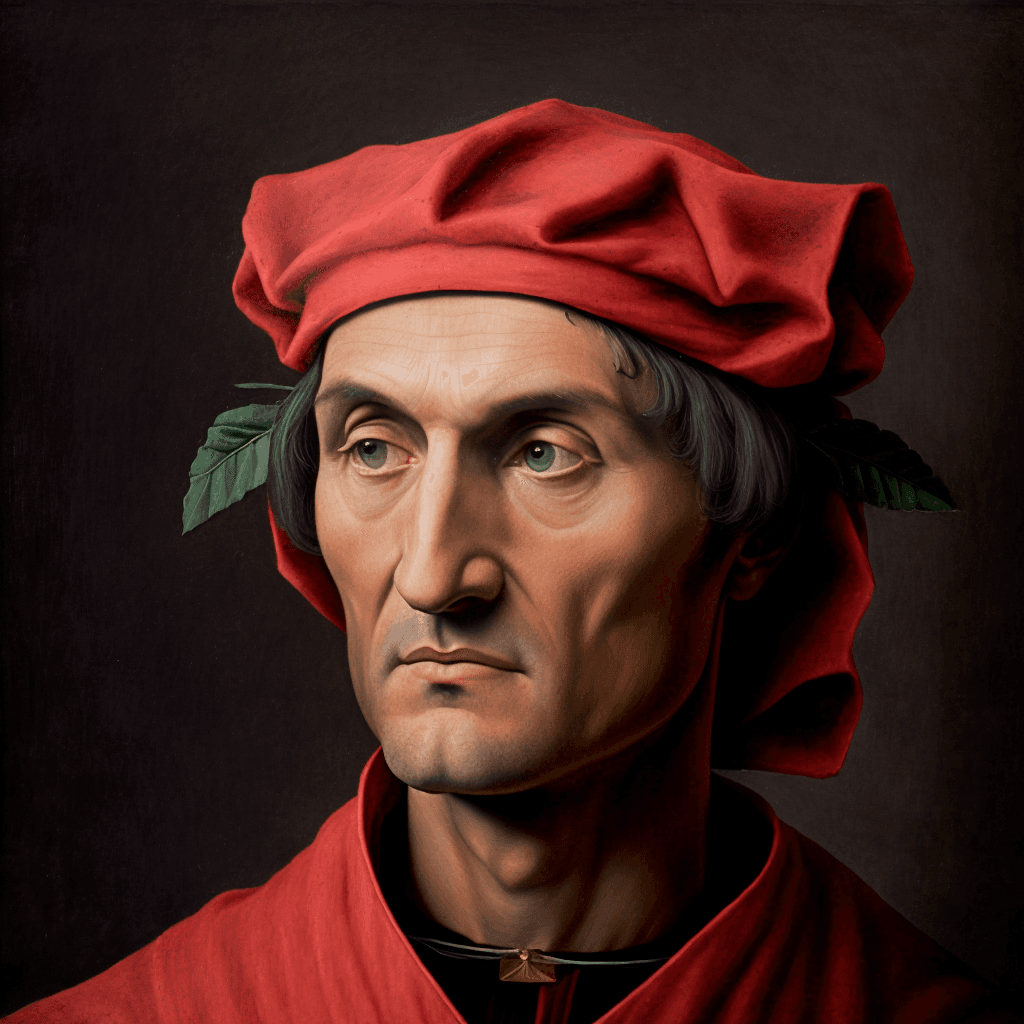
1265–1321
Poet • Author of The Divine Comedy
This is a read-only educational profile. Chat, Council Mode, and AI features are not available for historical figures.
Dante Alighieri was born in Florence around 1265 into a minor noble family entangled in the city's Guelph-Ghibelline strife. He fought at Campaldino, served in civic office, and married Gemma Donati while nurturing an intense literary and political life. His early verse, including the Vita Nuova, elevated Beatrice Portinari from personal muse to symbol of divine love, blending courtly tradition with theological ambition.
Political exile changed everything. After the Black Guelphs took power in 1302, Dante spent his remaining years wandering Italian courts, never returning to Florence. From Ravenna he composed The Divine Comedy in vernacular Tuscan rather than Latin, assigning popes, emperors, and contemporaries to meticulously ordered realms of the afterlife. Virgil guides him through Inferno and Purgatorio; Beatrice leads Paradiso. The poem fused Aristotelian philosophy, Augustinian theology, and biting political commentary into a single imaginative architecture.
Dante died in Ravenna in 1321, honored by the city that sheltered him. Florence eventually reclaimed his memory, but the Comedy had already begun its ascent as Italy's national epic and a cornerstone of European literature. By choosing the volgare, Dante helped establish Tuscan as the literary language that would become modern Italian.
Key moments across this figure's life and legacy
c. 1265
Raised amid Guelph faction politics in a city of bankers, guilds, and church rivalry.
1289
Fought as a cavalryman in the Guelph victory over Ghibelline forces.
1302
Condemned in absentia by Florence; spent the rest of his life outside his native city.
1308–1320
Wrote the epic in exile, likely finishing Paradiso shortly before his death.
1321
Died of malaria on return from a diplomatic mission to Venice.
Landmarks that define this figure's contribution to history
Completed a three-part epic that structured Western imaginings of the afterlife for centuries.
Demonstrated that Italian could carry philosophical and theological weight equal to Latin.
Argued for imperial authority independent of papal temporal power, provoking posthumous controversy.
How this figure shaped the world we inherit
Dante gave medieval Christianity a narrative geography so vivid that 'Dante-esque' still describes moral reckoning. His Comedy influenced Chaucer, Milton, and Joyce while fixing Tuscan as Italy's literary standard. Politicians and poets alike continue to read his infernal catalog of sins as both spiritual allegory and forensic portrait of human ambition.
Explore more profiles from the same era or field
Curated educational resources for further study
Discover historical art and educational content on our media channels