Queen's Frontman and Songwriter
Co-founded Queen and wrote hits including "Bohemian Rhapsody," "We Are the Champions," and "Somebody to Love."
Discover
Explore influential historical figures from science, philosophy, leadership, art, and culture.
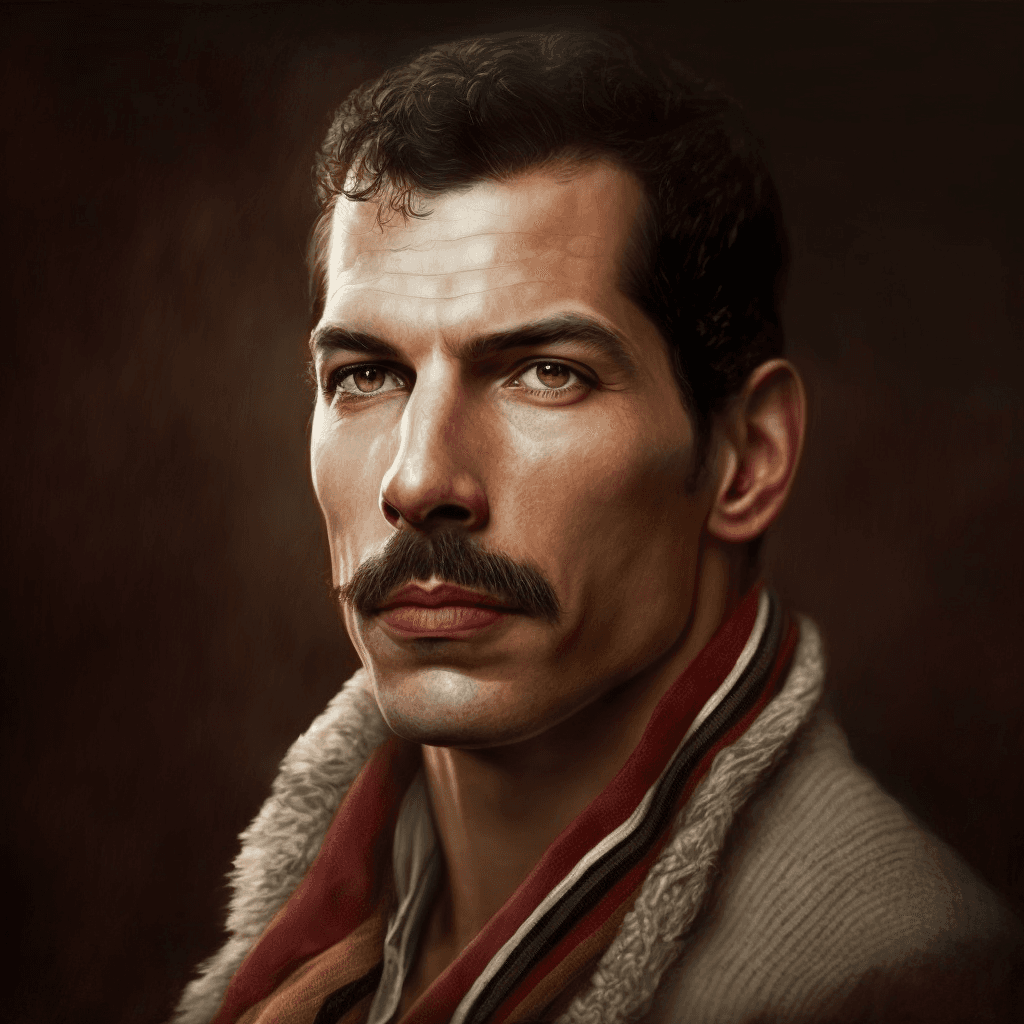
1946–1991
Singer • Songwriter • Queen Frontman
This is a read-only educational profile. Chat, Council Mode, and AI features are not available for historical figures.
Freddie Mercury was born Farrokh Bulsara on 5 September 1946 in Stone Town, Zanzibar, to Parsi Indian parents Bomi and Jer Bulsara who worked for the British colonial government. He spent part of his childhood in India at St Peter's boarding school near Bombay, developing interests in piano, art, and Western pop records before the family fled Zanzibar's 1964 revolution for Middlesex, England. He studied graphic art at Ealing Technical College, worked in Kensington Market stalls, and joined bands including Wreckage and Smile before persuading guitarist Brian May and drummer Roger Taylor to rename their group Queen. Mercury chose his stage name, designed the band's crest logo, and insisted on theatrical ambition at a time when rock often favored denim authenticity over operatic scale.
Queen's albums from the 1970s and 1980s—A Night at the Opera, News of the World, The Game—combined hard rock, vaudeville camp, disco grooves, and studio experimentation, culminating in the six-minute "Bohemian Rhapsody," a single that defied radio convention and became a generational anthem. Mercury's four-octave range, precise phrasing, and command of stadium crowds turned Live Aid 1985 at Wembley into a masterclass in audience connection; critics who once dismissed Queen as excessive later cited that performance as rock's finest hour. He wrote "Crazy Little Thing Called Love," "Somebody to Love," "We Are the Champions," and "Don't Stop Me Now," balancing Brian May's guitar epics with his own pop instincts. Privately he guarded his relationships and health, maintaining a circle of close friends while tabloids speculated about his life offstage.
Mercury was diagnosed with AIDS and kept his illness private while recording Queen's final album with him, Innuendo, whose title track and "These Are the Days of Our Lives" carried elegiac weight. He confirmed his condition on 23 November 1991, one day before his death at home in Kensington at forty-five. His funeral followed Parsi Zoroastrian rites, honoring the faith of his childhood. Tribute concerts and the Mercury Phoenix Trust channeled grief into AIDS fundraising, while Queen's music surged in popularity across films, sports arenas, and streaming decades later. Freddie Mercury proved that a rock singer could merge ballet, opera, and stadium volume without apology, expanding what a pop voice could express in gender, nationality, and sheer theatrical joy.
Key moments across this figure's life and legacy
1946
Born Farrokh Bulsara to Parsi parents before the family settled in England after the 1964 revolution.
1970
Joined Brian May and Roger Taylor in the band he named and visually branded.
1975
Released the album featuring "Bohemian Rhapsody," elevating Queen to global stardom.
1985
Commanded a twenty-minute set that revitalized Queen's reputation among critics and fans.
1991
Died of AIDS-related bronchial pneumonia at forty-five, one day after his public statement.
Landmarks that define this figure's contribution to history
Co-founded Queen and wrote hits including "Bohemian Rhapsody," "We Are the Champions," and "Somebody to Love."
Released a genre-defying epic that became one of the best-selling singles in rock history.
Delivered a Wembley performance widely hailed as among the greatest live rock sets ever filmed.
Recorded visionary work while gravely ill, including the chart-topping title track released months before his death.
How this figure shaped the world we inherit
Freddie Mercury expanded rock performance beyond guitar-hero clichés, blending South Asian heritage, camp aesthetics, and operatic scale into a global pop language. His openness about AIDS at the end of his life and the fundraising it inspired helped shift public awareness of the epidemic in the early 1990s.
Explore more profiles from the same era or field
Curated educational resources for further study
Discover historical art and educational content on our media channels