
Relief of Orléans
In May 1429, Joan's leadership helped French forces end an English siege that had threatened to collapse royal resistance in the Loire Valley.
Discover
Explore influential historical figures from science, philosophy, leadership, art, and culture.
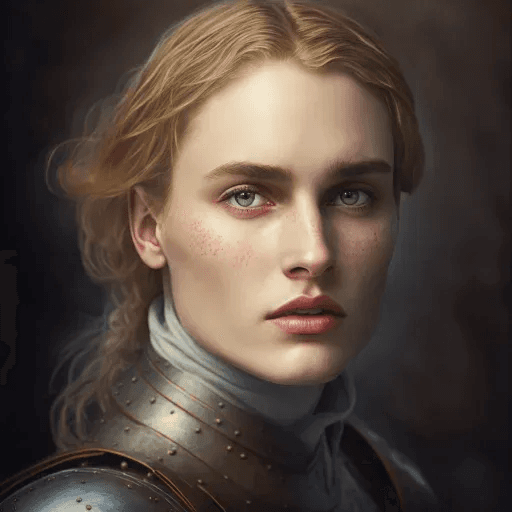
1412–1431
Warrior • Saint • National Heroine
This is a read-only educational profile. Chat, Council Mode, and AI features are not available for historical figures.
Joan of Arc was born around 1412 in Domrémy, a village in northeastern France caught between Burgundian and English pressure. From childhood she reported visions of saints instructing her to support Charles VII and drive the English from French territory. At seventeen she traveled to Chinon, convinced the dauphin to grant her command, and cut her hair to ride with soldiers as La Pucelle—the Maid of Orléans.
Her arrival transformed a demoralized campaign. In 1429 she led troops that broke the English siege of Orléans, then pushed through the Loire in a rapid series of victories culminating in Charles's coronation at Reims. Captured at Compiègne in 1430, she was sold to the English, tried for heresy by a pro-English ecclesiastical court at Rouen, and burned at the stake on May 30, 1431, at age nineteen.
A retrial ordered by Charles VII in 1456 declared her innocent. Beatified in 1909 and canonized in 1920, Joan became a symbol of French unity and resistance. Her trial records preserve one of the most detailed medieval interrogations, and her story continues to raise questions about faith, gender, and political legitimacy.
Key moments across this figure's life and legacy
1412
Joan was born to peasant farmers in a border region contested by France, Burgundy, and England during the Hundred Years' War.
1429
After reporting divine visions, she gained an audience with the dauphin Charles and received armor, a household, and military authority.
1429
French troops under her influence lifted a critical siege and followed with victories at Patay and along the Loire.
1430
She was taken prisoner by Burgundian allies of England during a sortie from the town of Compiégne.
1431
Convicted of heresy at Rouen, she was burned at the stake; a later church inquiry declared the verdict unjust.
Landmarks that define this figure's contribution to history
In May 1429, Joan's leadership helped French forces end an English siege that had threatened to collapse royal resistance in the Loire Valley.
She escorted Charles VII through hostile territory so he could be crowned king of France, legitimizing his claim against English-backed rivals.
Her campaigns along the Loire in 1429 restored momentum to the French war effort after years of defeat and internal division.
The 1456 nullification trial overturned her heresy conviction, paving the way for her later recognition as a Catholic saint and French national heroine.
How this figure shaped the world we inherit
Joan of Arc gave the Valois monarchy a decisive psychological and military turning point in the Hundred Years' War. Her canonization and place in French civic memory made her an enduring emblem of patriotism, while historians study her trial as a window into medieval law, politics, and popular religion.
Curated educational resources for further study
Discover historical art and educational content on our media channels