Discovery of Polonium and Radium
Isolated new radioactive elements through years of meticulous laboratory work.
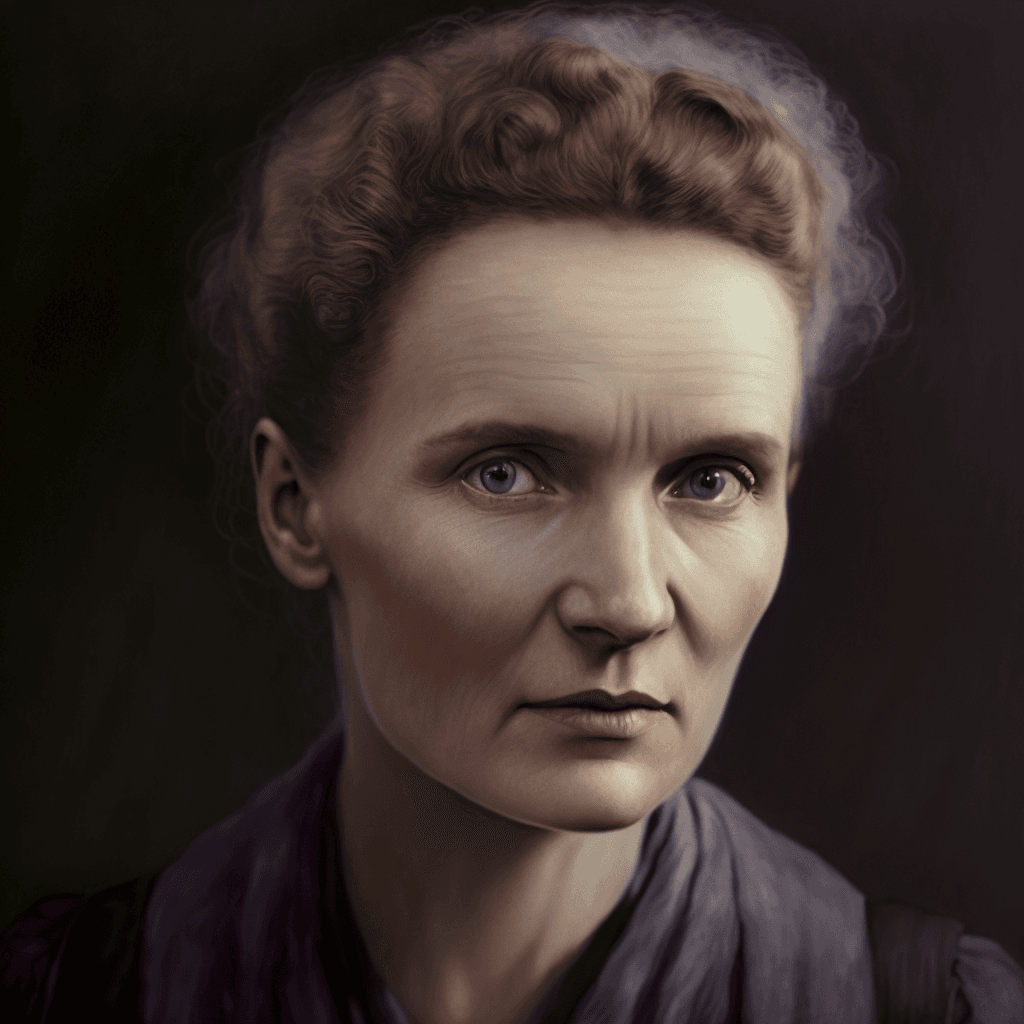
1867–1934
Scientist • Pioneer • Nobel Laureate
Maria Skłodowska nació en Varsovia, en la Polonia controlada por Rusia, donde las oportunidades académicas para las mujeres eran limitadas. Decidida a estudiar ciencia, se mudó a París, adoptó el nombre de Marie y se inscribió en la Sorbona. Allí conoció a Pierre Curie, un físico que compartía su pasión por el experimento riguroso. Juntos investigaron los rayos invisibles emitidos por el uranio, un fenómeno que Becquerel había descubierto recientemente.
Los Curies acuñaron el término radioactividad y, a través de un trabajo minucioso con mineral de pechblenda, aislaron dos nuevos elementos: polonio, nombrado por la tierra natal de Marie, y radio. El Premio Nobel de Física de Marie en 1903—compartido con Pierre y Becquerel—la convirtió en la primera mujer laureada con un Nobel. Tras la muerte de Pierre en 1906, se convirtió en la primera profesora femenina en la Sorbona y continuó una investigación que le valió un segundo Nobel, en Química, en 1911.
Durante la Primera Guerra Mundial, Curie organizó unidades móviles de rayos X—petites Curies—para ayudar a los cirujanos a localizar esquirlas en soldados heridos. Falleció en 1934 de anemia aplásica vinculada a la exposición prolongada a la radiación, antes de que se comprendieran completamente los riesgos para la salud. Su vida combinó descubrimientos innovadores, barreras institucionales superadas y servicio bajo fuego, convirtiéndola en un ícono perdurable del coraje científico.
Momentos clave en la vida y el legado de esta figura
1867
Raised in an educated Polish family under Russian partition.
1891
Studied at the Sorbonne, earning degrees in physics and mathematics.
1898
Identified new elements while studying uranium rays with Pierre Curie.
1911
Awarded Nobel Prize in Chemistry for isolating radium and studying its properties.
1934
Died from illness linked to radiation; later interred in the Panthéon.
Hitos que definen la contribución de esta figura a la historia
Isolated new radioactive elements through years of meticulous laboratory work.
Nobel in Physics (1903) and Chemistry (1911)—the first person to win twice.
Advanced understanding of atomic structure and radiation phenomena.
Deployed mobile radiography units that saved countless lives on the battlefield.
Detalles notables sobre esta figura
Cómo esta figura moldeó el mundo que heredamos
Marie Curie abrió la era atómica al demostrar que los átomos no eran indivisibles y estables, sino que podían emitir energía y transformarse. Sus premios rompieron las barreras de género en la ciencia, inspirando a generaciones de investigadoras. Los usos médicos del radio y la posterior física nuclear trazan linajes a su trabajo, mientras que su historia sigue siendo un punto de referencia para las discusiones sobre ética, seguridad y equidad en el descubrimiento científico.
Influencia duradera a través de generaciones
Marie Curie opened the atomic age by showing that atoms were not indivisible and stable but could emit energy and transform. Her prizes shattered gender barriers in science, inspiring generations of women researchers. Radium's medical uses and later nuclear physics trace lineages to her work, while her story remains a touchstone for discussions of ethics, safety, and equity in scientific discovery. Death in France (1934) remains a defining moment in Marie Curie's enduring reputation.
Más perfiles de la misma época o campo
Recursos educativos seleccionados para profundizar
Inicia una conversación privada con Historical Collection AI.