Wartime Leadership (1940–1945)
Steered Britain through its gravest existential threat since the Napoleonic era.
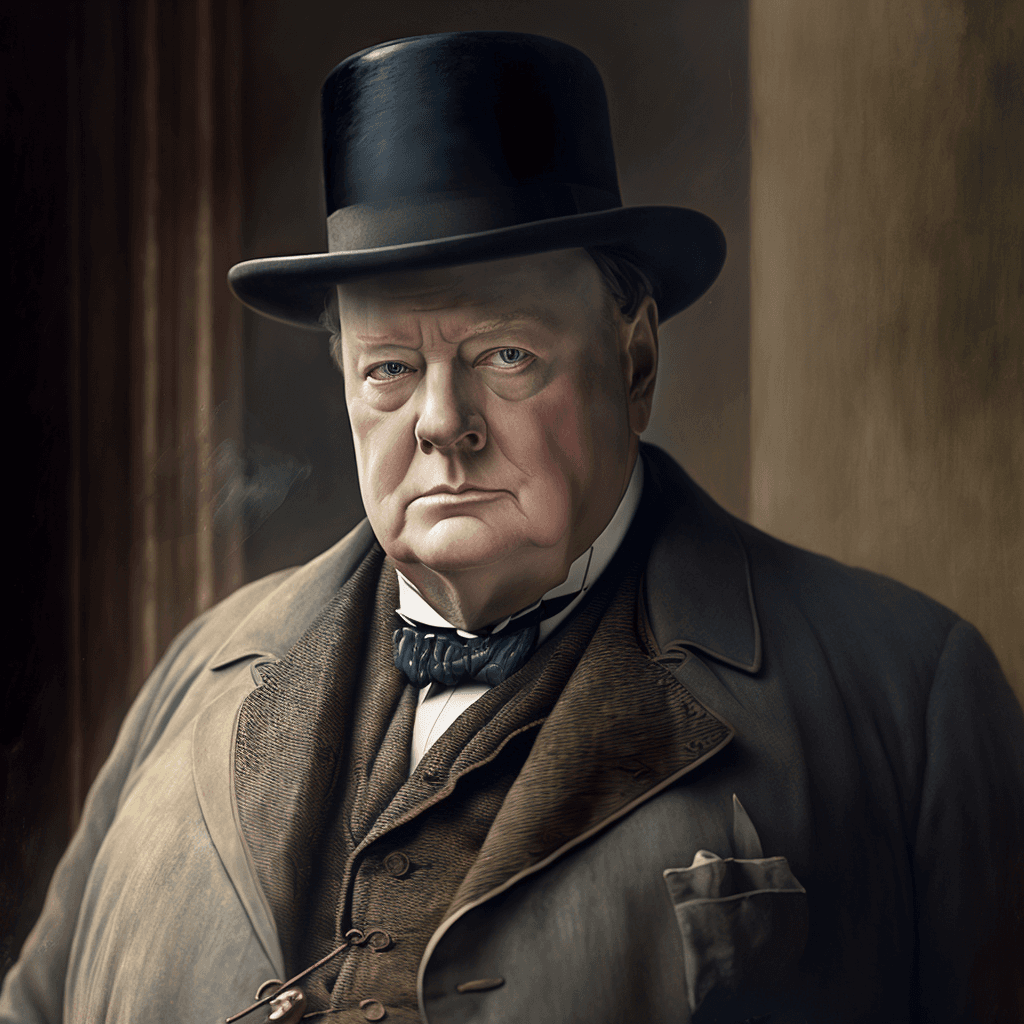
1874–1965
Statesman • Orator • Writer
Winston Leonard Spencer Churchill nació en una familia aristocrática británica y persiguió una carrera de ambición inquieta—como soldado, corresponsal de guerra, historiador y político. La fama temprana llegó de escapadas audaces y retórica valiente, pero su juicio no fue infalible: el desastre de Gallipoli en la Primera Guerra Mundial manchó su reputación durante años. Entre las guerras advirtió sobre el rearme nazi mientras a menudo ocupaba el desierto político.
Nombrado Primer Ministro en mayo de 1940, cuando Francia cayó y Gran Bretaña quedó sola, los discursos de Churchill—"sangre, trabajo, lágrimas y sudor", "lucharemos en las playas"—galvanizaron la moral nacional y articularon la resistencia democrática. Coordinó la estrategia con los Aliados, navegó la política imperial y aceptó la asociación soviética como una necesidad de guerra. La victoria en 1945 trajo triunfos en el extranjero pero derrota electoral en casa.
Regresando como Primer Ministro en 1951, Churchill lidió con la diplomacia de la Guerra Fría y el imperio en declive. Galardonado con el Premio Nobel de Literatura en 1953 por sus escritos históricos y discursos, siguió siendo una figura imponente y controvertida—celebrada por su liderazgo en tiempos de guerra, pero criticada por sus puntos de vista imperiales y fracasos de política anteriores. Su vida encarna tanto el poder de la retórica en crisis como la complejidad del legado.
Momentos clave en la vida y el legado de esta figura
1874
Raised in aristocratic circles with ambition to match his lineage.
1940
Took office as German forces overran Western Europe and Britain faced invasion.
1940–1941
Rallied the nation during aerial siege and early Allied coalition building.
1945
Led Britain to Allied victory, then lost the general election to Labour.
1965
Honored with a funeral reflecting global stature; died at age ninety.
Hitos que definen la contribución de esta figura a la historia
Steered Britain through its gravest existential threat since the Napoleonic era.
Speeches that mobilized resistance and framed WWII as a struggle for civilization.
Honored for mastery of historical narrative and biographical writing.
Early warnings about Soviet expansion, including the 1946 Iron Curtain speech.
Detalles notables sobre esta figura
Cómo esta figura moldeó el mundo que heredamos
La desafío de Churchill en 1940 ayudó a prevenir una paz negociada que podría haber dejado a la Alemania nazi dominante en Europa, moldeando el curso del siglo XX. Sus escritos preservaron una narrativa de resiliencia democrática, mientras que sus actitudes imperiales recuerdan a los historiadores que el heroísmo en una crisis no borra otros juicios. Para los líderes de hoy, Churchill sigue siendo un estudio de caso en comunicación bajo fuego, gestión de coaliciones y los costos de la guerra total.
Influencia duradera a través de generaciones
Churchill's defiance in 1940 helped prevent a negotiated peace that might have left Nazi Germany dominant in Europe, shaping the course of the twentieth century. His writings preserved a narrative of democratic resilience, while his imperial attitudes remind historians that heroism in one crisis does not erase other judgments. For leaders today, Churchill remains a case study in communication under fire, coalition management, and the costs of total war. State Funeral (1965) remains a defining moment in Winston Churchill's enduring reputation.
Más perfiles de la misma época o campo
Recursos educativos seleccionados para profundizar
Inicia una conversación privada con Historical Collection AI.