Three-Time Heavyweight Champion
Ali won the title in 1964, 1974, and 1978—the only heavyweight to regain it twice after losing the belt.
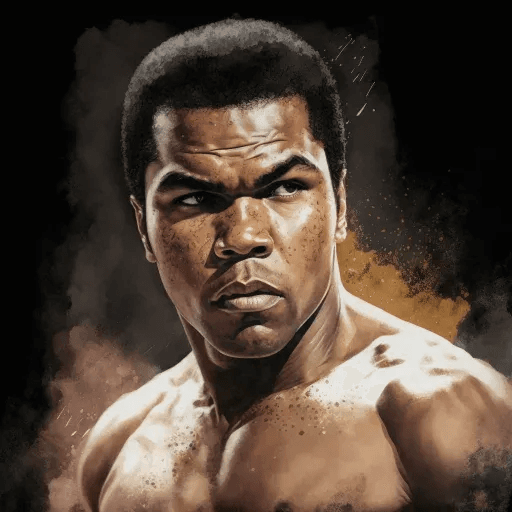
1942–2016
Boxing Champion • Activist • Global Icon
Cassius Marcellus Clay Jr. nació en 1942 en Louisville, Kentucky. Comenzó a boxear después de que le robaran su bicicleta, lo que lo llevó a entrenar con Joe Martin. Ganando la medalla de oro en peso semipesado en los Juegos Olímpicos de Roma de 1960, se volvió profesional con predicciones llamativas y un juego de pies que desafiaba las normas del peso pesado. En 1964, sorprendió a Sonny Liston para reclamar el título mundial y anunció su conversión al Islam, adoptando el nombre de Muhammad Ali.
Ali se negó a ser reclutado en el ejército de EE. UU. durante la Guerra de Vietnam, citando objeciones religiosas e injusticias raciales. Despojado de su título y enfrentando prisión, habló en campus universitarios mientras luchaba legalmente contra la condena, que la Corte Suprema anuló en 1971. Recuperó el campeonato en épicas peleas: el 'Rumble in the Jungle' contra George Foreman en Zaire y el 'Thrilla in Manila' contra Joe Frazier.
El síndrome de Parkinson, probablemente relacionado con el trauma en el ring, ralentizó su habla en las décadas posteriores, pero Ali siguió siendo un embajador global, encendiendo el pebetero de los Juegos Olímpicos de Atlanta 1996. Murió en 2016 en Scottsdale, Arizona, llorado como un campeón que colocó la conciencia junto al genio atlético.
Momentos clave en la vida y el legado de esta figura
1942
Raised in segregated Kentucky, Clay began boxing at twelve and quickly showed precocious talent and confidence.
1964
He stopped Sonny Liston, proclaimed 'I am the greatest,' and publicly joined the Nation of Islam.
1967
Ali's conviction for refusing induction cost him his license and heavyweight title during peak athletic years.
1974
The Kinshasa bout restored his championship and demonstrated strategic adaptation against a younger, harder puncher.
2016
Ali died of septic shock linked to Parkinson's; global memorials celebrated his sports and civil rights legacy.
Hitos que definen la contribución de esta figura a la historia
Ali won the title in 1964, 1974, and 1978—the only heavyweight to regain it twice after losing the belt.
His 1974 knockout of George Foreman in Kinshasa used the rope-a-dope tactic to reclaim the championship in Africa.
Refusing Vietnam draft induction in 1967, he sacrificed prime fighting years and became a symbol of principled dissent.
Victory in Rome launched an amateur career marked by speed and showmanship that carried into professional dominance.
Detalles notables sobre esta figura
Cómo esta figura moldeó el mundo que heredamos
Ali transformó al campeón de peso pesado de un atleta silencioso a una celebridad global elocuente. Su negativa a luchar en Vietnam, su abrazo al Islam y su carisma avanzaron debates sobre raza, religión y activismo de atletas que resuenan en la protesta deportiva moderna.
Influencia duradera a través de generaciones
Ali transformed the heavyweight champion from silent athlete to outspoken global celebrity. His refusal to fight in Vietnam, embrace of Islam, and charisma advanced debates on race, religion, and athlete activism that echo in modern sports protest. Death in Arizona (2016) remains a defining moment in Muhammad Ali's enduring reputation.
Más perfiles de la misma época o campo
Recursos educativos seleccionados para profundizar
Inicia una conversación privada con Historical Collection AI.