Unified the German Empire
Orchestrated the diplomatic and military sequence that merged German states into a single empire under Prussian dominance in 1871.
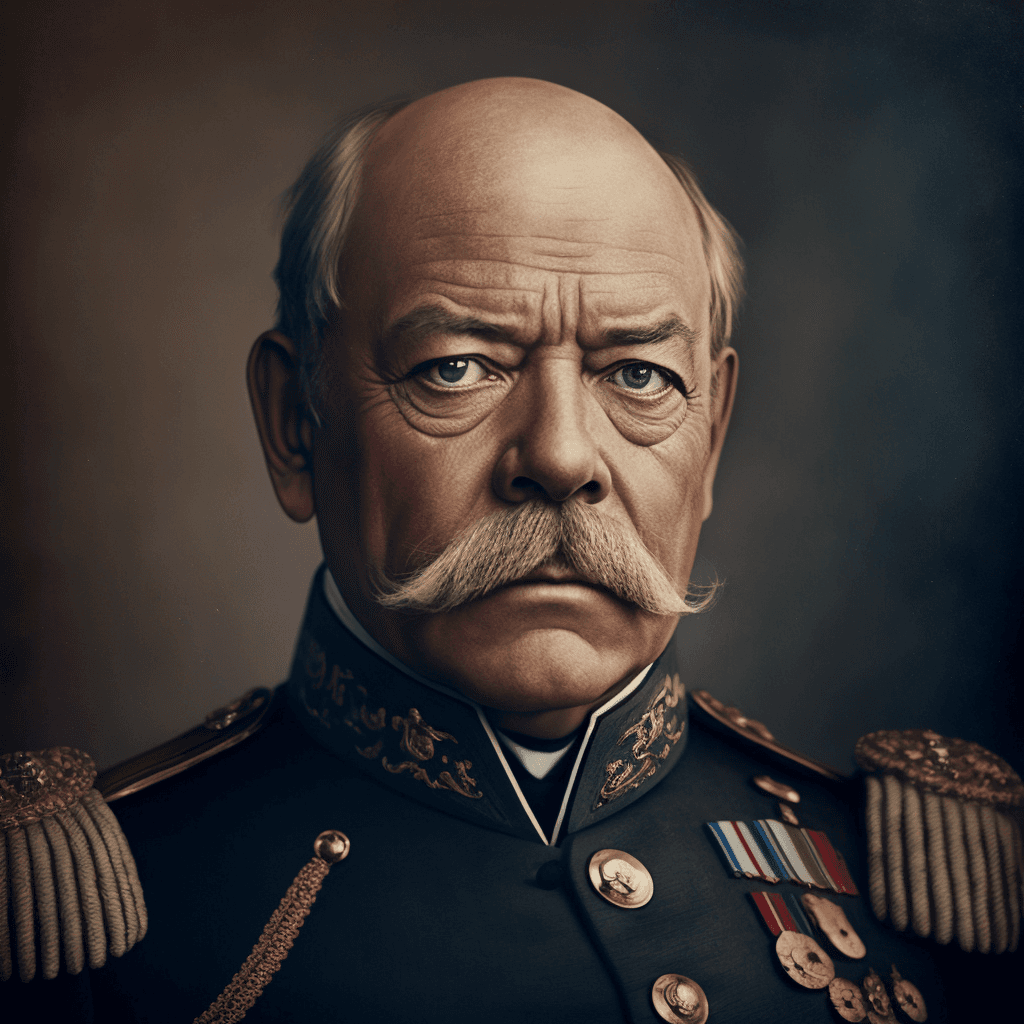
1815–1898
Statesman • Architect of German Unity
Nacido en 1815 en una familia Junker en Prusia, Otto von Bismarck entró en la política como un diputado conservador que inicialmente resistió el nacionalismo liberal. Su nombramiento como embajador prusiano en París y San Petersburgo le enseñó a leer el equilibrio de poder con fría precisión, habilidades que usaría sin piedad una vez que el rey Guillermo I lo nombrara ministro-presidente en 1862.
Bismarck orquestó tres rápidas guerras—contra Dinamarca, Austria y Francia—que despejaron el camino hacia la unificación alemana bajo el liderazgo prusiano. Proclamado emperador alemán en Versalles en 1871, construyó un imperio constitucional que preservó la autoridad real mientras canalizaba la energía nacionalista en un aparato estatal moderno.
Como canciller hasta 1890, fue pionero en el seguro social, manipuló alianzas para aislar a Francia y trató el debate parlamentario como una herramienta en lugar de una restricción. Despedido por Guillermo II, pasó sus últimos años advirtiendo contra la ambición imperial imprudente, dejando una Alemania unificada cuyo poder y tensiones remodelarían el siglo XX.
Momentos clave en la vida y el legado de esta figura
1815
Raised in the Prussian aristocracy, studying law before entering conservative politics in the fragmented German Confederation.
1862
Took control of Prussian government and declared that great questions would be settled by 'iron and blood,' not speeches.
1871
After defeating France, Wilhelm I was proclaimed German Emperor in the Hall of Mirrors, completing unification.
1884
Acquired protectorates in Africa and the Pacific, extending German influence overseas while maintaining continental priorities.
1890
Forced from office after clashing with the new emperor, ending an era of cautious balance in European diplomacy.
Hitos que definen la contribución de esta figura a la historia
Orchestrated the diplomatic and military sequence that merged German states into a single empire under Prussian dominance in 1871.
Pioneered a foreign policy based on shifting alliances and calculated force, keeping France isolated while avoiding general European war for two decades.
Introduced health, accident, and old-age insurance in the 1880s, partly to undercut socialist appeal and stabilize industrial society.
Balanced monarchical authority, bureaucratic efficiency, and limited parliamentarism in a constitutional order that endured until 1918.
Detalles notables sobre esta figura
Cómo esta figura moldeó el mundo que heredamos
La unificación de Alemania por parte de Bismarck redibujó el mapa de Europa y creó una potencia industrial cuya rivalidad con Gran Bretaña y Francia ayudó a preparar el escenario para la Primera Guerra Mundial. Su mezcla de gobernanza autoritaria y reforma social influyó en la política estatal mucho más allá de Alemania, convirtiendo 'Realpolitik' en un término permanente en el vocabulario diplomático.
Influencia duradera a través de generaciones
Bismarck's unification of Germany redrew the map of Europe and created a industrial powerhouse whose rivalry with Britain and France helped set the stage for World War I. His blend of authoritarian governance and social reform influenced statecraft far beyond Germany, making 'Realpolitik' a permanent term in diplomatic vocabulary. Dismissed by Wilhelm II (1890) remains a defining moment in Otto von Bismarck's enduring reputation.
Más perfiles de la misma época o campo
Recursos educativos seleccionados para profundizar
Inicia una conversación privada con Historical Collection AI.