Montgomery Bus Boycott
King's leadership of the 1955–56 boycott helped end segregated seating and launched him as a national civil rights spokesman.
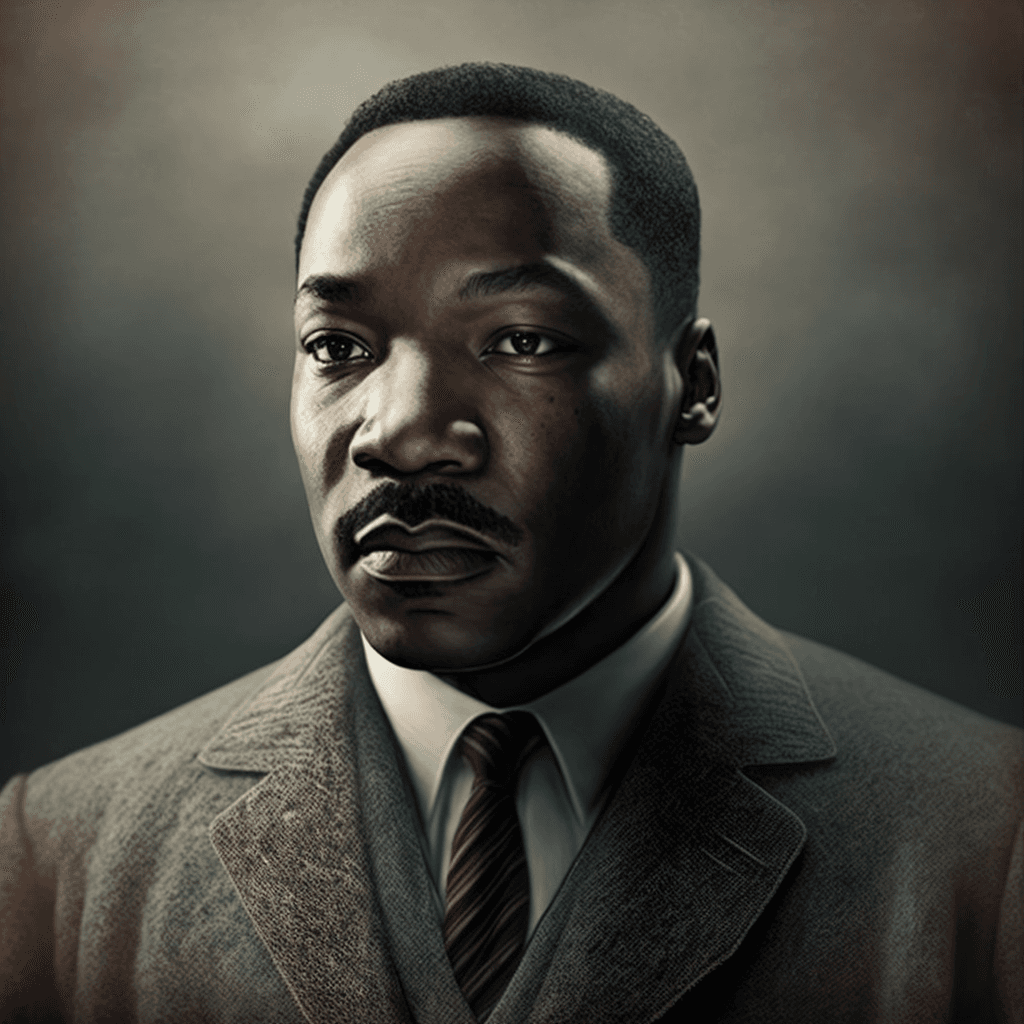
1929–1968
Civil Rights Leader • Orator • Nobel Laureate
Martin Luther King Jr. est né en 1929 à Atlanta, en Géorgie, fils d'un ministre baptiste. Éduqué au Morehouse College, au Crozer Theological Seminary et à l'Université de Boston, il a absorbé les idées de résistance non violente de Gandhi et l'enseignement social chrétien. En 1955, il a acquis une notoriété nationale en dirigeant le boycott des bus de Montgomery après l'arrestation de Rosa Parks.
En tant que premier président de la Southern Christian Leadership Conference, King a organisé des campagnes contre la ségrégation à Birmingham, a marché sur Washington en 1963 et a plaidé pour une législation sur les droits de vote. Sa lettre de la prison de Birmingham et ses discours ont lié l'argument moral à l'action directe. La loi sur les droits civiques de 1964 et la loi sur les droits de vote de 1965 ont suivi des années de manifestations, d'arrestations et de violence blanche.
King a élargi son attention à la justice économique et à l'opposition à la guerre du Vietnam, attirant des critiques de la part des modérés et du FBI. Le 4 avril 1968, il a été assassiné à Memphis, où il était venu soutenir des travailleurs de la sanitation en grève. Un jour férié fédéral en son honneur, établi en 1983, marque sa place en tant que leader le plus visible de la lutte pour la liberté du XXe siècle en Amérique.
Moments clés de la vie et de l'héritage de cette figure
1929
Born Michael King Jr., he later received his father's adopted name honoring the Protestant reformer Martin Luther.
1955
After Rosa Parks's arrest, King helped coordinate a year-long boycott that desegregated city buses.
1963
Children's marches and national media coverage of police dogs preceded the August March on Washington for Jobs and Freedom.
1964
Landmark federal law banned segregation in public places and employment discrimination— a major goal of King's campaigns.
1968
James Earl Ray shot King at the Lorraine Motel; riots erupted in cities nationwide as mourners gathered for his funeral.
Jalons qui définissent la contribution de cette figure à l'histoire
King's leadership of the 1955–56 boycott helped end segregated seating and launched him as a national civil rights spokesman.
His 'I Have a Dream' address before the Lincoln Memorial in 1963 became the movement's most quoted call for racial equality.
Awarded in 1964 at age thirty-five, the prize recognized nonviolent campaigns that produced landmark U.S. civil rights legislation.
Protests and the Selma-to-Montgomery march in 1965 built pressure for the Voting Rights Act signed that August.
Détails notables sur cette figure
Comment cette figure a façonné le monde que nous avons hérité
La fusion par King de l'éthique chrétienne et de la non-violence gandhienne a donné un langage moral à la démolition de la ségrégation Jim Crow. Son martyre a accéléré la législation sur le logement équitable et a fixé les droits civiques au centre de l'identité civique américaine, même si des activistes ultérieurs ont débattu de ses stratégies et de son agenda économique inachevé.
Influence durable à travers les générations
King's fusion of Christian ethics and Gandhian nonviolence gave moral language to dismantling Jim Crow segregation. His martyrdom accelerated fair housing legislation and fixed civil rights at the center of American civic identity, even as later activists debated his strategies and unfinished economic agenda. Assassination in Memphis (1968) remains a defining moment in Martin Luther King Jr.'s enduring reputation.
D'autres profils de la même époque ou du même domaine
Ressources éducatives sélectionnées pour approfondir
Entamez une conversation privée via Historical Collection AI.