Three-Time Heavyweight Champion
Ali won the title in 1964, 1974, and 1978—the only heavyweight to regain it twice after losing the belt.
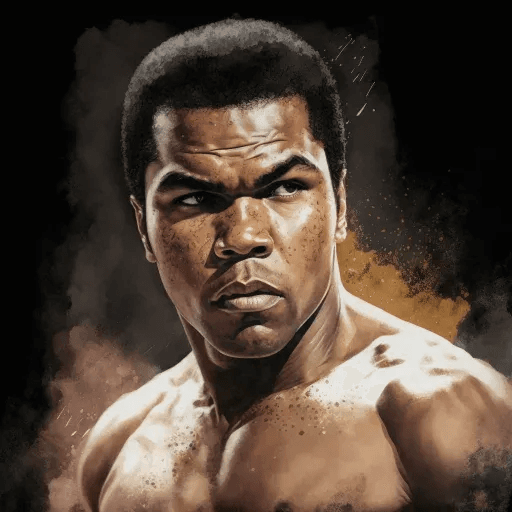
1942–2016
Boxing Champion • Activist • Global Icon
Cassius Marcellus Clay Jr. est né en 1942 à Louisville, dans le Kentucky. Il a commencé la boxe après qu'un vélo volé l'ait conduit à l'entraîneur Joe Martin. En remportant l'or en poids mi-lourd aux Jeux olympiques de Rome en 1960, il est devenu professionnel avec des prédictions flamboyantes et un jeu de jambes qui défiait les normes des poids lourds. En 1964, il a créé la surprise en battant Sonny Liston pour revendiquer le titre mondial et a annoncé sa conversion à l'islam, adoptant le nom de Muhammad Ali.
Ali a refusé son enrôlement dans l'armée américaine pendant la guerre du Vietnam, invoquant une objection religieuse et une injustice raciale. Dépossédé de son titre et confronté à la prison, il a pris la parole sur les campus universitaires tout en combattant légalement la condamnation, que la Cour suprême a annulée en 1971. Il a récupéré le championnat lors de combats épiques — le 'Rumble in the Jungle' contre George Foreman au Zaïre et le 'Thrilla in Manila' contre Joe Frazier.
Le syndrome de Parkinson, probablement lié à un traumatisme de la boxe, a ralenti son discours dans les décennies suivantes, mais Ali est resté un ambassadeur mondial, allumant le flambeau des Jeux olympiques d'Atlanta en 1996. Il est mort en 2016 à Scottsdale, en Arizona, pleuré comme un champion qui a placé la conscience aux côtés du génie athlétique.
Moments clés de la vie et de l'héritage de cette figure
1942
Raised in segregated Kentucky, Clay began boxing at twelve and quickly showed precocious talent and confidence.
1964
He stopped Sonny Liston, proclaimed 'I am the greatest,' and publicly joined the Nation of Islam.
1967
Ali's conviction for refusing induction cost him his license and heavyweight title during peak athletic years.
1974
The Kinshasa bout restored his championship and demonstrated strategic adaptation against a younger, harder puncher.
2016
Ali died of septic shock linked to Parkinson's; global memorials celebrated his sports and civil rights legacy.
Jalons qui définissent la contribution de cette figure à l'histoire
Ali won the title in 1964, 1974, and 1978—the only heavyweight to regain it twice after losing the belt.
His 1974 knockout of George Foreman in Kinshasa used the rope-a-dope tactic to reclaim the championship in Africa.
Refusing Vietnam draft induction in 1967, he sacrificed prime fighting years and became a symbol of principled dissent.
Victory in Rome launched an amateur career marked by speed and showmanship that carried into professional dominance.
Détails notables sur cette figure
Comment cette figure a façonné le monde que nous avons hérité
Ali a transformé le champion poids lourd d'athlète silencieux en célébrité mondiale engagée. Son refus de combattre au Vietnam, son adoption de l'islam et son charisme ont fait avancer les débats sur la race, la religion et l'activisme des athlètes qui résonnent dans la protestation sportive moderne.
Influence durable à travers les générations
Ali transformed the heavyweight champion from silent athlete to outspoken global celebrity. His refusal to fight in Vietnam, embrace of Islam, and charisma advanced debates on race, religion, and athlete activism that echo in modern sports protest. Death in Arizona (2016) remains a defining moment in Muhammad Ali's enduring reputation.
D'autres profils de la même époque ou du même domaine
Ressources éducatives sélectionnées pour approfondir
Entamez une conversation privée via Historical Collection AI.