Revolutionized Portrait Painting
Moved beyond flattering likeness to reveal character through light, gesture, and psychological intensity in works like *The Syndics*.
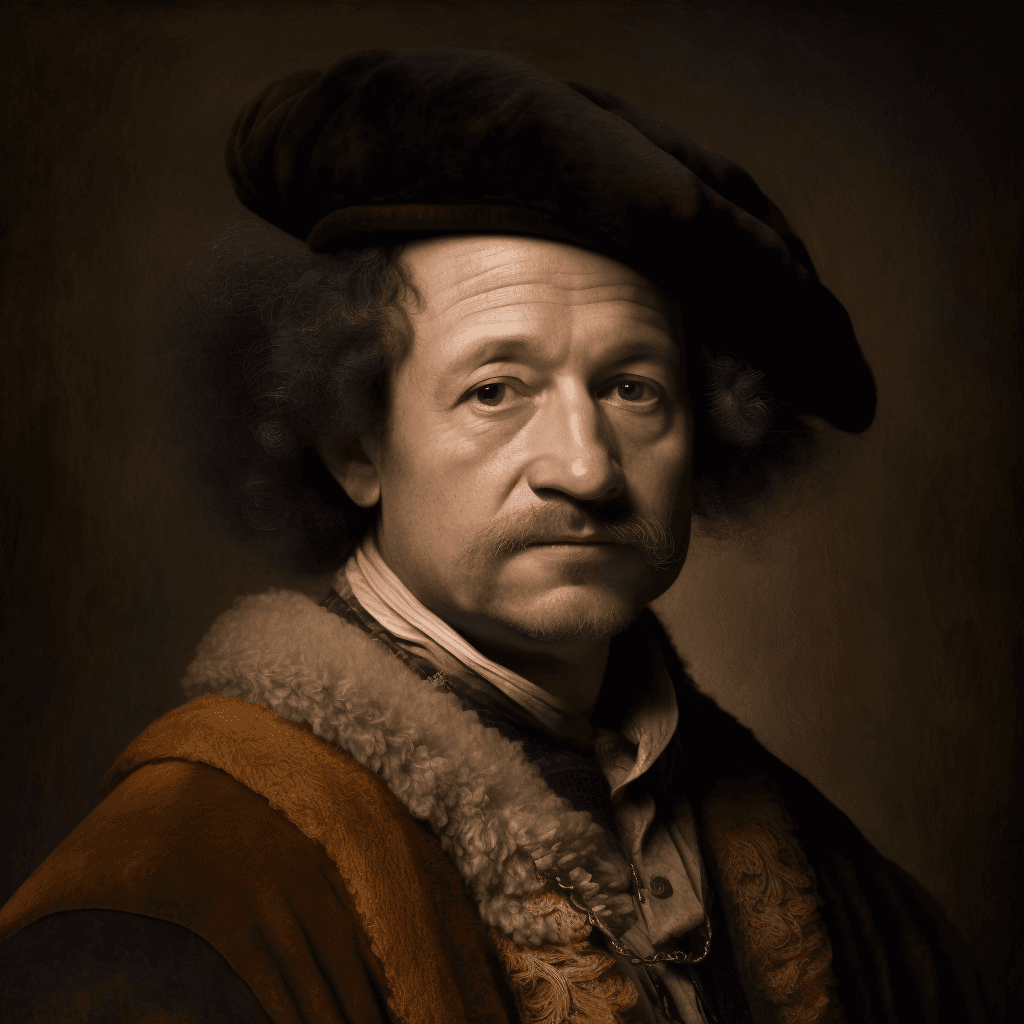
1606–1669
Painter • Master of Light and Shadow
Né à Leyde en 1606, Rembrandt Harmenszoon van Rijn s'est formé localement avant de déménager à Amsterdam, où son talent pour capturer la lumière, la texture et la vie intérieure le rendit le portraitiste le plus réussi de la ville à la fin de sa vingtaine. Des œuvres comme *La Leçon d'anatomie du Dr. Nicolaes Tulp* annonçaient un artiste capable de transformer des commandes de groupe en récits de découverte et de mortalité.
La vie personnelle de Rembrandt mêlait triomphe et tragédie : il épousa Saskia van Uylenburgh, perdit plusieurs enfants en bas âge et fit face à la ruine financière malgré une production prolifique. Son style ultérieur devint plus audacieux et introspectif : impasto épais, arrière-plans ombragés et autoportraits implacables documentant le vieillissement au fil des décennies.
Des chefs-d'œuvre tels que *La Ronde de nuit*, *La Mariée juive* et *Le Retour du fils prodigue* élevèrent la peinture de genre néerlandaise à une profondeur philosophique. Lorsqu'il mourut en 1669, enterré dans une tombe louée, sa réputation avait diminué localement ; en quelques siècles, il fut reconnu comme l'un des plus grands interprètes de la condition humaine dans l'art occidental.
Moments clés de la vie et de l'héritage de cette figure
1606
Studied at Leiden University briefly before apprenticing with local painters and opening his own studio.
1631
Established a thriving workshop in the commercial capital, attracting wealthy patrons and students.
1642
Delivered his monumental group portrait of the Amsterdam civic guard, later trimmed on all sides when moved to city hall.
1656
Auctioned possessions including art collection and house, yet continued painting with undiminished ambition.
1669
Buried in the Westerkerk; posthumous fame grew until he became synonymous with Dutch Golden Age painting.
Jalons qui définissent la contribution de cette figure à l'histoire
Moved beyond flattering likeness to reveal character through light, gesture, and psychological intensity in works like *The Syndics*.
Produced hundreds of etchings whose technical innovation and narrative range rivaled his paintings in influence.
Transformed a civic militia commission into a dynamic baroque tableau of movement, shadow, and collective identity.
Created an unparalleled series of self-portraits spanning youth to old age, treating his own face as a laboratory for artistic and emotional experiment.
Détails notables sur cette figure
Comment cette figure a façonné le monde que nous avons hérité
Le traitement de la lumière et de la vie intérieure par Rembrandt a établi des normes pour le réalisme et la profondeur émotionnelle qui ont influencé Velázquez, Delacroix et la photographie moderne. Ses gravures ont démocratisé l'art raffiné grâce à des impressions reproductibles, et ses œuvres tardives restent centrales pour la façon dont les musées et les chercheurs comprennent la naissance de la subjectivité moderne sous forme visuelle.
Influence durable à travers les générations
Rembrandt's treatment of light and inner life set standards for realism and emotional depth that influenced Velázquez, Delacroix, and modern photography. His etchings democratized fine art through reproducible prints, and his late works remain central to how museums and scholars understand the birth of modern subjectivity in visual form. Death in Amsterdam (1669) remains a defining moment in Rembrandt's enduring reputation.
D'autres profils de la même époque ou du même domaine
Ressources éducatives sélectionnées pour approfondir
Entamez une conversation privée via Historical Collection AI.