Discovered the Tuberculosis Bacillus
Identified Mycobacterium tuberculosis in 1882, providing the first microbial explanation for history's deadliest chronic disease.
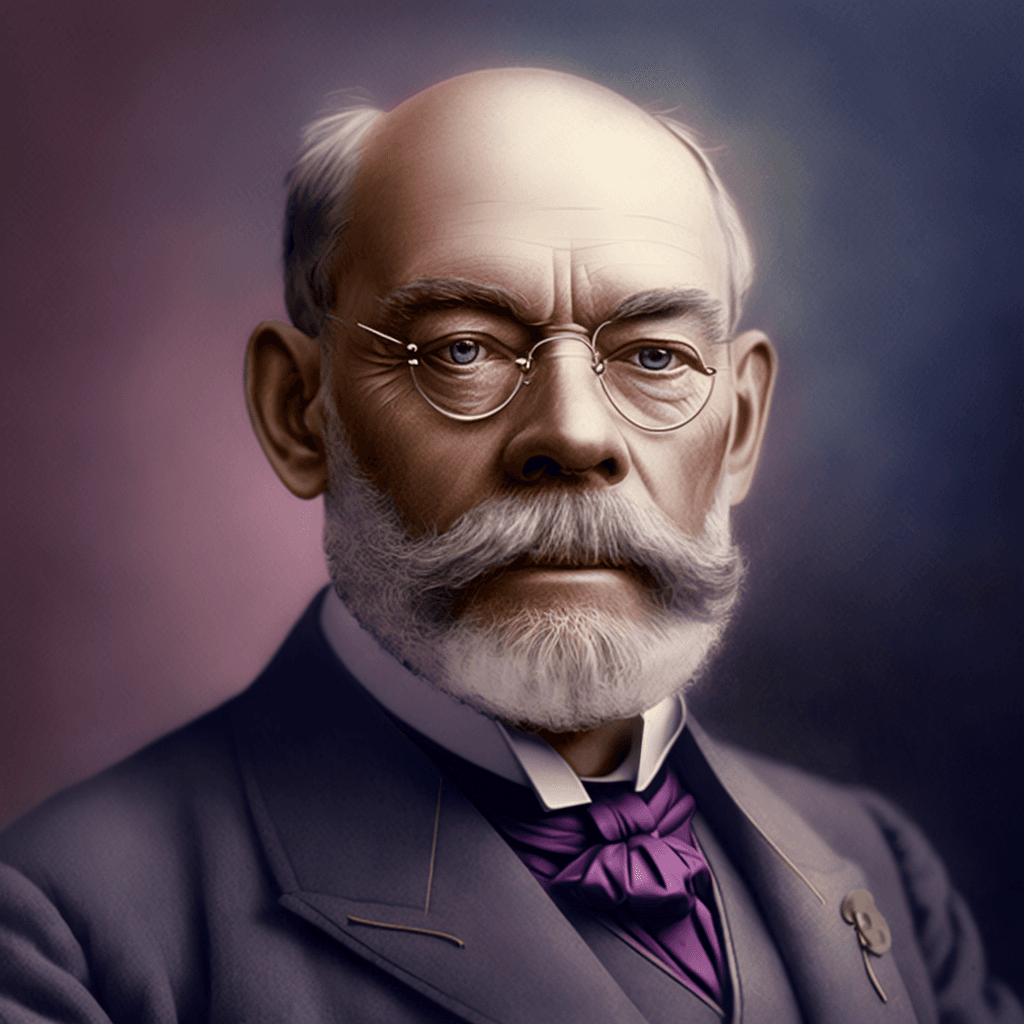
1843–1910
Physician • Microbiologist • Nobel Laureate
Né en 1843 à Clausthal dans les montagnes du Harz, Robert Heinrich Hermann Koch a d'abord pratiqué la médecine rurale avant de se tourner vers la microscopie dans un laboratoire à domicile. En 1876, il a démontré que le Bacillus anthracis causait l'anthrax, photographiant le cycle de vie de l'organisme et établissant des méthodes pour isoler des cultures bactériennes pures.
La présentation de Koch en 1882 à la Société physiologique de Berlin a identifié le Mycobacterium tuberculosis, le bacille responsable d'une maladie qui tuait un Européen sur sept. Ses quatre critères—connus sous le nom de postulats de Koch—devinrent la norme pour lier des microbes spécifiques à des maladies spécifiques, transformant la médecine d'une conjecture basée sur les symptômes vers une preuve en laboratoire.
Des expéditions en Égypte et en Inde ont permis d'isoler le Vibrio cholerae, bien que des disputes de priorité avec le chercheur italien Filippo Pacini aient persisté pendant des décennies. Koch a également poursuivi le tuberculine comme agent thérapeutique, un revers qui n'a pas diminué son influence institutionnelle en tant que directeur de l'Institut des maladies infectieuses à Berlin. Il est mort en 1910, laissant la microbiologie comme une discipline bâtie sur ses méthodes.
Moments clés de la vie et de l'héritage de cette figure
1843
Studied medicine at the University of Göttingen before serving as a district physician in rural East Prussia.
1876
Published proof that a specific bacterium caused anthrax, gaining attention from Ferdinand Cohn and the German scientific establishment.
1882
Announced discovery of the TB bacillus in Berlin, a moment later compared to Pasteur's rabies vaccine in significance.
1883
Isolated comma-shaped bacteria from cholera victims during epidemics, advancing understanding of waterborne disease.
1910
Died of a heart condition; Koch's methods had by then become standard practice in laboratories worldwide.
Jalons qui définissent la contribution de cette figure à l'histoire
Identified Mycobacterium tuberculosis in 1882, providing the first microbial explanation for history's deadliest chronic disease.
Established four criteria for proving that a microorganism causes a disease, foundational to modern medical microbiology.
Demonstrated the complete life cycle of Bacillus anthracis, pioneering photography of bacteria and solid culture media techniques.
Awarded for investigations and discoveries regarding tuberculosis, cementing his status as a founder of bacteriology.
Détails notables sur cette figure
Comment cette figure a façonné le monde que nous avons hérité
Les postulats de Koch et les techniques d'isolement ont donné à la médecine un moyen systématique d'identifier les agents pathogènes, permettant des vaccins, des antibiotiques et des interventions de santé publique qui ont sauvé des millions de vies. La recherche sur la tuberculose, le choléra et l'anthrax, fondée sur son travail, reste un pilier de la politique de santé mondiale.
Influence durable à travers les générations
Koch's postulates and isolation techniques gave medicine a systematic way to identify pathogens, enabling vaccines, antibiotics, and public health interventions that saved millions of lives. Tuberculosis, cholera, and anthrax research built on his work remain pillars of global health policy. Death in Baden-Baden (1910) remains a defining moment in Robert Koch's enduring reputation.
D'autres profils de la même époque ou du même domaine
Ressources éducatives sélectionnées pour approfondir
Entamez une conversation privée via Historical Collection AI.