First Law of Planetary Motion
Kepler showed that planets travel in elliptical orbits with the Sun at one focus, overturning centuries of circular models.
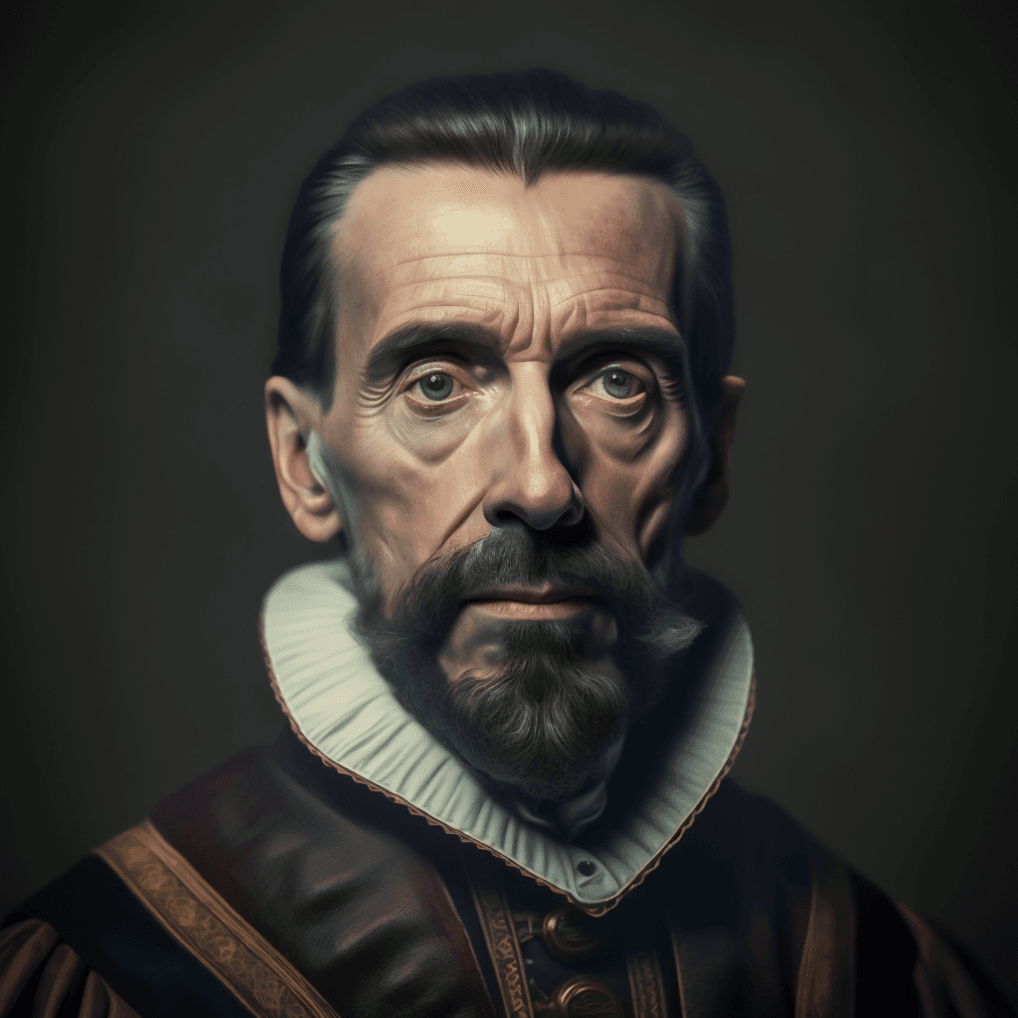
1571–1630
Astronomer • Mathematician • Laws of Planetary Motion
Иоганн Кеплер (Johannes Kepler) родился в 1571 году в Вайль-дер-Штадт в Священной Римской империи. Выросший в скромной лютеранской семье, он изучал теологию и математику в Тюбингене, где стал убеждённым коперниканцем. Плохое здоровье и финансовые трудности определяли большую часть его жизни, однако он продолжал заниматься астрономией с убеждением, что космический порядок отражает божественную геометрию.
После работы с Тихо Браге в Праге, Кеплер унаследовал лучшие предтелескопические наблюдательные записи в Европе. Из данных Тихо о Марсе он вывел, что планеты движутся по эллипсам с Солнцем в одном фокусе, охватывают равные площади за равные промежутки времени и подчиняются точной зависимости между орбитальным периодом и расстоянием. Опубликованные между 1609 и 1619 годами, эти законы придали математическую форму гелиоцентризму и подготовили почву для ньютоновской механики.
Кеплер также вычислил улучшенные таблицы для навигации и астрологии, изучал оптику и защищал свою мать во время суда по делу о колдовстве. Его сочетание строгих расчетов, метафизических спекуляций и эмпирической сдержанности сделало его центральной фигурой в Научной революции.
Ключевые моменты жизни и наследия этой личности
1571
Kepler was born prematurely in Weil der Stadt; childhood smallpox left him with weakened vision but did not stop his scholarly rise.
1600
He joined the imperial mathematician in Prague and gained access to meticulous naked-eye observations of Mars and other bodies.
1609
He published his first two laws of planetary motion after years of laborious calculation to fit Mars to an ellipse.
1619
Kepler announced the third planetary law and explored musical and geometric harmonies he believed governed the cosmos.
1630
He died while traveling to collect overdue pay from the imperial court, leaving manuscripts that influenced Newton and later astronomers.
Вехи, определяющие вклад этой личности в историю
Kepler showed that planets travel in elliptical orbits with the Sun at one focus, overturning centuries of circular models.
He demonstrated that a line from a planet to the Sun sweeps equal areas in equal intervals of time, describing changing orbital speed.
He established that the square of a planet's orbital period is proportional to the cube of its mean distance from the Sun.
His astronomical tables, completed in 1627, offered far more accurate planetary predictions than earlier ephemerides.
Примечательные детали об этой личности
Как эта личность изменила мир, который мы унаследовали
Законы Кеплера преобразовали астрономию из описательной геометрии в физически готовое описание движения. Доказав, что эмпирические данные могут опровергать древние авторитеты, он помог установить метод современного научного исследования и обеспечил Ньютону планетарную основу, позже объединённую под универсальным тяготением.
Влияние на последующие поколения
Kepler's laws transformed astronomy from descriptive geometry into a physics-ready description of motion. By proving that empirical data could overrule ancient authority, he helped establish the method of modern science and supplied Newton with the planetary framework later unified under universal gravitation. Death in Regensburg (1630) remains a defining moment in Johannes Kepler's enduring reputation.
Другие профили той же эпохи или области
Подобранные образовательные ресурсы для дальнейшего изучения
Начните беседу и изучите мудрость через Historical Collection AI.