Rubáiyát
Quatrains on life, fate, and the search for meaning that became a global literary touchstone.
1048–1131
Poet • Mathematician • Astronomer
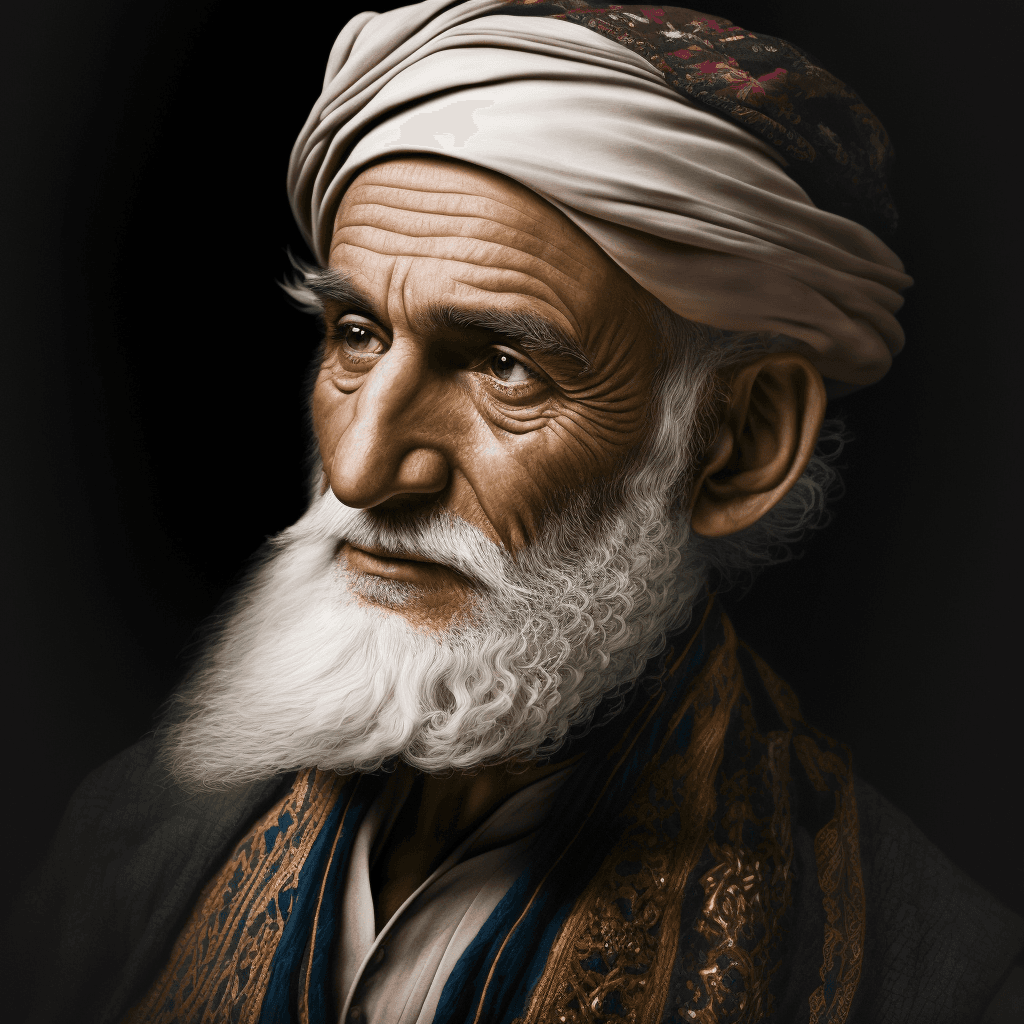
Омар Хайям (Omar Khayyam) родился в Нишапуре, на территории современного Ирана, в период интеллектуального подъема в исламском мире. Обученный математике, астрономии и философии, он служил при дворах в Исфахане и других местах, где покровительство способствовало как научной работе, так и практическим реформам. Его репутация при жизни основывалась в основном на математике и астрономии, а не на поэзии.
В математике Хайям сделал знаковые вклады в классификацию и решение кубических уравнений, предвосхитив методы, которые не будут полностью систематизированы в Европе на протяжении веков. Как астроном, он участвовал в реформе календаря, помогая создать Джалали календарь — удивительно точный солнечный календарь, который до сих пор используется в Иране. Его философские труды, включая обсуждения существования и необходимости, отражают взаимодействие с аристотелевской и исламской мыслью.
Куплеты Хайяма, позже собранные в «Рубайят», приобрели всемирную известность благодаря английскому переводу Эдварда Фицджеральда в девятнадцатом веке. Хотя не каждую строку можно с уверенностью приписать ему, стихи — размышляющие о смертности, удовольствии и границах человеческого знания — сформировали его образ как мудреца-поэта, чья научная строгость и лирический скептицизм перекликаются через культуры и века.
Ключевые моменты жизни и наследия этой личности
1048
Born in Khurasan during the Seljuk era, entering a region rich in scholarship and trade.
1070s
Composed influential works on algebra, including systematic study of cubic equations.
1074–1079
Led astronomical observations under royal patronage and contributed to calendar reform.
1079
Helped institute a refined solar calendar, correcting drift in earlier systems.
1131
Died in his native city; later generations would celebrate him as poet, mathematician, and sage.
Вехи, определяющие вклад этой личности в историю
Quatrains on life, fate, and the search for meaning that became a global literary touchstone.
Geometric methods for classifying and solving cubic equations, a major advance in algebra.
Solar calendar reform with exceptional accuracy, influencing Persian timekeeping for generations.
Observatory work and star catalogs that supported precise celestial calculations.
Примечательные детали об этой личности
Как эта личность изменила мир, который мы унаследовали
Омар Хайям стоит на пересечении науки Золотого века ислама и мировой литературы. Его алгебраические новшества повлияли на последующих математиков от аль-Туси до европейских ученых, в то время как его астрономическая работа олицетворяла стремление эпохи к измеримой точности. Благодаря «Рубайят», он стал одним из самых читаемых персидских голосов на Западе, символизируя гуманное отношение к неопределенности — где разум, удивление и принятие краткости жизни сосуществуют.
Влияние на последующие поколения
Omar Khayyam stands at a crossroads of Islamic Golden Age science and world literature. His algebraic innovations influenced later mathematicians from al-Tusi to European scholars, while his astronomical work embodied the era's drive toward measurable precision. Through the Rubáiyát, he became one of the most widely read Persian voices in the West, symbolizing a humane response to uncertainty—where reason, wonder, and acceptance of life's brevity coexist. Death in Nishapur (1131) remains a defining moment in Omar Khayyam's enduring reputation.
Другие профили той же эпохи или области
Подобранные образовательные ресурсы для дальнейшего изучения
Начните беседу и изучите мудрость через Historical Collection AI.