Fall of the Persian Empire
Defeated Darius III and seized the largest empire the Greek world had yet encountered.
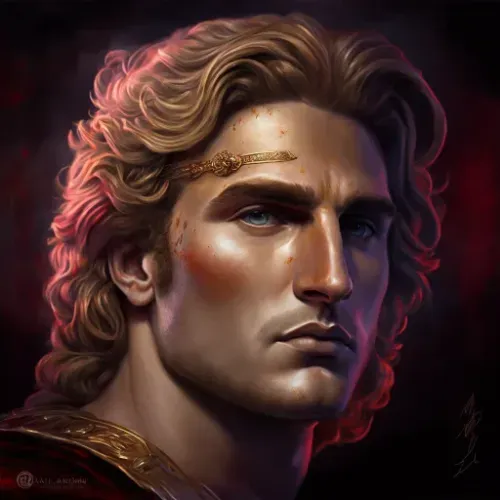
356–323 BC
Conqueror • Strategist • King
Alexander III of Macedon was tutored by Aristotle, immersed in Homeric ideals of heroism, and forged in the martial court of his father, Philip II. When Philip was assassinated in 336 BC, the twenty-year-old king secured Macedonia's throne and crushed rebellions in Greece. He then turned east, launching a campaign against the Persian Empire that would carry his armies across three continents.
Victories at Granicus, Issus, and Gaugamela shattered Persian power; Alexander absorbed Persian administration, married Roxana, and adopted elements of eastern kingship to hold his vast realm together. He founded cities—many named Alexandria—that became hubs of trade and Hellenistic culture from Egypt to Central Asia. Yet constant campaigning, court intrigue, and the strain of governing diverse peoples marked his reign as brilliant and unstable.
Alexander died in Babylon in 323 BC, likely from fever, leaving no clear successor. His empire fragmented among the Diadochi, but the Hellenistic world they built spread Greek language, art, and science from the Mediterranean to India. Alexander's life became legend—emblem of youthful ambition, military genius, and the paradox of conquest that unites and destroys in equal measure.
356 BC — Born in Pella. Raised in the Macedonian court under Philip II and tutored by Aristotle.
336 BC — Becomes King. Succeeded Philip II and secured power against rivals and rebellions.
334 BC — Invasion of Persia. Crossed into Asia Minor, beginning a decade of conquest.
331 BC — Battle of Gaugamela. Decisive victory over Darius III, opening the heartlands of Persia.
323 BC — Death in Babylon. Died at age thirty-two; empire divided among his generals.
Key moments across this figure's life and legacy
356 BC
Raised in the Macedonian court under Philip II and tutored by Aristotle.
336 BC
Succeeded Philip II and secured power against rivals and rebellions.
334 BC
Crossed into Asia Minor, beginning a decade of conquest.
331 BC
Decisive victory over Darius III, opening the heartlands of Persia.
323 BC
Died at age thirty-two; empire divided among his generals.
Landmarks that define this figure's contribution to history
Defeated Darius III and seized the largest empire the Greek world had yet encountered.
Spread Greek culture, urban planning, and koine Greek across Afro-Eurasia.
Established cities that became centers of learning, including Alexandria in Egypt.
Combined phalanx, cavalry, and adaptive tactics studied for millennia.
Notable details about this historical figure
How this figure shaped the world we inherit
Alexander's campaigns linked East and West in a new Hellenistic civilization whose art, science, and philosophy—including influences on Rome, Buddhism, and later Islamic scholarship—echo for centuries. He symbolizes the limits of empire: rapid expansion without durable institutions crumbled after his death, yet the cultural fusion he accelerated reshaped the ancient world. Military academies, literature, and political rhetoric still invoke Alexander when debating ambition, leadership, and the price of glory.
Enduring influence across generations
Alexander's campaigns linked East and West in a new Hellenistic civilization whose art, science, and philosophy—including influences on Rome, Buddhism, and later Islamic scholarship—echo for centuries. He symbolizes the limits of empire: rapid expansion without durable institutions crumbled after his death, yet the cultural fusion he accelerated reshaped the ancient world. Military academies, literature, and political rhetoric still invoke Alexander when debating ambition, leadership, and the price of glory. Death in Babylon (323 BC) remains a defining moment in Alexander the Great's enduring reputation.
Explore more profiles from the same era or field
Curated educational resources for further study
Start a private conversation and explore their wisdom through Historical Collection AI.