Conquest of Gaul
Extended Roman control across modern France and beyond, securing wealth and loyal legions.
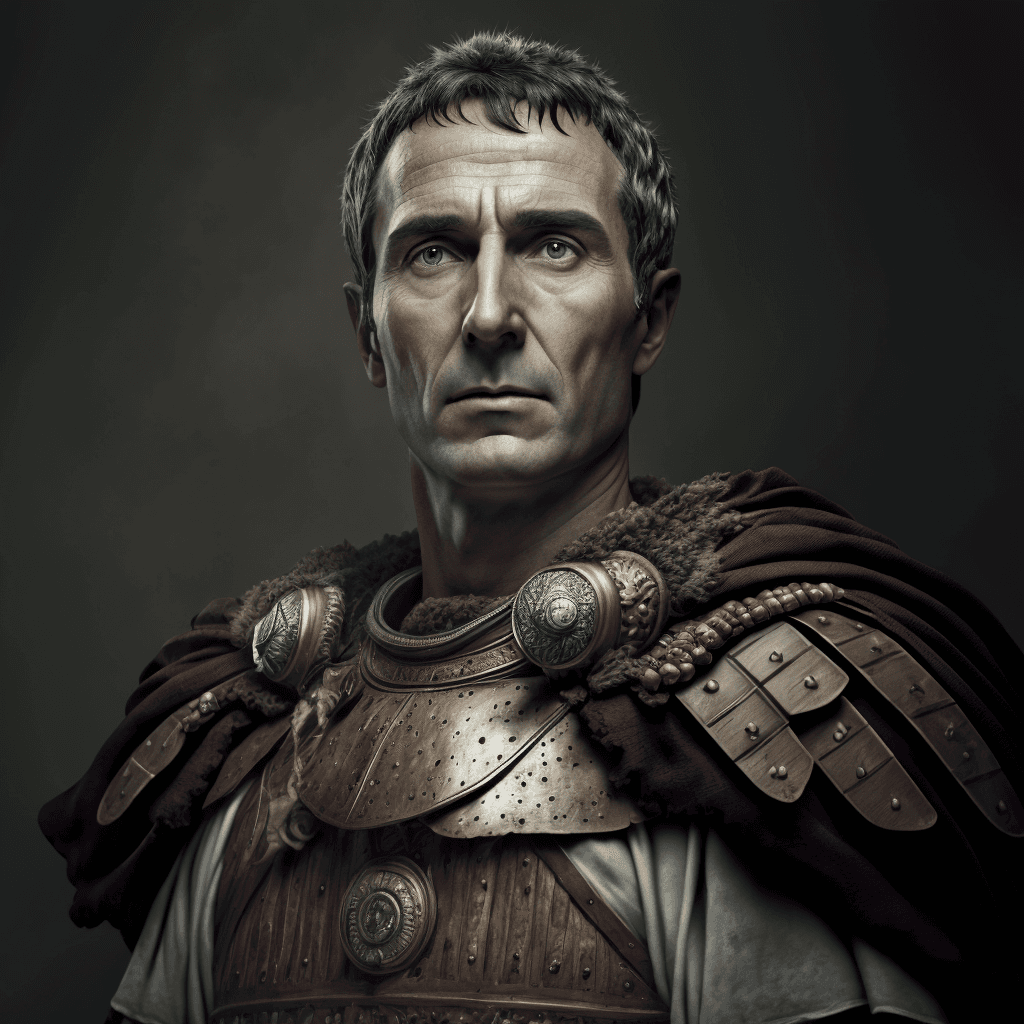
100–44 BC
General • Statesman • Dictator
Gaius Julius Caesar was born into a patrician family during the late Roman Republic, an era of fierce aristocratic rivalry and popular unrest. He rose through political alliances—including the First Triumvirate with Pompey and Crassus—and military command in Gaul, where eight years of campaigning expanded Roman territory to the Rhine and Britain's shores. His Commentaries on the Gallic War remain a classic of military prose and self-fashioning.
Caesar's crossing of the Rubicon in 49 BC ignited civil war against the Senate and Pompey. Victorious, he pursued campaigns from Spain to Egypt—where his alliance with Cleopatra secured resources and legitimacy—before returning to Rome as dictator. He reformed the calendar, extended citizenship, reduced debt, and planned public works, aiming to stabilize a state torn by decades of factional violence.
On the Ides of March, 44 BC, senators assassinated Caesar, fearing monarchical power. His death did not restore the Republic; instead it triggered new civil wars that ended with his adopted heir Octavian—Augustus—as Rome's first emperor. Caesar's name became synonymous with imperial authority (kaiser, czar), and his life marks the pivot from republic to empire in Western history.
100 BC — Born in Rome. Born into the Julian clan amid mounting republican instability.
58–50 BC — Gallic Wars. Commanded campaigns that brought vast territories under Roman rule.
49 BC — Crosses the Rubicon. Marched on Rome, beginning civil war against the Senate's forces.
45 BC — Dictator of Rome. Consolidated power and enacted calendar and administrative reforms.
44 BC — Assassination. Stabbed by conspirators on the Ides of March in the Senate house.
Key moments across this figure's life and legacy
100 BC
Born into the Julian clan amid mounting republican instability.
58–50 BC
Commanded campaigns that brought vast territories under Roman rule.
49 BC
Marched on Rome, beginning civil war against the Senate's forces.
45 BC
Consolidated power and enacted calendar and administrative reforms.
44 BC
Stabbed by conspirators on the Ides of March in the Senate house.
Landmarks that define this figure's contribution to history
Extended Roman control across modern France and beyond, securing wealth and loyal legions.
Introduced a solar calendar reform that remained standard in Europe for centuries.
Expanded citizenship, restructured debt, and centralized governance as dictator.
Firsthand account of campaigns that influenced military writing and Latin prose.
Notable details about this historical figure
How this figure shaped the world we inherit
Caesar's career crystallized the crisis of the Roman Republic: popular generals wielding armies against traditional senatorial authority. His reforms and dictatorship accelerated Rome's transformation into an empire whose law, language, and infrastructure shaped Europe and the Mediterranean for millennia. Military strategists, politicians, and historians still study his blend of audacity, propaganda, and statecraft—as both model and warning.
Enduring influence across generations
Caesar's career crystallized the crisis of the Roman Republic: popular generals wielding armies against traditional senatorial authority. His reforms and dictatorship accelerated Rome's transformation into an empire whose law, language, and infrastructure shaped Europe and the Mediterranean for millennia. Military strategists, politicians, and historians still study his blend of audacity, propaganda, and statecraft—as both model and warning. Assassination (44 BC) remains a defining moment in Julius Caesar's enduring reputation.
Explore more profiles from the same era or field
Curated educational resources for further study
Start a private conversation and explore their wisdom through Historical Collection AI.