The Three Musketeers
Created an enduring saga of d'Artagnan and the musketeers that defined historical adventure fiction.
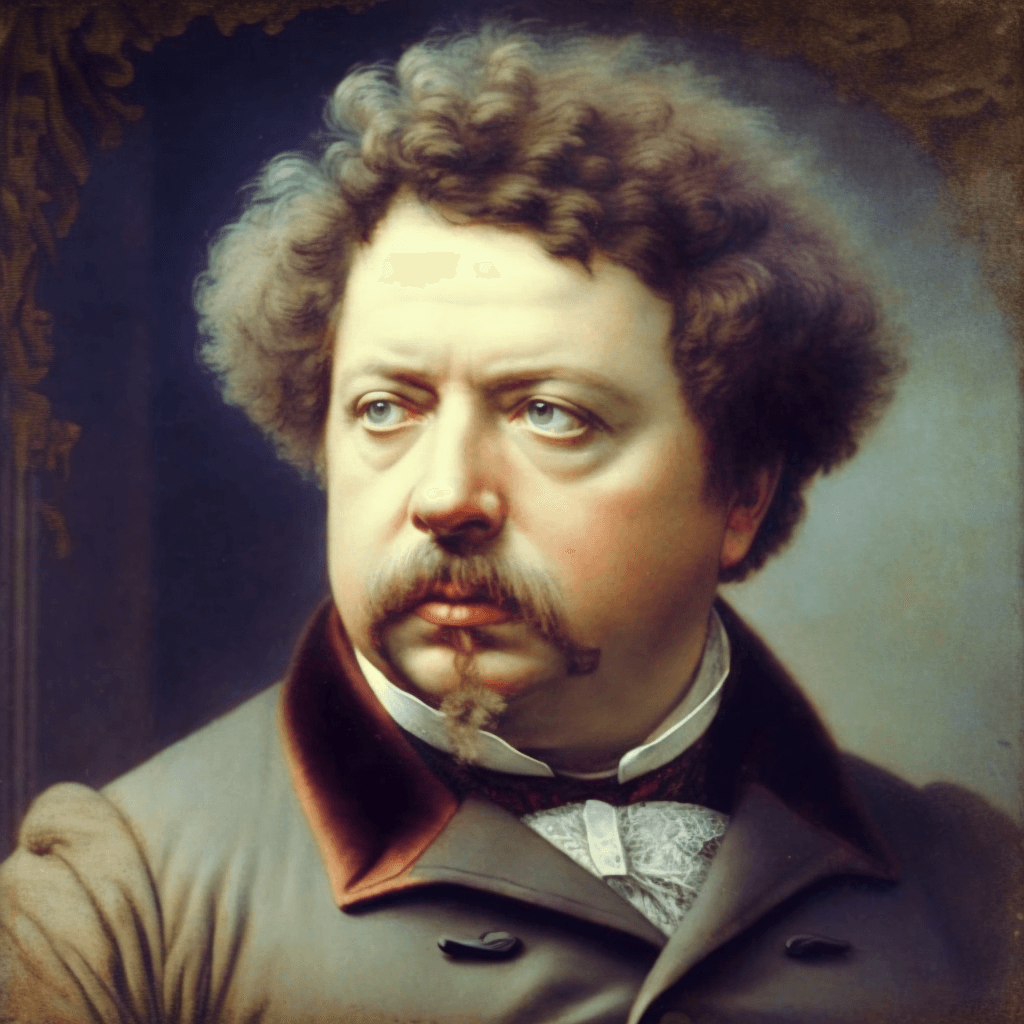
1802–1870
Novelist • Playwright • Storyteller
Alexandre Dumas was born on 24 July 1802 in Villers-Cotterets, Aisne, the son of General Thomas-Alexandre Dumas, a mixed-race officer who rose to general of division in the French Revolutionary armies, and Marie-Louise Labouret, daughter of a local innkeeper. General Dumas died in 1806 when Alexandre was four, leaving the family in modest circumstances despite the father's heroic reputation. Young Alexandre grew up listening to stories of his father's campaigns in Egypt and Italy, narratives of merit and racial prejudice within Revolutionary institutions that would later echo in his historical fiction. After moving to Paris he worked as a clerk for the Duc d'Orléans, acquiring access to theater and journalism while observing political intrigue under the July Monarchy. His early historical plays, including Henry III and His Court, drew crowds with swift dialogue, ceremonial spectacle, and a flair for dramatizing monarchy at moments of crisis. Dumas possessed enormous physical energy, reputedly dictating for hours while collaborators organized scenes, a working method that enabled staggering output. He embraced the Romantic movement's taste for color, adventure, and emotional excess while retaining a journalist's eye for serial cliffhangers. Paris in the 1830s and 1840s offered expanding literacy, cheap press, and a public hungry for narratives that connected present republican debates with France's monarchical past. Dumas's mixed ancestry made him a visible figure in conversations about race and citizenship, though he often coded personal grievance as universal adventure.
Dumas became one of the nineteenth century's most productive writers, often collaborating with assistants such as Auguste Maquet who helped research and draft serial installments later shaped by Dumas's voice. The Three Musketeers, serialized in 1844, revived France's seventeenth century as popular entertainment, introducing d'Artagnan, Athos, Porthos, and Aramis to global readership. The Count of Monte Cristo, serialized from 1844 to 1846, offered a vast narrative of wrongful imprisonment, hidden treasure, and calculated revenge that captivated readers across class lines. Dumas pioneered a business model tying literature to daily newspaper circulation, embedding fiction in Le Siècle and other journals so that readers followed plots as they followed politics. He founded the Théâtre Historique in Paris to stage his own dramatizations, merging authorship and entrepreneurship in ways that foreshadowed modern media franchises. Fortunes from serial rights funded a lavish lifestyle—château de Monte-Cristo, extravagant parties, mistresses, travel—that matched his heroic characters' appetites and eventually led to financial strain. Historical novels such as The Queen's Necklace and La Reine Margot displayed archival reading and a talent for set-piece action within documented events. Critics associated with Realism sometimes dismissed his work as commercial, yet Dumas mastered pacing, dialogue, and historical color with rare skill, influencing Stevenson, Hugo, and later adventure genres. Translations spread rapidly to England, Russia, and the Americas, making Dumas one of the most read French authors worldwide before cinema even existed.
Although Dumas spent freely and faced bankruptcy more than once, he continued writing until late life, producing memoirs and travel writing alongside fiction. He participated in political journalism during 1848 and maintained friendships with artists and revolutionaries, yet his primary legacy remained narrative rather than legislative. His father's story of racial barriers in Napoleonic France informed sensitivity to exclusion within celebratory adventure, visible when noble heroes defend outsiders or challenge corrupt privilege. Dumas died on 5 December 1870 at Puys, near Dieppe, during the Franco-Prussian War period, as France faced national crisis unrelated to but contemporaneous with his passing. After death, his son Alexandre Dumas fils, himself a major playwright, managed aspects of the literary estate while critical fashions shifted. Twentieth-century film, television, and comics repeatedly adapted his plots; Disney, Soviet cinema, and Hong Kong studios all found material in his musketeers and Monte Cristo. In 2002 France reinterred Dumas in the Panthéon, acknowledging both literary achievement and the nation's delayed recognition of his father's Revolutionary service and his own mixed heritage. Scholars now study collaboration practices in his workshop, debating authorship attribution while affirming his editorial genius. Dumas transformed history into mass entertainment without sacrificing narrative complexity, training generations to follow long plots and to see literature as part of daily public life. His name remains synonymous with swashbuckling narrative and the democratization of literary pleasure in the age of print. Theatre historians note how Dumas's melodramatic instincts shaped later screenplay structure, and bibliographers still identify collaborative passages in serial novels through stylometric comparison. Restoration of Château de Monte-Cristo as a museum attracts readers tracing the author's extravagant domestic life. Dumas's journalism on Italy's unification and on criminal justice reform shows a writer engaged with current events even when fame rested on musketeers and counts of adventure. Academic conferences regularly revisit his workshop of collaborators as an early modern literary factory anticipating Hollywood writers' rooms. Literary tourists still walk Paris routes associated with his serial installments, connecting fiction to journalism's physical geography. Dumas societies in France and the United States maintain archives of playbills and newspaper clippings documenting his astonishing output.
1802 — Born in Villers-Cotterets. Born to General Thomas-Alexandre Dumas and Marie-Louise Labouret in northern France.
1829 — Henry III and His Court. Scored a theatrical triumph that opened Parisian doors to the young author.
1844 — The Three Musketeers Serial. Published the first installments of his most famous adventure novel.
1844–1846 — Monte Cristo Serial. Released The Count of Monte Cristo in newspaper episodes to enormous readership.
1870 — Death at Puys. Died at sixty-eight near Dieppe during the Franco-Prussian War period.
Key moments across this figure's life and legacy
1802
Born to General Thomas-Alexandre Dumas and Marie-Louise Labouret in northern France.
1829
Scored a theatrical triumph that opened Parisian doors to the young author.
1844
Published the first installments of his most famous adventure novel.
1844–1846
Released The Count of Monte Cristo in newspaper episodes to enormous readership.
1870
Died at sixty-eight near Dieppe during the Franco-Prussian War period.
Landmarks that define this figure's contribution to history
Created an enduring saga of d'Artagnan and the musketeers that defined historical adventure fiction.
Authored a monumental novel of wrongful imprisonment and elaborate revenge serialized to vast audiences.
Pioneered newspaper serialization that linked popular fiction to daily press circulation.
Achieved early success with plays that brought French history to contemporary stages.
Notable details about this historical figure
How this figure shaped the world we inherit
Dumas transformed history into mass entertainment without sacrificing narrative complexity. His serial novels trained generations of readers to follow long plots and identified fiction with daily public life. By foregrounding a mixed-race Revolutionary hero in his family background and populating novels with outsiders who triumph through wit and loyalty, he also contributed to broader conversations about race, merit, and republican identity in nineteenth-century France.
Enduring influence across generations
Dumas transformed history into mass entertainment without sacrificing narrative complexity. His serial novels trained generations of readers to follow long plots and identified fiction with daily public life. By foregrounding a mixed-race Revolutionary hero in his family background and populating novels with outsiders who triumph through wit and loyalty, he also contributed to broader conversations about race, merit, and republican identity in nineteenth-century France. Death at Puys (1870) remains a defining moment in Alexandre Dumas's enduring reputation.
Explore more profiles from the same era or field
Curated educational resources for further study
Start a private conversation and explore their wisdom through Historical Collection AI.