Global Reggae Popularization
Led the Wailers and solo career that introduced reggae rhythms and Rastafarian themes to international charts.
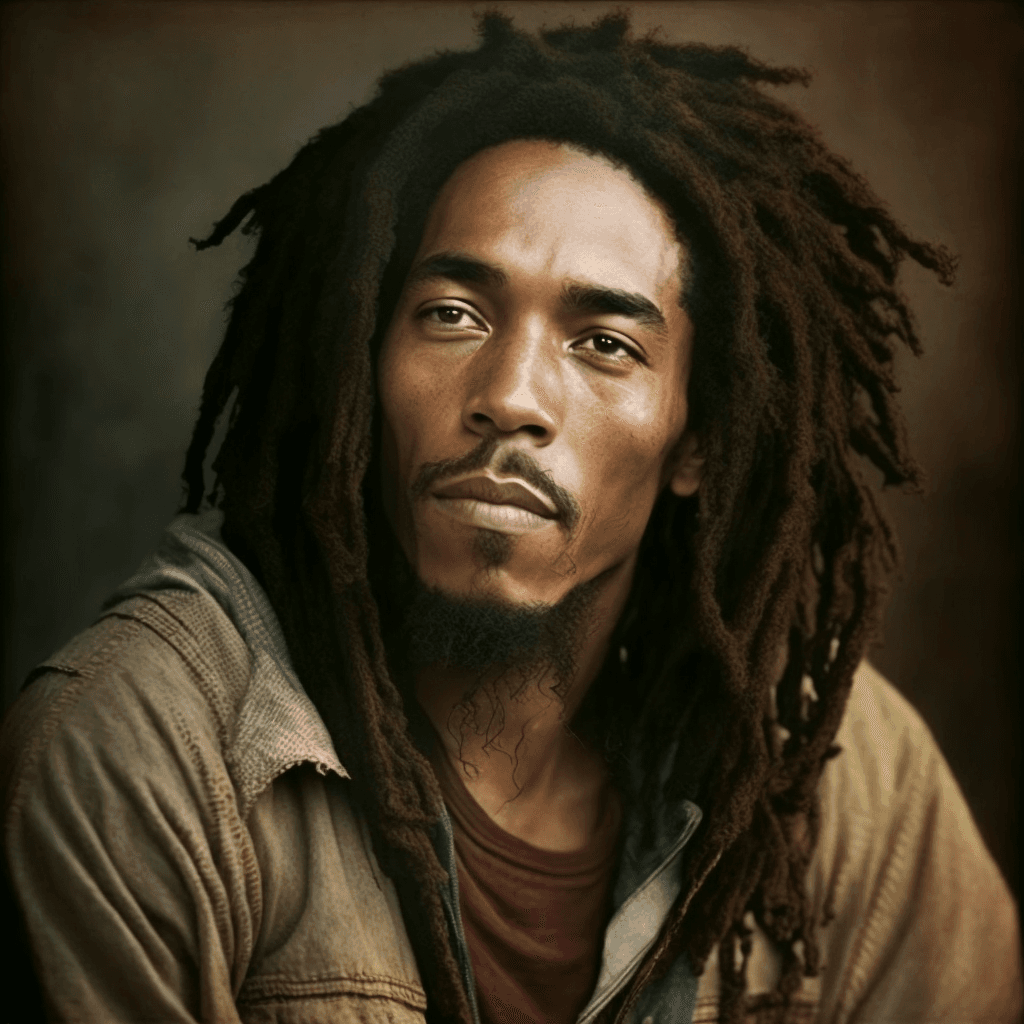
1945–1981
Musician • Reggae Icon • Voice of Unity
Robert Nesta Marley was born on 6 February 1945 in Nine Mile, Saint Ann Parish, Jamaica, to Cedella Booker, a Black teenager, and Norval Sinclair Marley, a white English plantation overseer who barely participated in his upbringing. Raised in rural poverty then Trenchtown, Kingston's dense postwar settlement, he absorbed ska, rocksteady, and sound-system culture where mobile DJs competed on bass-heavy setups that reshaped Caribbean rhythm. Early life included street football, Rastafarian neighborhood influence, and apprenticeship with local musicians such as Joe Higgs, who taught vocal harmony and guitar basics. With Peter Tosh and Bunny Wailer he formed the Wailers in 1963, recording early tracks with producer Clement Coxsone Dodd at Studio One before tensions over payment and creative control led to departures and reconfigurations. Marley's distinctive voice—plaintive yet firm—carried lyrics about oppression, redemption, and spiritual devotion rooted in Rastafarian belief in Haile Selassie I as divine figure and Ethiopia as symbolic homeland. Trenchtown's corrugated zinc fences, political gang affiliations, and economic scarcity informed songs that universalized local struggle into pan-African solidarity. Marriage to Rita Anderson and adoption of Rastafarian dreadlocks and ital diet marked public religious commitment that both attracted followers and provoked middle-class Jamaican suspicion. Island Records founder Chris Blackwell signed the Wailers in 1972, pairing reggae with rock production values on Catch a Fire and Burnin', introducing international rock audiences to Jamaican syncopation. Marley navigated complex band dynamics as Tosh and Wailer eventually left for solo careers while he continued as Bob Marley and the Wailers with new musicians including the Barrett brothers.
Albums such as Natty Dread, Rastaman Vibration, Exodus, and Kaya blended reggae's offbeat guitar skank with horn lines, dub effects, and political message that reached charts in Britain, Africa, and North America. Songs like No Woman, No Cry, Jamming, Waiting in Vain, and One Love translated Kingston experience into anthems performed on every continent. Exodus, recorded partly in London after Marley left Jamaica following the 1976 assassination attempt, pairs escape themes with hits including Three Little Birds. Redemption Song, largely acoustic, invoked Marcus Garvey and emancipation from mental slavery, showing Marley's range beyond band arrangements. Surviving gunfire at his Hope Road home on 3 December 1976 during Jamaica's violent election season between Michael Manley's PNP and Edward Seaga's JLP, Marley performed two days later at Smile Jamaica concert, then continued touring internationally. The 1978 One Love Peace Concert in Kingston saw him join hands with Manley and Seaga onstage, a symbolic gesture amid real paramilitary divisions historians debate as symbolic versus substantive. Touring brought Marley to Zimbabwe independence celebrations in 1980, linking reggae to African liberation movements and diasporic return narratives. Recordings with Lee Scratch Perry earlier in career left experimental dub footprints; later Island productions polished sound for radio without losing rhythmic identity. Marley's global fame made Rastafarian symbols—lion of Judah, red-gold-green—visible in fashion and poster culture worldwide, sometimes detached from theological context.
Marley died on 11 May 1981 in Miami at thirty-six from melanoma that had spread from a toe injury; he had declined amputation for religious and performance reasons, a decision doctors later said allowed metastasis. His funeral in Jamaica combined state ceremony with Rastafarian ritual at Nine Mile and Kingston, drawing massive crowds and international media. Posthumous compilation Legend became one of the best-selling albums worldwide, anchoring reggae in global popular culture decades after his death. Critics debate commercialization of his image on merchandise ranging from coffee to college posters, yet his music remains central to reggae's identity and to movements invoking dignity and decolonization. Artists from Youssou N'Dour to Lauryn Hill cite Marley as influence; Jamaican tourism economy partly rests on pilgrimage sites at Nine Mile and Tuff Gong studio. Scholars analyze his negotiation of race, religion, and gender in patriarchal Rastafarian culture, noting both progressive messaging and traditional limits. Marley turned a Jamaican religious and musical subculture into a worldwide language of protest and hope. His songs provided soundtracks for anti-apartheid campaigns, human rights festivals, and solidarity concerts across Africa, Europe, and the Americas. By linking rhythm to Rastafarian ethics and postcolonial identity, he reshaped how popular music could carry theology, politics, and diasporic pride simultaneously. Marley remains among the most recognized performers of the twentieth century, his face as ubiquitous as his message is interpreted anew by each generation encountering reggae's pulse. Ethnomusicologists analyze his adaptation of Nyabinghi rhythms and rocksteady bass lines into arrangements accessible to rock radio without diluting syncopation. Jamaican government declared his birthday national holiday in 2019, formalizing cultural status debated for decades. Documentary archives at University of West Indies preserve concert footage showing crowd responses during politically tense 1970s Kingston seasons. Streaming platforms report steady global listenership decades after his death, proof that reggae's message of dignity retains cross-generational appeal. Reggae festivals from North America to Africa program his catalog as closing sets, treating songs as shared civic ritual.
1945 — Born in Nine Mile. Born in rural Saint Ann Parish and later moved to Trenchtown, Kingston.
1963 — The Wailers Formed. Co-founded the vocal group that became the backbone of his early recordings.
1976 — Assassination Attempt. Survived gunfire at his Hope Road home during Jamaica's political crisis.
1978 — One Love Peace Concert. Appeared onstage urging unity between Michael Manley and Edward Seaga.
1981 — Death in Miami. Died in Florida from cancer; buried in a state funeral at Nine Mile, Jamaica.
Key moments across this figure's life and legacy
1945
Born in rural Saint Ann Parish and later moved to Trenchtown, Kingston.
1963
Co-founded the vocal group that became the backbone of his early recordings.
1976
Survived gunfire at his Hope Road home during Jamaica's political crisis.
1978
Appeared onstage urging unity between Michael Manley and Edward Seaga.
1981
Died in Florida from cancer; buried in a state funeral at Nine Mile, Jamaica.
Landmarks that define this figure's contribution to history
Led the Wailers and solo career that introduced reggae rhythms and Rastafarian themes to international charts.
Recorded albums addressing exile, liberation, and social justice during Jamaica's turbulent 1970s.
Performed at a 1978 Kingston concert promoting reconciliation between rival political factions.
Became one of the world's best-selling artists, with Legend anchoring reggae in global popular culture.
Notable details about this historical figure
How this figure shaped the world we inherit
Marley turned a Jamaican religious and musical subculture into a worldwide language of protest and hope. His songs provided soundtracks for anti-apartheid campaigns, human rights movements, and festivals across Africa, Europe, and the Americas. By linking rhythm to Rastafarian ethics and postcolonial identity, he reshaped how popular music could carry theology, politics, and diasporic pride simultaneously.
Enduring influence across generations
Marley turned a Jamaican religious and musical subculture into a worldwide language of protest and hope. His songs provided soundtracks for anti-apartheid campaigns, human rights movements, and festivals across Africa, Europe, and the Americas. By linking rhythm to Rastafarian ethics and postcolonial identity, he reshaped how popular music could carry theology, politics, and diasporic pride simultaneously. Death in Miami (1981) remains a defining moment in Bob Marley's enduring reputation.
Explore more profiles from the same era or field
Curated educational resources for further study
Start a private conversation and explore their wisdom through Historical Collection AI.