Rock and Roll Breakthrough
Sun Studio recordings bridged racially segregated musical traditions into a new mainstream genre.
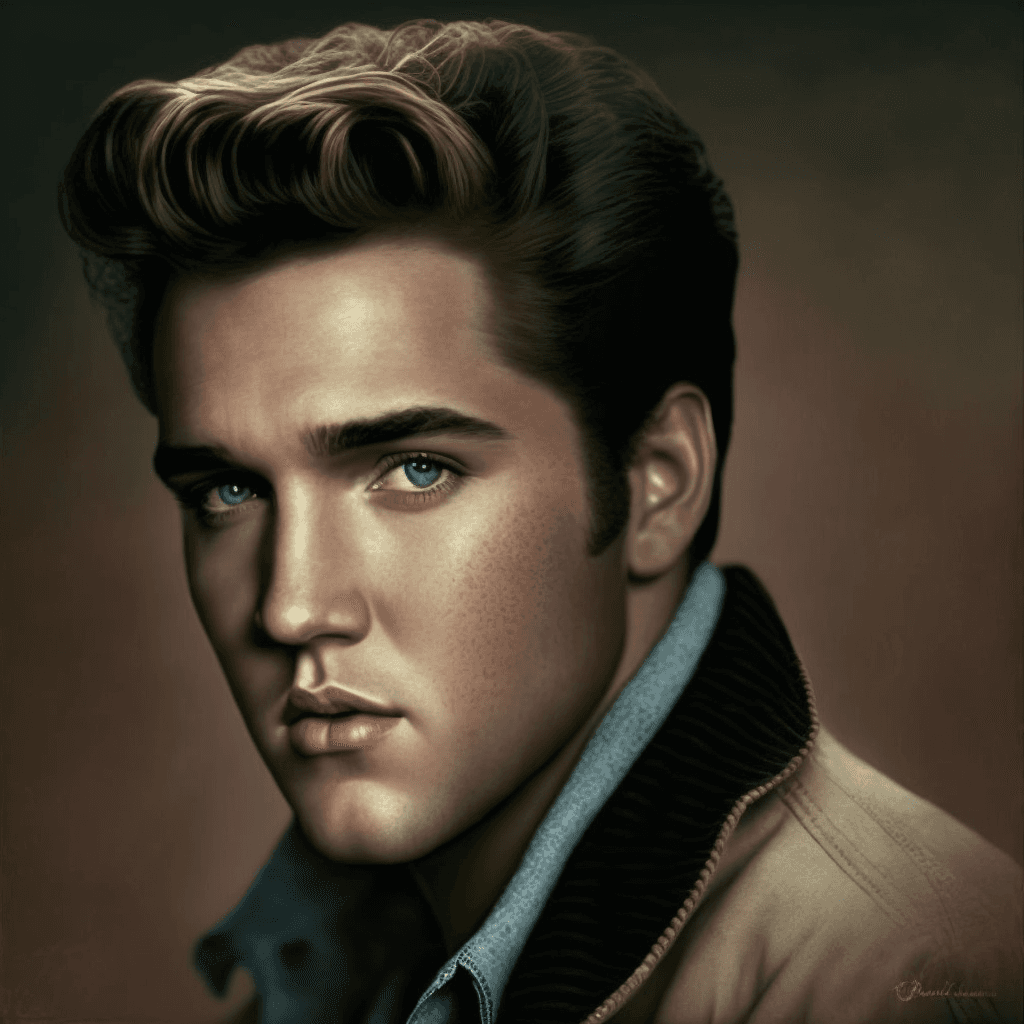
1935–1977
Singer • Rock and Roll Icon
Elvis Aaron Presley was born in 1935 in Tupelo, Mississippi, and moved to Memphis as a teenager, absorbing the musical crossroads of Beale Street, church choirs, and radio broadcasts. He recorded at Sun Studio in 1954 with producer Sam Phillips, who sought a white singer who could deliver black rhythm-and-blues with authentic feel. 'That's All Right' announced a sound that was simultaneously familiar and shocking to segregated America.
National fame arrived through television appearances that showcased Presley's voice, charisma, and hip movements deemed provocative by guardians of public morality. RCA Victor bought out his Sun contract, and hits such as 'Heartbreak Hotel,' 'Hound Dog,' and 'Jailhouse Rock' dominated charts while he filmed a string of profitable movies. Military service in Germany from 1958 to 1960 interrupted but did not end his career; the 1968 television comeback special reasserted his relevance before Las Vegas residencies and arena tours defined his seventies.
Presley's later years mixed spectacular live performance with prescription drug dependence, weight gain, and isolation at Graceland. He died in Memphis in August 1977 at forty-two, prompting global mourning. Graceland became a pilgrimage site, and sales of his recordings continued to break records decades after his death, cementing his status as the best-selling solo artist in popular music history.
1954 — Sun Studio Sessions. Recorded 'That's All Right' with Scotty Moore and Bill Black at Sun Records.
1956 — National Breakthrough. Released 'Heartbreak Hotel' and appeared on national television to enormous audiences.
1958 — Army Enlistment. Drafted into the U.S. Army and stationed in Germany for two years.
1968 — Comeback Special. Aired the '68 Comeback Special, ending years of declining critical respect.
1977 — Death at Graceland. Found unresponsive at his Memphis home; cardiac arrhythmia cited as cause.
Key moments across this figure's life and legacy
1954
Recorded 'That's All Right' with Scotty Moore and Bill Black at Sun Records.
1956
Released 'Heartbreak Hotel' and appeared on national television to enormous audiences.
1958
Drafted into the U.S. Army and stationed in Germany for two years.
1968
Aired the '68 Comeback Special, ending years of declining critical respect.
1977
Found unresponsive at his Memphis home; cardiac arrhythmia cited as cause.
Landmarks that define this figure's contribution to history
Sun Studio recordings bridged racially segregated musical traditions into a new mainstream genre.
Ed Sullivan and other broadcasts made him the first true multimedia pop superstar.
Revived his artistic credibility with a raw, intimate televised performance.
Posthumous catalog sales exceeded one billion units worldwide.
Notable details about this historical figure
How this figure shaped the world we inherit
Presley accelerated the cultural integration of African American musical forms into a white-dominated entertainment industry, for better and worse. His image—quiff, jumpsuit, snarl—became shorthand for American youth rebellion and later for nostalgic commercialism. Generations of musicians from the Beatles to hip-hop producers cite him as the template for pop stardom built on charisma, controversy, and constant reinvention.
Enduring influence across generations
Presley accelerated the cultural integration of African American musical forms into a white-dominated entertainment industry, for better and worse. His image—quiff, jumpsuit, snarl—became shorthand for American youth rebellion and later for nostalgic commercialism. Generations of musicians from the Beatles to hip-hop producers cite him as the template for pop stardom built on charisma, controversy, and constant reinvention. Death at Graceland (1977) remains a defining moment in Elvis Presley's enduring reputation.
Explore more profiles from the same era or field
Curated educational resources for further study
Start a private conversation and explore their wisdom through Historical Collection AI.