Periodic Table of Elements
Arranged elements by atomic weight in 1869, grouping them by recurring chemical properties.
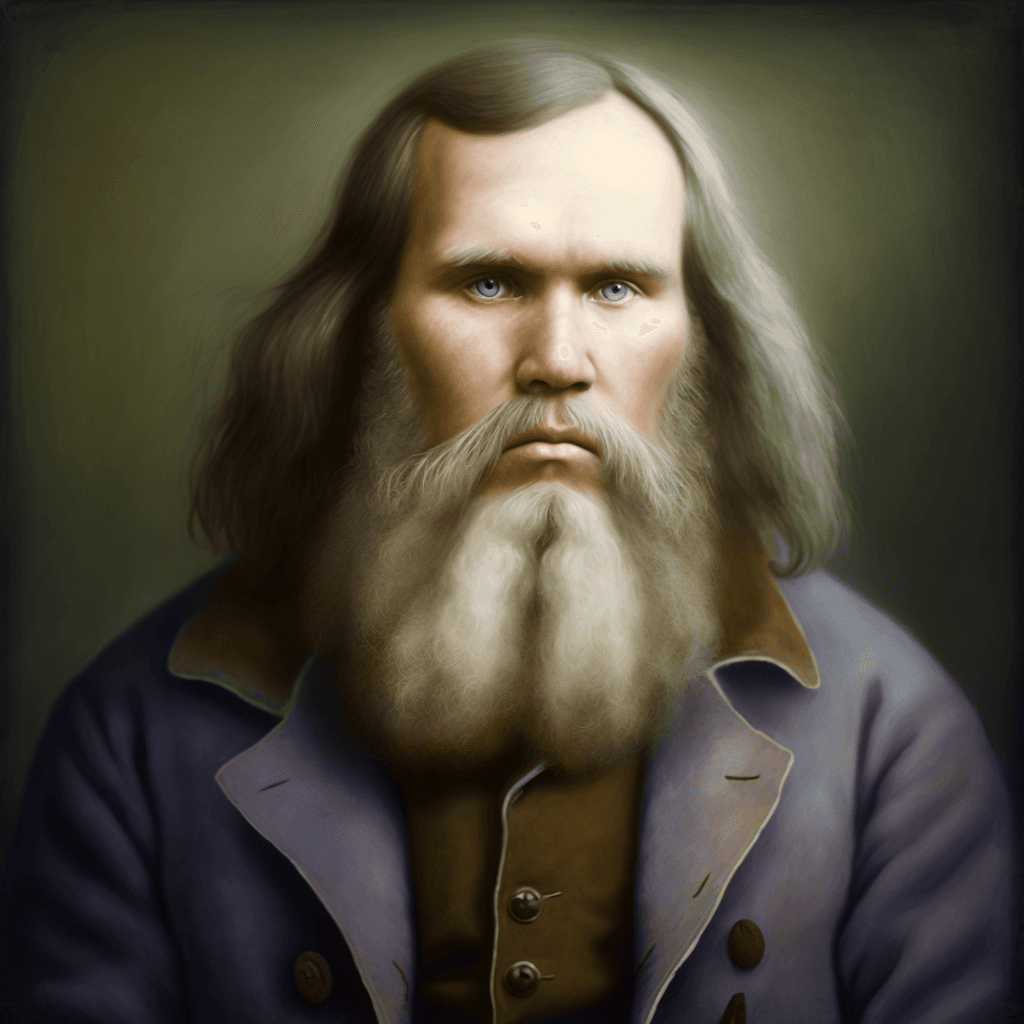
1834–1907
Chemist • Creator of the Periodic Table
Dmitri Ivanovich Mendeleev was born on 8 February 1834 in Tobolsk, Siberia, the youngest of more than a dozen children in a family headed by a director of the local gymnasium; after his father's blindness and early death, his mother took him to St Petersburg to pursue university education against financial odds. He studied at the Main Pedagogical Institute and later in Heidelberg, absorbing the latest European research on atomic weights and chemical classification. Mendeleev taught in Odessa and St Petersburg, wrote textbooks, investigated petroleum and metallurgy, and participated in Russian industrial policy as a consultant on tariffs and technology. His mind moved constantly between abstract theory and the practical needs of a modernizing empire.
In 1869 Mendeleev published an arrangement of the sixty-three then-known elements in order of increasing atomic weight, leaving gaps where properties suggested undiscovered substances. He predicted the existence and characteristics of elements he called eka-aluminium, eka-boron, and eka-silicon—later identified as gallium, scandium, and germanium—demonstrating that his table was not mere cataloguing but a map of nature's logic. The periodic law he articulated—that element properties recur periodically with atomic weight—survived revisions when atomic number replaced weight as the organizing principle in the twentieth century. Mendeleev defended his system in lectures across Europe, resisted spiritualist fads that infected some scientific circles, and became a celebrity of Russian science while feuding occasionally with rivals over priority and interpretation.
Beyond chemistry, Mendeleev researched balloon ascent, Arctic shipping routes, and the metric system, and he helped found the Russian Chemical Society. He married twice, faced personal tragedies including the death of his first wife, and served on government commissions that linked science to economic development under tsarist administration. He died in St Petersburg on 2 February 1907, honored as a national icon whose beard and stern portraits adorned classrooms from Moscow to Chicago. The periodic table became one of science's most recognizable diagrams, printed on posters, mugs, and textbooks as the alphabet of matter itself. Mendeleev proved that classification could be discovery—that empty spaces in a chart could predict real elements waiting in the earth.
1834 — Born in Tobolsk. Raised in Siberia before his mother moved the family to St Petersburg for his education.
1869 — Periodic Law Published. Presented the first widely recognized periodic table in Zeitschrift für Chemie.
1875 — Gallium Confirms Prediction. French discovery of gallium matched Mendeleev's predicted eka-aluminium properties.
1893 — Director of Bureau of Weights. Oversaw Russian standards for weights and measures in St Petersburg.
1907 — Death in St Petersburg. Died at seventy-two as his table had become chemistry's central organizing framework.
Key moments across this figure's life and legacy
1834
Raised in Siberia before his mother moved the family to St Petersburg for his education.
1869
Presented the first widely recognized periodic table in Zeitschrift für Chemie.
1875
French discovery of gallium matched Mendeleev's predicted eka-aluminium properties.
1893
Oversaw Russian standards for weights and measures in St Petersburg.
1907
Died at seventy-two as his table had become chemistry's central organizing framework.
Landmarks that define this figure's contribution to history
Arranged elements by atomic weight in 1869, grouping them by recurring chemical properties.
Forecast properties of gallium, scandium, and germanium before their isolation confirmed his system.
Authored influential textbooks that standardized chemical education in Russian and European universities.
Advised the Russian government on tariffs, petroleum, and metrology, linking science to economic planning.
Notable details about this historical figure
How this figure shaped the world we inherit
Mendeleev's periodic table gave chemistry a predictive language that guided discovery of new elements, understanding of atomic structure, and teaching across every level of science education. It remains among the most powerful examples of how pattern recognition can unlock natural law.
Enduring influence across generations
Mendeleev's periodic table gave chemistry a predictive language that guided discovery of new elements, understanding of atomic structure, and teaching across every level of science education. It remains among the most powerful examples of how pattern recognition can unlock natural law. Death in St Petersburg (1907) remains a defining moment in Dmitri Mendeleev's enduring reputation.
Explore more profiles from the same era or field
Curated educational resources for further study
Start a private conversation and explore their wisdom through Historical Collection AI.