Schrödinger Equation
Formulated the central equation of non-relativistic quantum wave mechanics.
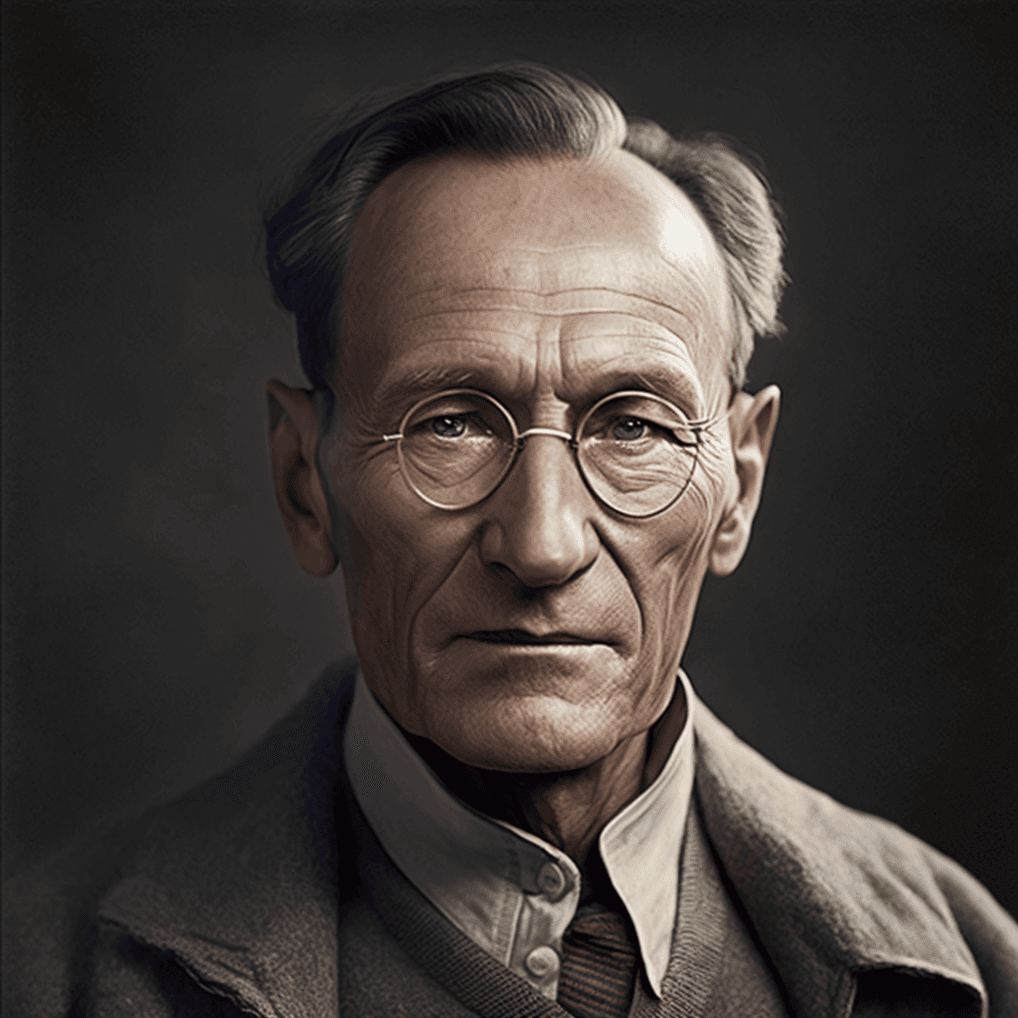
1887–1961
Physicist • Quantum Mechanics Pioneer
Erwin Schrödinger was born in Vienna in 1887 to a scientifically literate household—his father ran a linoleum factory but cultivated botany and physics—and studied under luminaries such as Franz Exner and Friedrich Hasenöhrl at the University of Vienna. He held posts across Europe, including Zurich, where in 1926 he published a series of papers deriving the Schrödinger equation, a mathematical framework describing how quantum wave functions evolve over time.
The equation offered a rival formulation to matrix mechanics developed by Heisenberg and Born, and the two approaches were soon shown to be equivalent. Schrödinger preferred wave mechanics for its visual continuity with classical physics, yet he remained uneasy about the probabilistic interpretation that Born attached to the wave function's square. His 1935 thought experiment involving a cat simultaneously alive and dead until observed became the most famous popular illustration of quantum superposition and measurement problems.
Political upheaval drove Schrödinger from Germany after the Nazis rose to power; he eventually settled in Dublin as director of the Institute for Advanced Studies, where he wrote What Is Life?, a book that influenced Watson and Crick's search for the structure of DNA. He returned to Vienna after the war and died there in 1961, having bridged foundational physics, biology, and philosophy with a prose clarity rare among his peers.
1926 — Wave Equation Published. Released papers establishing wave mechanics during his Zurich professorship.
1933 — Nobel Prize in Physics. Shared the prize with Paul Dirac for atomic theory contributions.
1935 — Cat Paradox Essay. Published the thought experiment challenging naive interpretations of quantum states.
1940 — Dublin Institute. Became director at the Dublin Institute for Advanced Studies amid wartime exile.
1961 — Death in Vienna. Died of tuberculosis at seventy-three in the city where he began his scientific career.
Key moments across this figure's life and legacy
1926
Released papers establishing wave mechanics during his Zurich professorship.
1933
Shared the prize with Paul Dirac for atomic theory contributions.
1935
Published the thought experiment challenging naive interpretations of quantum states.
1940
Became director at the Dublin Institute for Advanced Studies amid wartime exile.
1961
Died of tuberculosis at seventy-three in the city where he began his scientific career.
Landmarks that define this figure's contribution to history
Formulated the central equation of non-relativistic quantum wave mechanics.
Provided an alternative to matrix mechanics that unified much of early quantum theory.
Illustrated measurement and superposition problems that still anchor quantum debates.
Proposed that genetic information might be stored in an 'aperiodic crystal,' inspiring molecular biology.
Notable details about this historical figure
How this figure shaped the world we inherit
Schrödinger's equation remains the daily working language of chemists, condensed-matter physicists, and quantum engineers. His cat turned abstruse physics into dinner-table philosophy, ensuring that quantum weirdness entered general culture. The biological speculations in What Is Life? helped steer mid-century research toward genetics as an information problem rather than purely a chemical one.
Enduring influence across generations
Schrödinger's equation remains the daily working language of chemists, condensed-matter physicists, and quantum engineers. His cat turned abstruse physics into dinner-table philosophy, ensuring that quantum weirdness entered general culture. The biological speculations in What Is Life? helped steer mid-century research toward genetics as an information problem rather than purely a chemical one. Death in Vienna (1961) remains a defining moment in Erwin Schrödinger's enduring reputation.
Explore more profiles from the same era or field
Curated educational resources for further study
Start a private conversation and explore their wisdom through Historical Collection AI.