Conquest of Kazan and Astrakhan
Annexed Volga Tatar khanates in the 1550s, securing trade routes and Muslim subjects under Moscow.
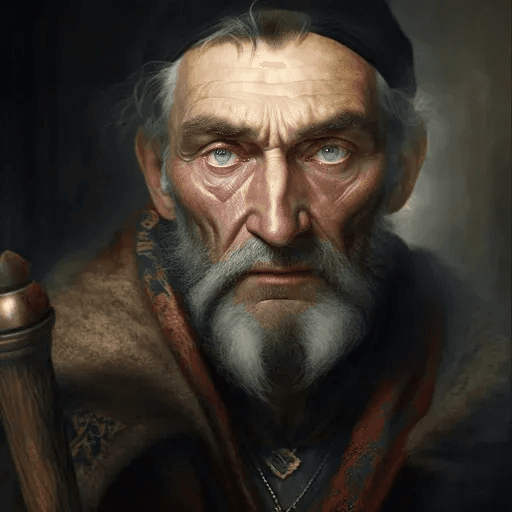
1530–1584
Tsar • Unifier of Russia
Ivan IV was born in 1530 at Kolomenskoye near Moscow, crowned grand prince at three after his father Vasili III died, and enthroned as tsar at sixteen in a ceremony that claimed continuity with Byzantine and Roman imperial titles. Boyar factions competed during his minority, and court intrigue hardened his suspicion of the aristocracy. Early reforms included convening the first Zemsky Sobor, updating the law code known as Sudebnik, and expanding printing under Moscow's new press. Military campaigns against the Khanates of Kazan and Astrakhan opened the Volga corridor to Russian trade and settlement, victories celebrated in church bells and folk song.
The middle decades of Ivan's reign turned darker. The death of his wife Anastasia Romanovna in 1560, whether by illness or poison, deepened his paranoia. He created the oprichnina in 1565, a separate domain guarded by black-clad oprichniki who terrorized suspected boyars, confiscated estates, and sacked Novgorod in 1570 amid accusations of treason. Personal grief compounded political violence: he killed his son and heir Ivan in a rage in 1581, an act immortalized in Ilya Repin's painting though details remain disputed. Wars against Poland-Lithuania, Sweden, and the Crimean Khanate drained treasuries; the failed Livonian War stretched across twenty-five years without decisive gain.
Ivan died in 1584, leaving a weakened state and a childless succession crisis that led to the Time of Troubles. Historians debate whether "Grozny" meant "awe-inspiring" or "terrible" in contemporary usage, but later chronicles emphasized cruelty. Peter the Great, Stalin, and nationalist writers reinterpreted him variously as reformer, tyrant, or symbol of Russian severity. His reign consolidated Moscow's claim to be the Third Rome, expanded eastward into Siberia under commanders like Yermak, and fused sacred kingship with capricious violence in ways that echo through Russian political memory.
1530 — Born at Kolomenskoye. Born to Vasili III and Elena Glinskaya in the Moscow grand princely court.
1547 — Crowned Tsar. Assumed the title tsar in a lavish coronation at the Dormition Cathedral.
1552 — Fall of Kazan. Captured the Kazan Khanate after a brutal siege, a defining victory of his early reign.
1565 — Oprichnina Established. Created a separate realm and terror apparatus targeting the boyar elite.
1584 — Death in Moscow. Died while playing chess, triggering succession instability and the Time of Troubles.
Key moments across this figure's life and legacy
1530
Born to Vasili III and Elena Glinskaya in the Moscow grand princely court.
1547
Assumed the title tsar in a lavish coronation at the Dormition Cathedral.
1552
Captured the Kazan Khanate after a brutal siege, a defining victory of his early reign.
1565
Created a separate realm and terror apparatus targeting the boyar elite.
1584
Died while playing chess, triggering succession instability and the Time of Troubles.
Landmarks that define this figure's contribution to history
Annexed Volga Tatar khanates in the 1550s, securing trade routes and Muslim subjects under Moscow.
Proclaimed himself tsar in 1547, elevating Muscovite rulers to imperial rank.
Promulgated legal reforms that strengthened central authority over local custom.
Convened representative councils that consulted nobility and towns on war and governance.
Notable details about this historical figure
How this figure shaped the world we inherit
Ivan IV fused imperial ambition with personal despotism, expanding Russia's territory while demonstrating how centralized terror could shatter elite opposition. His title of tsar, conquests on the Volga, and oprichnina violence became reference points for later rulers weighing reform against fear as tools of statecraft.
Enduring influence across generations
Ivan IV fused imperial ambition with personal despotism, expanding Russia's territory while demonstrating how centralized terror could shatter elite opposition. His title of tsar, conquests on the Volga, and oprichnina violence became reference points for later rulers weighing reform against fear as tools of statecraft. Death in Moscow (1584) remains a defining moment in Ivan the Terrible's enduring reputation.
Explore more profiles from the same era or field
Curated educational resources for further study
Start a private conversation and explore their wisdom through Historical Collection AI.