Disproof of Spontaneous Generation
Pasteur's swan-neck flask experiments showed that microbes enter from the air, settling a centuries-old scientific dispute.
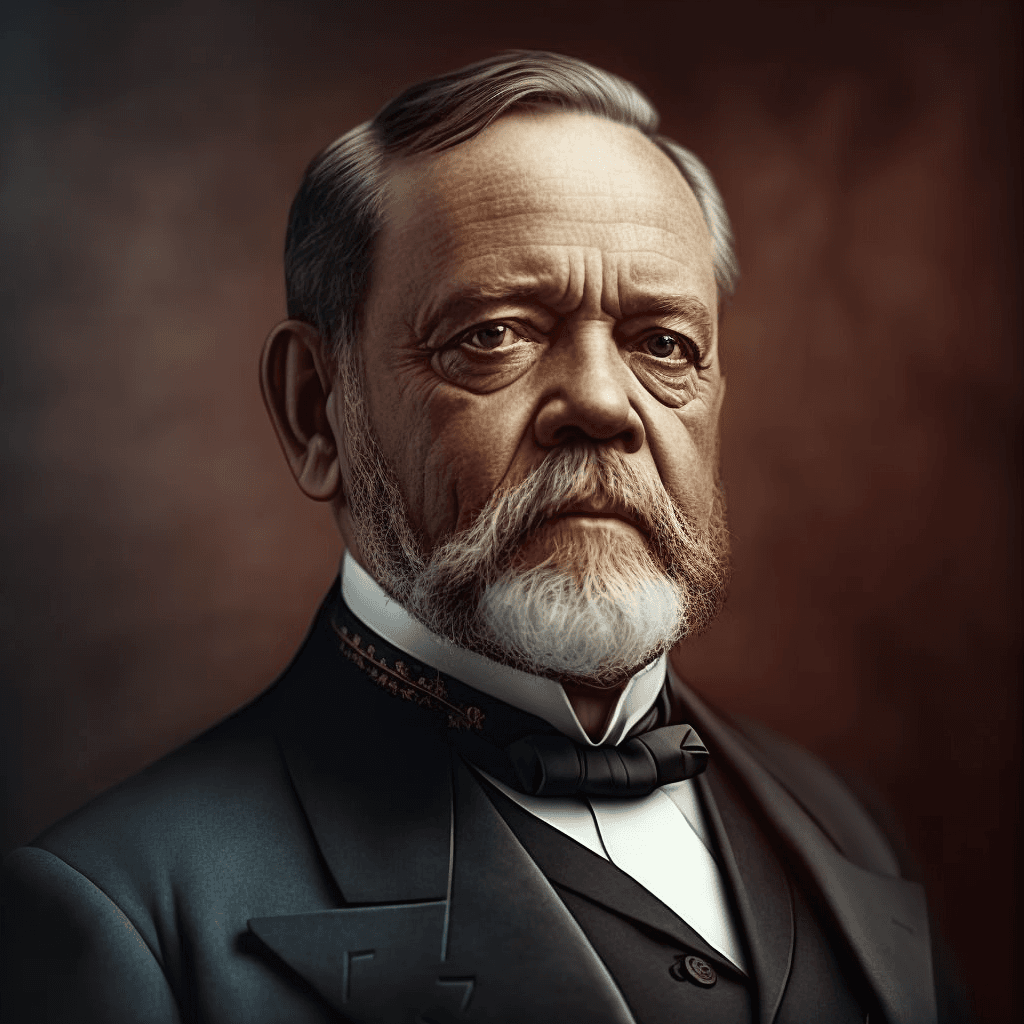
1822–1895
Microbiologist • Immunology Pioneer
Louis Pasteur was born in 1822 in Dole, France, the son of a tanner. Trained as a chemist, he began by studying why wine and beer sour. His experiments demonstrated that specific microbes—not spontaneous generation—drive fermentation, a finding with immediate implications for French industry and scientific method.
Pasteur extended germ theory to human and animal disease. He attenuated pathogens to create vaccines, famously treating young Joseph Meister for rabies in 1885 after the boy was mauled by a dog. His work on anthrax and chicken cholera persuaded skeptics that targeted microbes could be defeated through hygiene, heat treatment, and immunization. The process now called pasteurization—gentle heating to kill harmful organisms—grew from his concern to preserve food without destroying flavor.
Partial paralysis from a stroke in 1868 did not halt his laboratory. Pasteur directed the Institut Pasteur in Paris until his death in 1895, training researchers who spread germ theory worldwide. His rigorous experiments and public demonstrations made microbiology a pillar of modern public health.
1822 — Birth in Dole. Pasteur grew up in eastern France and earned degrees in chemistry and physics at the École Normale Supérieure.
1857 — Fermentation Studies. Research on lactic fermentation in beer and wine established microbes as the agents of chemical change.
1865 — Silkworm Disease. Commissioned to save France's silk industry, he identified microbial causes of pébrine and flacherie in silkworms.
1885 — Rabies Vaccination. Pasteur successfully treated a bitten boy with a series of attenuated spinal-cord preparations, drawing global attention.
1895 — Death in Paris. He died at the Institut Pasteur, which continues as a leading center for infectious disease research.
Key moments across this figure's life and legacy
1822
Pasteur grew up in eastern France and earned degrees in chemistry and physics at the École Normale Supérieure.
1857
Research on lactic fermentation in beer and wine established microbes as the agents of chemical change.
1865
Commissioned to save France's silk industry, he identified microbial causes of pébrine and flacherie in silkworms.
1885
Pasteur successfully treated a bitten boy with a series of attenuated spinal-cord preparations, drawing global attention.
1895
He died at the Institut Pasteur, which continues as a leading center for infectious disease research.
Landmarks that define this figure's contribution to history
Pasteur's swan-neck flask experiments showed that microbes enter from the air, settling a centuries-old scientific dispute.
He linked specific microorganisms to fermentation, silkworm disease, anthrax, and rabies, redirecting medicine toward targeted prevention.
His 1885 treatment of Joseph Meister marked the first successful post-exposure rabies vaccination in a human patient.
Controlled heating to eliminate pathogens in wine, milk, and other foods became a standard safety technique bearing his name.
Notable details about this historical figure
How this figure shaped the world we inherit
Pasteur's demonstrations that invisible organisms cause disease and spoilage underpinned modern hygiene, vaccination, and food safety. Hospitals, dairies, and laboratories worldwide adopted methods he pioneered, saving countless lives and reshaping biology into an experimental science.
Enduring influence across generations
Pasteur's demonstrations that invisible organisms cause disease and spoilage underpinned modern hygiene, vaccination, and food safety. Hospitals, dairies, and laboratories worldwide adopted methods he pioneered, saving countless lives and reshaping biology into an experimental science. Death in Paris (1895) remains a defining moment in Louis Pasteur's enduring reputation.
Explore more profiles from the same era or field
Curated educational resources for further study
Start a private conversation and explore their wisdom through Historical Collection AI.