Discovered the Tuberculosis Bacillus
Identified Mycobacterium tuberculosis in 1882, providing the first microbial explanation for history's deadliest chronic disease.
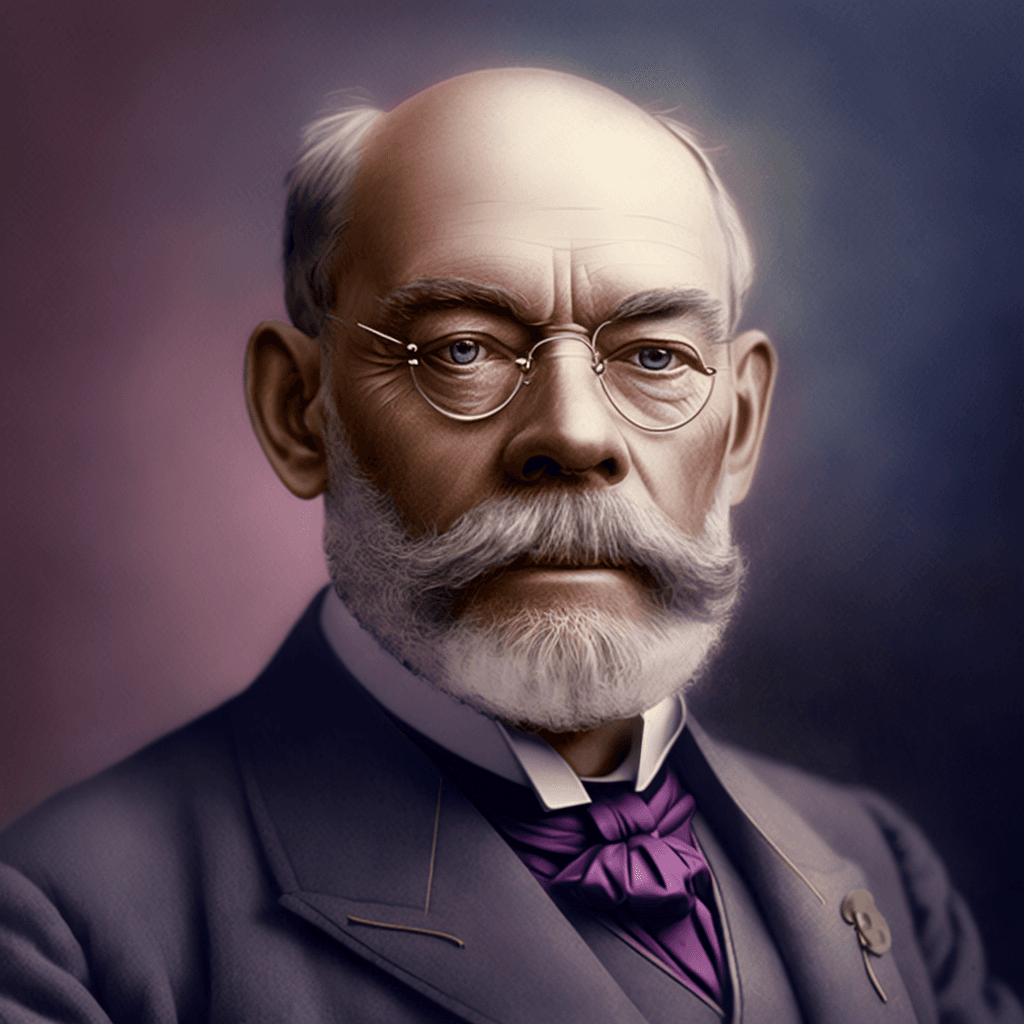
1843–1910
Physician • Microbiologist • Nobel Laureate
Born in 1843 in Clausthal in the Harz Mountains, Robert Heinrich Hermann Koch initially practiced rural medicine before turning to microscopy in a home laboratory. In 1876 he demonstrated that Bacillus anthracis caused anthrax, photographing the organism's life cycle and establishing methods to isolate pure bacterial cultures.
Koch's 1882 presentation to the Physiological Society of Berlin identified Mycobacterium tuberculosis, the bacillus responsible for a disease that killed one in seven Europeans. His four criteria—known as Koch's postulates—became the gold standard for linking specific microbes to specific illnesses, transforming medicine from symptom-based guesswork toward laboratory proof.
Expeditions to Egypt and India yielded isolation of Vibrio cholerae, though priority disputes with Italian researcher Filippo Pacini persisted for decades. Koch also pursued tuberculin as a therapeutic agent, a setback that did not diminish his institutional influence as director of the Institute for Infectious Diseases in Berlin. He died in 1910, leaving microbiology as a discipline built on his methods.
1843 — Born in Clausthal. Studied medicine at the University of Göttingen before serving as a district physician in rural East Prussia.
1876 — Anthrax Breakthrough. Published proof that a specific bacterium caused anthrax, gaining attention from Ferdinand Cohn and the German scientific establishment.
1882 — Tuberculosis Bacillus Identified. Announced discovery of the TB bacillus in Berlin, a moment later compared to Pasteur's rabies vaccine in significance.
1883 — Cholera Expedition to Egypt and India. Isolated comma-shaped bacteria from cholera victims during epidemics, advancing understanding of waterborne disease.
1910 — Death in Baden-Baden. Died of a heart condition; Koch's methods had by then become standard practice in laboratories worldwide.
Key moments across this figure's life and legacy
1843
Studied medicine at the University of Göttingen before serving as a district physician in rural East Prussia.
1876
Published proof that a specific bacterium caused anthrax, gaining attention from Ferdinand Cohn and the German scientific establishment.
1882
Announced discovery of the TB bacillus in Berlin, a moment later compared to Pasteur's rabies vaccine in significance.
1883
Isolated comma-shaped bacteria from cholera victims during epidemics, advancing understanding of waterborne disease.
1910
Died of a heart condition; Koch's methods had by then become standard practice in laboratories worldwide.
Landmarks that define this figure's contribution to history
Identified Mycobacterium tuberculosis in 1882, providing the first microbial explanation for history's deadliest chronic disease.
Established four criteria for proving that a microorganism causes a disease, foundational to modern medical microbiology.
Demonstrated the complete life cycle of Bacillus anthracis, pioneering photography of bacteria and solid culture media techniques.
Awarded for investigations and discoveries regarding tuberculosis, cementing his status as a founder of bacteriology.
Notable details about this historical figure
How this figure shaped the world we inherit
Koch's postulates and isolation techniques gave medicine a systematic way to identify pathogens, enabling vaccines, antibiotics, and public health interventions that saved millions of lives. Tuberculosis, cholera, and anthrax research built on his work remain pillars of global health policy.
Enduring influence across generations
Koch's postulates and isolation techniques gave medicine a systematic way to identify pathogens, enabling vaccines, antibiotics, and public health interventions that saved millions of lives. Tuberculosis, cholera, and anthrax research built on his work remain pillars of global health policy. Death in Baden-Baden (1910) remains a defining moment in Robert Koch's enduring reputation.
Explore more profiles from the same era or field
Curated educational resources for further study
Start a private conversation and explore their wisdom through Historical Collection AI.