Buoyancy Principle
Formulated the law relating displaced fluid to upward force, foundational for hydrostatics.
Discover
Explore influential historical figures from science, philosophy, leadership, art, and culture.
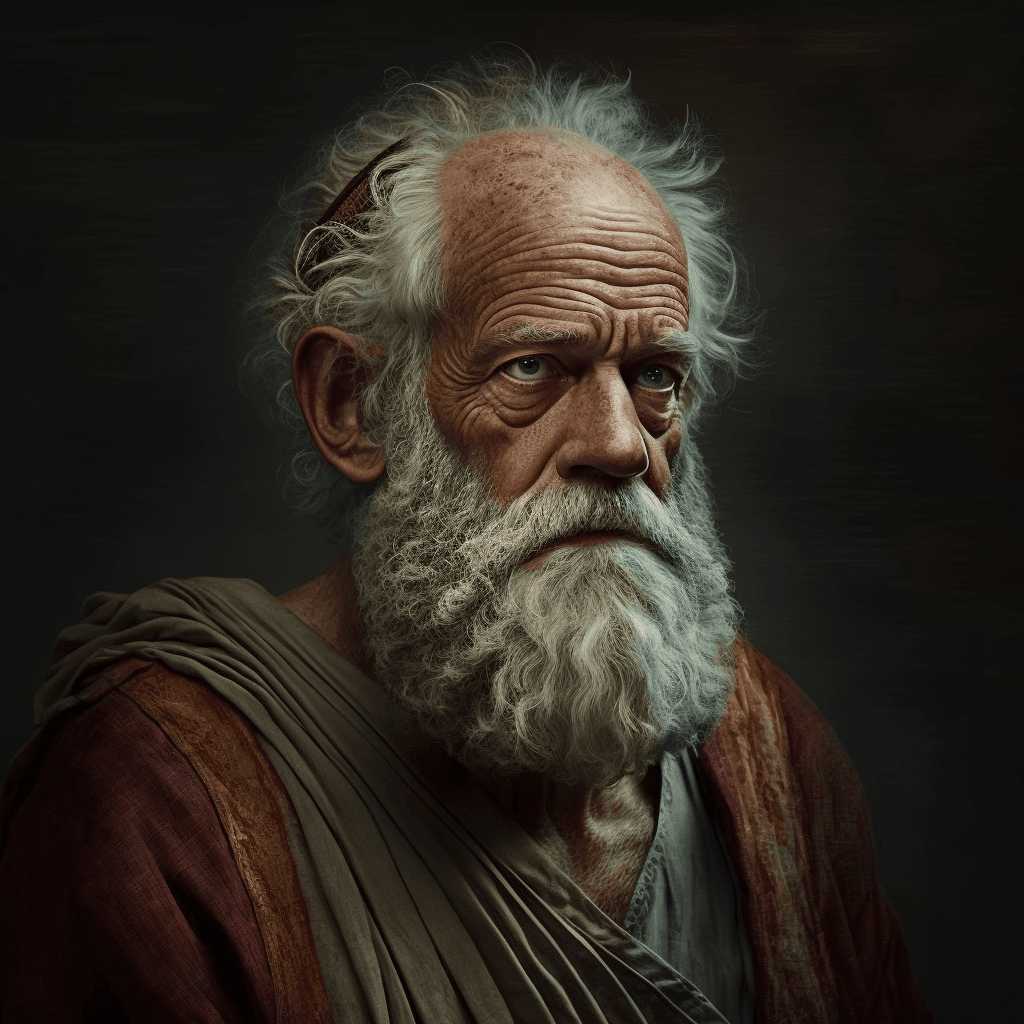
c. 287–212 BC
Mathematician • Inventor • Ancient Genius
This is a read-only educational profile. Chat, Council Mode, and AI features are not available for historical figures.
Archimedes was born around 287 BC in Syracuse on the island of Sicily, a major Hellenistic city where Greek culture intersected with practical engineering demands of Mediterranean trade and warfare. Ancient authors such as Plutarch and Livy portray him as closely tied to King Hieron II, whose reign benefited from Syracuse's strategic harbor and agricultural wealth. Tradition holds that Archimedes studied in Alexandria, then the intellectual center founded around the Museum and Library, where Euclid's geometry and emerging mechanical sciences circulated among scholars. Returning to Syracuse, he served as counselor and engineer, applying mathematics to problems of weight, volume, and military defense while maintaining a reputation for obsessive concentration on geometric figures. Stories describe him tracing diagrams in dust, oil, or sand, sometimes forgetting meals—a literary motif emphasizing pure thought embedded in civic duty. Sicily's position between Rome and Carthage meant Syracuse faced recurring strategic pressure, and Archimedes's talents acquired political urgency beyond abstract inquiry. He corresponded with contemporaries in the Greek world, preserving a sense of shared mathematical community across city-states even as Rome expanded. Unlike some philosophers who disdained manual labor, Archimedes designed machines and supervised construction, bridging theoretical rigor and artisan practice. Medieval and Renaissance readers would later treat him as the archetype of the scientist-engineer serving the state while pursuing eternal geometrical truths.
Archimedes's mathematical achievements were extraordinary by any standard. Using the method of exhaustion, he calculated areas and volumes of curved figures with rigorous geometric limits, approaching techniques later associated with integral calculus. He determined the area of a circle, the surface area and volume of a sphere, and properties of the spiral named after him, often proving results with dual reductio arguments that left no logical gap. In On Floating Bodies he formulated the principle of buoyancy: a body immersed in fluid experiences an upward force equal to the weight of displaced fluid, still taught as Archimedes' principle. The apocryphal Eureka story—leaping from a bath upon realizing displacement could test crown alloy density—captures popular memory of this hydrostatic insight even if details are legendary. He designed compound pulley systems reputedly capable of moving ships with modest force, illustrating mechanical advantage to court audiences. The Archimedean screw, a helical device for raising water, remained in use for irrigation and drainage across the Mediterranean and beyond. During Rome's Second Punic War, he engineered defensive machines for Syracuse's walls: catapults with adjustable range, cranes dropping weights on Roman ships, and possibly burning mirrors whose historicity remains debated. Roman soldiers reportedly faced contraptions that threw stones and hooks, delaying Marcellus's assault and earning Archimedes respect even among enemies.
According to tradition, Archimedes died in 212 BC when Roman forces under Marcus Claudius Marcellus captured Syracuse after a prolonged siege. Despite orders that the scholar be spared, a soldier allegedly killed him while he worked on a diagram, a story symbolizing conflict between conquest and contemplation. Marcellus reportedly mourned the death and ensured Archimedes's family received honor, recognizing that the city's greatest asset had been intellectual as well as military. Roman authors preserved fragments of his treatises through medieval manuscript copies; works such as On the Sphere and Cylinder and The Sand Reckoner survived while others vanished. Renaissance mathematicians including Galileo studied Archimedes with awe, and early printers issued editions that fueled the scientific revolution's recovery of classical methods. In 1906 the Archimedes Palimpsest re-emerged, revealing overwritten texts recovered through modern imaging and expanding knowledge of his method and Stomachion puzzle. Archimedes represents the fusion of pure geometry with mechanical invention, and modern historians continue to debate which machines were literal versus rhetorical exaggeration. Engineers and physicists still rely on his hydrostatic principle; his screw appears in humanitarian water projects today. From calculus history to military engineering anecdotes, his name anchors the ancient scientific tradition as both rigorous proof and civic problem-solving. Archimedes endures as proof that mathematical creativity and practical survival could coexist under the shadow of empire. Engineering students still derive proofs from his treatises on levers and centers of gravity, and naval architects reference hydrostatic principles when calculating displacement and stability. UNESCO lists Syracuse archaeological sites associated with his machines among Mediterranean heritage landmarks. Computer-aided reconstructions of claw and catapult mechanisms test whether ancient descriptions exaggerate scale or reflect feasible Roman-era technology. Mathematics competitions occasionally name problems after his spiral and exhaustion lemmas, keeping his geometric ingenuity alive in pedagogical culture. Historians of mathematics credit his exhaustion method as conceptual ancestor of limits taught in introductory calculus courses today. Popular science writers still retell the Eureka anecdote when explaining how insight and measurement interact in experimental discovery across disciplines. Engineering ethics courses sometimes discuss his siege engines when debating scientists' responsibility in wartime, using ancient Syracuse as early case study in dual-use technology. Museum replicas of his screw and lever demonstrations introduce schoolchildren to mechanical advantage before formal physics instruction.
Key moments across this figure's life and legacy
c. 287 BC
Born in Syracuse, Sicily, and later studied mathematics in Alexandria.
c. 250 BC
Served King Hieron II, applying geometry to practical problems of weight and volume.
c. 240 BC
Composed treatises on buoyancy and equilibrium of fluids.
214–212 BC
Designed defensive machines during Rome's assault in the Second Punic War.
212 BC
Killed during the city's fall to Roman forces under Marcellus.
Landmarks that define this figure's contribution to history
Formulated the law relating displaced fluid to upward force, foundational for hydrostatics.
Developed techniques to compute areas and volumes of curved shapes with rigorous geometric limits.
Designed a helical device still used for irrigation and drainage in many regions.
Engineered catapults and mechanical devices credited with strengthening the city's Roman siege defense.
How this figure shaped the world we inherit
Archimedes advanced mathematics from static formulas toward dynamic methods that later enabled calculus. Engineers and physicists still rely on his hydrostatic principle, while his mechanical inventions linked theoretical rigor to civic survival. Recovery of his texts in the Renaissance and through modern imaging reaffirmed his status as a central figure in the ancient scientific tradition and a model of mathematical creativity applied to real-world problems.
Explore more profiles from the same era or field
Curated educational resources for further study
Discover historical art and educational content on our media channels