Cuban Revolutionary Victory
Helped defeat the Batista dictatorship through guerrilla warfare in the Sierra Maestra.
Discover
Explore influential historical figures from science, philosophy, leadership, art, and culture.
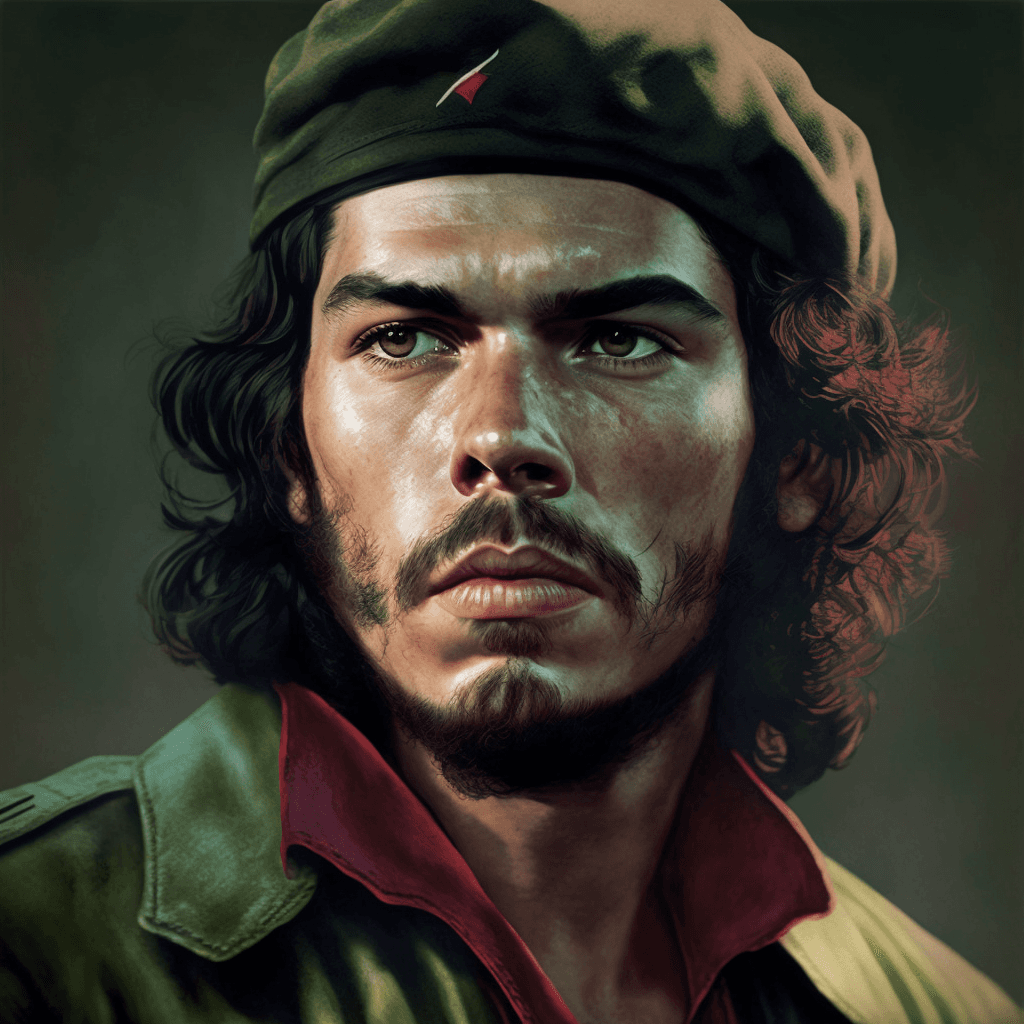
1928–1967
Revolutionary • Physician • Icon
This is a read-only educational profile. Chat, Council Mode, and AI features are not available for historical figures.
Ernesto Guevara de la Serna was born in Rosario, Argentina, in 1928 to a middle-class family with aristocratic Spanish and Irish roots. Asthma plagued his childhood but did not stop him from motorcycle journeys across Latin America in the early 1950s, travels that exposed him to poverty, exploitation, and the United Fruit Company's power—experiences he recorded in The Motorcycle Diaries.
After completing medical studies in Buenos Aires, Guevara met Fidel and Raúl Castro in Mexico City and joined the expedition that landed in Cuba aboard the Granma in 1956. As a comandante in the Sierra Maestra, he proved a disciplined guerrilla leader and later oversaw the revolutionary tribunal at La Cabaña. Following Batista's fall in 1959, he held posts in the new government, including president of the National Bank and minister of industry, advocating rapid industrialization and relations with the Soviet bloc.
Restless in administrative roles, Guevara left Cuba in 1965 to foment revolution elsewhere. Failed campaigns in Congo-Kinshasa and Bolivia ended when Bolivian troops, advised by the CIA, captured and executed him in October 1967. His death at thirty-nine transformed a controversial guerrilla into one of the twentieth century's most reproduced political images.
Key moments across this figure's life and legacy
1953
Traveled through South America, witnessing inequality that radicalized his politics.
1956
Sailed with Castro's rebels to Cuba to begin the armed struggle against Batista.
1959
Entered Havana as a victor after Batista fled the island.
1965
Left public office to pursue revolution in Africa and Latin America.
1967
Killed at La Higuera after the Bolivian army suppressed his guerrilla column.
Landmarks that define this figure's contribution to history
Helped defeat the Batista dictatorship through guerrilla warfare in the Sierra Maestra.
Wrote Guerrilla Warfare, articulating foco theory that influenced insurgencies across the Global South.
Directed economic policy and land reform in early revolutionary Cuba.
How this figure shaped the world we inherit
Che Guevara condensed Latin America's Cold War radicalism into a face recognized on posters from Berkeley to Beirut. His life linked medical humanism with armed revolution, inspiring leftist movements while provoking fierce debate over violence, authoritarianism, and the limits of exportable rebellion. Cuba's revolutionary narrative—and global counterculture—remain inseparable from his brief, intense trajectory.
Explore more profiles from the same era or field
Curated educational resources for further study
Discover historical art and educational content on our media channels