New Deal Programs
Launched federal relief, recovery, and reform initiatives including Social Security and public works.
Discover
Explore influential historical figures from science, philosophy, leadership, art, and culture.
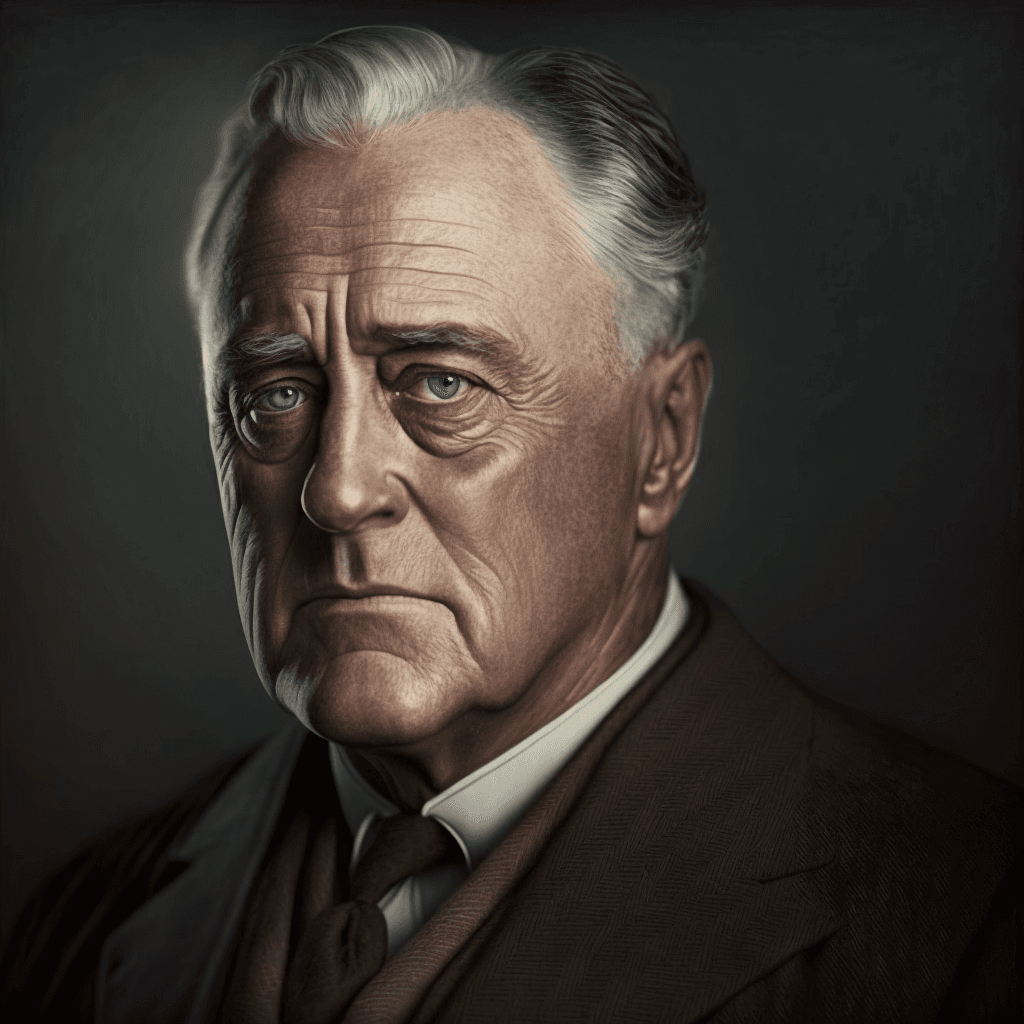
1882–1945
32nd U.S. President • New Deal Architect
This is a read-only educational profile. Chat, Council Mode, and AI features are not available for historical figures.
Franklin Delano Roosevelt was born on 30 January 1882 at Hyde Park, New York, into a wealthy Hudson Valley family connected to Theodore Roosevelt, whose niece Eleanor he married in 1905. Educated at Groton and Harvard, he practiced law briefly before winning a New York State Senate seat as a Democrat in 1910 and serving as Assistant Secretary of the Navy under Woodrow Wilson during World War I. Polio struck him in 1921 at Campobello Island, paralyzing his legs and forcing a grueling rehabilitation regimen he largely hid from the public through careful staging and press cooperation. He returned to politics as governor of New York from 1929 to 1932, experimenting with relief programs just as the national economy collapsed after the 1929 stock crash.
Elected president four times, Roosevelt responded to the Great Depression with unprecedented federal activism: bank holidays, the Civilian Conservation Corps, agricultural adjustments, Social Security, and a rhetorical partnership with citizens conveyed through radio fireside chats. The New Deal did not end unemployment before rearmament for World War II, and critics on the left and right attacked its compromises, yet it redefined American expectations of government responsibility for economic security. After Pearl Harbor on 7 December 1941, Roosevelt mobilized industry, maintained a grand alliance with Britain and the Soviet Union, and shaped strategy toward unconditional surrender in Europe and the Pacific. He attended the Tehran and Yalta conferences, planning postwar institutions even as heart disease and exhaustion visibly aged him.
Roosevelt died of a cerebral hemorrhage on 12 April 1945 at Warm Springs, Georgia, weeks before German surrender and months before the atomic bombs ended the war with Japan. Vice President Harry Truman inherited a nation poised for superpower status and decisions about the United Nations and nuclear weapons. Roosevelt's record includes the internment of Japanese Americans, a grave civil liberties violation he authorized, and enduring achievements in labor rights, rural electrification, and wartime logistics. Historians rank him among the most consequential American presidents for expanding federal capacity while preserving democratic institutions through two existential crises of the twentieth century.
Key moments across this figure's life and legacy
1882
Raised in privilege on the Hudson River before entering New York and national politics.
1921
Contracted poliomyelitis at Campobello, permanently limiting use of his legs.
1933
Became president amid banking crisis and declared "the only thing we have to fear is fear itself."
1941
Led United States into World War II after the Japanese attack on 7 December.
1945
Died in office on 12 April, leaving Truman to conclude the war.
Landmarks that define this figure's contribution to history
Launched federal relief, recovery, and reform initiatives including Social Security and public works.
Mobilized the Arsenal of Democracy and coordinated Allied strategy against Axis powers.
Used radio broadcasts to explain policy directly to Americans during depression and war.
Helped lay groundwork for the postwar international organization at Yalta and earlier conferences.
How this figure shaped the world we inherit
Roosevelt reshaped American government around active economic management and global military leadership, establishing precedents for the welfare state and the United States as a permanent world power. His presidency remains central to debates over executive power, civil liberties, and the balance between security and democracy.
Explore more profiles from the same era or field
Curated educational resources for further study
Discover historical art and educational content on our media channels