Eiffel Tower
Designed and built the 1889 exposition tower that remained the world's tallest man-made structure for four decades.
Discover
Explore influential historical figures from science, philosophy, leadership, art, and culture.
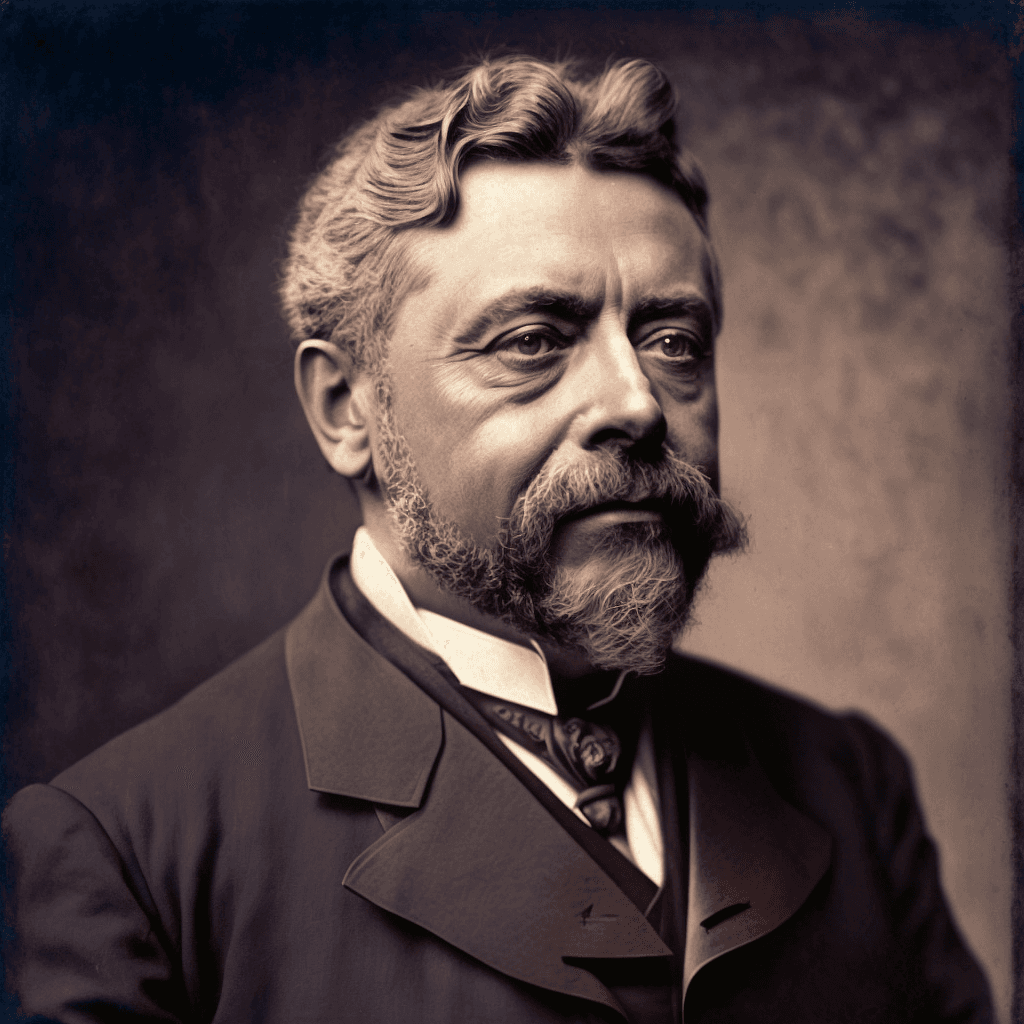
1832–1923
Engineer • Designer of the Eiffel Tower
This is a read-only educational profile. Chat, Council Mode, and AI features are not available for historical figures.
Alexandre Gustave Eiffel was born in 1832 in Dijon, where his mother ran a coal business and his upbringing emphasized practical education over aristocratic polish. He earned a diploma from the École Centrale des Arts et Manufactures in Paris and joined a railway construction firm, quickly proving himself in bridge and viaduct projects that demanded precise metallurgy and bold spans. By the 1860s he was managing his own company, Eiffel et Cie, building the Garabit viaduct in the Massif Central and the internal iron framework for the Statue of Liberty's torch-bearing arm, shipped from France to New York in sections. His designs favored wrought iron assembled from repeatable prefabricated pieces, a method that reduced cost and construction time on remote sites.
The commission that immortalized his name arrived for the 1889 world's fair celebrating the centennial of the French Revolution. Eiffel's proposal for a 300-meter tower won over a jury that included engineers and artists wary of a gigantic iron pylon on the Champ de Mars. Construction ran from 1887 to 1889 with no serious fatalities among the workforce, a remarkable safety record for the era. Critics such as Guy de Maupassant and Charles Garnier attacked the structure as an industrial eyesore, yet visitors flocked to its observation decks and restaurants, proving that engineering spectacle could itself become mass culture. Eiffel embedded meteorological and radio equipment in the tower, foreseeing scientific uses beyond ornament.
After the fair Eiffel turned to aerodynamics and radio transmission, building a wind tunnel at the base of the tower and supporting early wireless experiments that proved invaluable during the First World War. He wrote extensively on aerodynamic resistance and consulted on aviation projects until his death in 1923. The tower, intended as a temporary exhibit, was preserved because of its utility as a radio mast and soon became inseparable from French identity. Eiffel's career demonstrated how civil engineering could combine mathematical elegance, industrial prefabrication, and public symbolism, influencing skyscraper skeletons and long-span bridges worldwide.
Key moments across this figure's life and legacy
1832
Raised in Burgundy before entering Paris engineering schools.
1867
Established Eiffel et Cie and began major railway bridge contracts across France and abroad.
1887
Broke ground on the Champ de Mars for the Exposition Universelle centerpiece.
1889
Completed the tower in time for the fair, drawing millions of visitors despite elite criticism.
1923
Died at his mansion on the Champ de Mars with the tower still dominating the skyline he helped define.
Landmarks that define this figure's contribution to history
Designed and built the 1889 exposition tower that remained the world's tallest man-made structure for four decades.
Engineered a 565-meter iron arch bridge over the Truyère River, among the great railway spans of the nineteenth century.
Created the internal iron armature that supports Bartholdi's copper skin in New York Harbor.
Pioneered aerodynamic testing at his Paris laboratory, advancing early aviation and structural wind-load analysis.
How this figure shaped the world we inherit
Eiffel transformed iron from a hidden structural material into public architecture capable of expressing national ambition. His lattice tower influenced skyscraper engineering, exposition design, and the idea that a bridge or pylon could become a city's emblem, while his aerodynamic laboratory linked civil engineering to the birth of modern aviation research.
Explore more profiles from the same era or field
Curated educational resources for further study
Discover historical art and educational content on our media channels