Three-Time Heavyweight Champion
Ali won the title in 1964, 1974, and 1978—the only heavyweight to regain it twice after losing the belt.
Discover
Explore influential historical figures from science, philosophy, leadership, art, and culture.
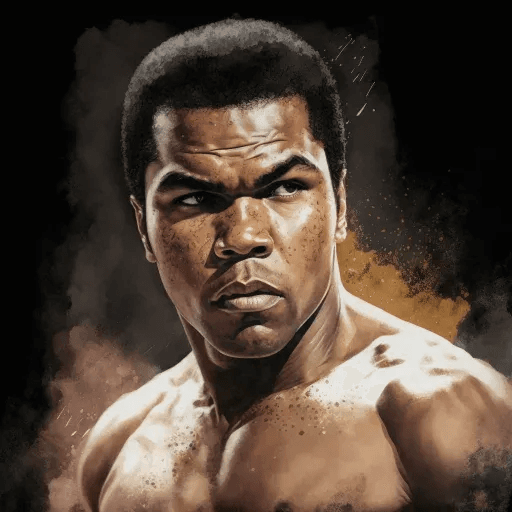
1942–2016
Boxing Champion • Activist • Global Icon
This is a read-only educational profile. Chat, Council Mode, and AI features are not available for historical figures.
Cassius Marcellus Clay Jr. was born in 1942 in Louisville, Kentucky. He took up boxing after a stolen bicycle led him to coach Joe Martin. Winning light-heavyweight gold at the 1960 Rome Olympics, he turned professional with flamboyant predictions and footwork that defied heavyweight norms. In 1964 he upset Sonny Liston to claim the world title and announced his conversion to Islam, adopting the name Muhammad Ali.
Ali refused induction into the U.S. Army during the Vietnam War, citing religious objection and racial injustice. Stripped of his title and facing prison, he spoke on college campuses while legally fighting the conviction, which the Supreme Court overturned in 1971. He regained the championship in epic bouts—the 'Rumble in the Jungle' against George Foreman in Zaire and the 'Thrilla in Manila' against Joe Frazier.
Parkinson's syndrome, likely linked to ring trauma, slowed his speech in later decades, yet Ali remained a global ambassador, lighting the 1996 Atlanta Olympics cauldron. He died in 2016 in Scottsdale, Arizona, mourned as a champion who placed conscience alongside athletic genius.
Key moments across this figure's life and legacy
1942
Raised in segregated Kentucky, Clay began boxing at twelve and quickly showed precocious talent and confidence.
1964
He stopped Sonny Liston, proclaimed 'I am the greatest,' and publicly joined the Nation of Islam.
1967
Ali's conviction for refusing induction cost him his license and heavyweight title during peak athletic years.
1974
The Kinshasa bout restored his championship and demonstrated strategic adaptation against a younger, harder puncher.
2016
Ali died of septic shock linked to Parkinson's; global memorials celebrated his sports and civil rights legacy.
Landmarks that define this figure's contribution to history
Ali won the title in 1964, 1974, and 1978—the only heavyweight to regain it twice after losing the belt.
His 1974 knockout of George Foreman in Kinshasa used the rope-a-dope tactic to reclaim the championship in Africa.
Refusing Vietnam draft induction in 1967, he sacrificed prime fighting years and became a symbol of principled dissent.
Victory in Rome launched an amateur career marked by speed and showmanship that carried into professional dominance.
How this figure shaped the world we inherit
Ali transformed the heavyweight champion from silent athlete to outspoken global celebrity. His refusal to fight in Vietnam, embrace of Islam, and charisma advanced debates on race, religion, and athlete activism that echo in modern sports protest.
Explore more profiles from the same era or field
Curated educational resources for further study
Discover historical art and educational content on our media channels