Satyagraha Doctrine
Developed a philosophy of nonviolent resistance grounded in truth and discipline.
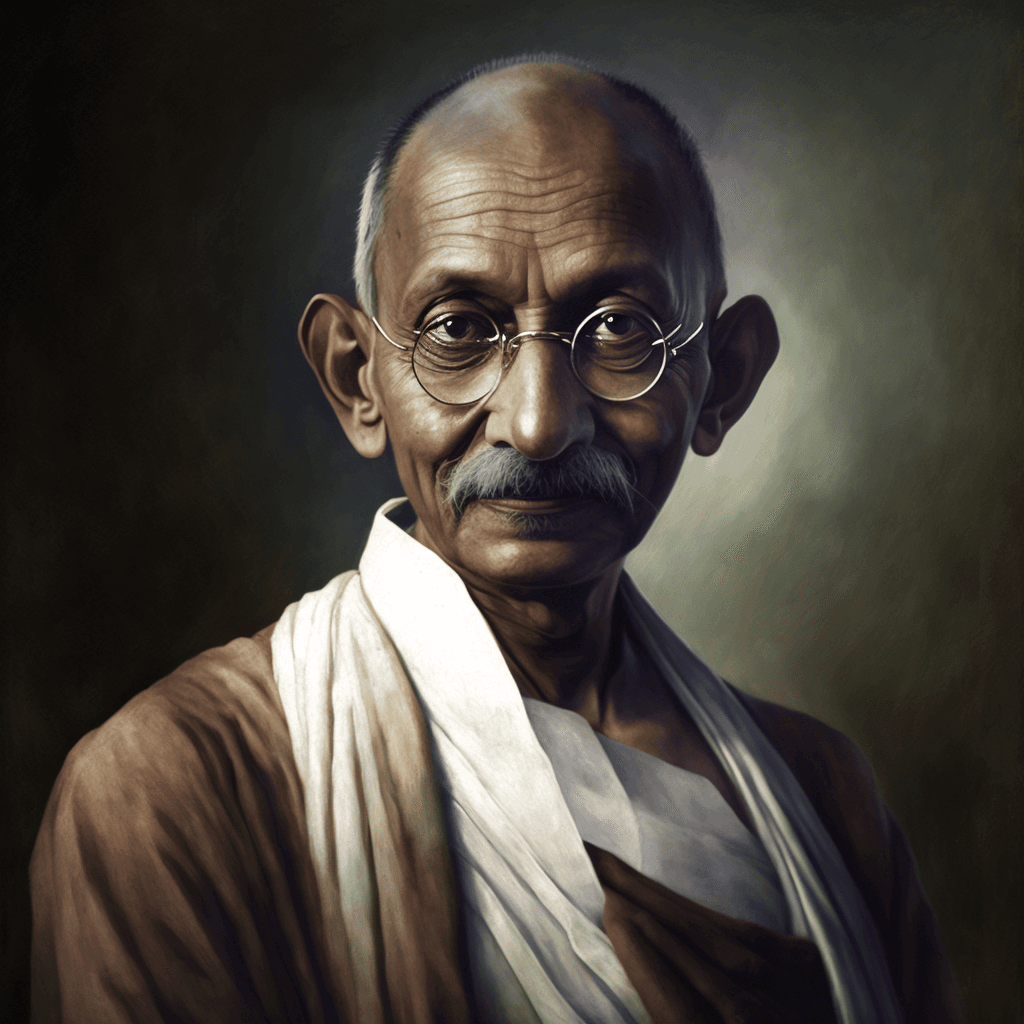
1869-1948
Activist - Moral Leader - Strategist of Nonviolence
Mohandas Karamchand Gandhi nació en Porbandar, estudió derecho en Londres y desarrolló por primera vez sus métodos políticos en Sudáfrica al enfrentar la discriminación racial. Allí organizó comunidades indias a través de una resistencia civil disciplinada y comenzó a articular el satyagraha, una filosofía de fuerza de la verdad basada en la no violencia y la responsabilidad moral. Su enfoque fusionó la práctica espiritual con la estrategia política práctica.
Al regresar a India en 1915, Gandhi se convirtió en una figura central en la movilización anti-colonial a través de campañas como la no cooperación, la Marcha de la Sal y la desobediencia civil. Buscó ampliar la participación política a través de clases, religiones y castas, mientras abogaba por la autogobernanza, la industria local y la reforma social. Aunque fue encarcelado con frecuencia, sus métodos atrajeron la atención global y desafiaron la legitimidad imperial.
India obtuvo la independencia en 1947 en medio de una violencia de partición que angustió profundamente a Gandhi, quien pasó sus últimos meses trabajando por la paz comunal. Asesinado en 1948, dejó un legado global que influyó en Martin Luther King Jr., Nelson Mandela y muchos movimientos posteriores. Gandhi sigue siendo una figura crucial en los debates sobre ética, poder y acción política no violenta.
Momentos clave en la vida y el legado de esta figura
1869
Born in western India in a merchant-caste family.
1893
Begins legal work and political organizing against racial discrimination.
1915
Assumes growing leadership in anti-colonial movements.
1930
Leads civil disobedience campaign against salt taxes and imperial law.
1948
Killed months after independence while advocating interreligious peace.
Hitos que definen la contribución de esta figura a la historia
Developed a philosophy of nonviolent resistance grounded in truth and discipline.
Led a symbolic mass protest that challenged British colonial authority.
Helped transform anti-colonial nationalism into a broad-based popular movement.
Inspired civil rights and liberation leaders across the twentieth century.
Detalles notables sobre esta figura
Cómo esta figura moldeó el mundo que heredamos
Gandhi reorientó la lucha política moderna al demostrar que la no violencia organizada podía desafiar el poder imperial arraigado a gran escala. Sus métodos proporcionaron repertorios prácticos para los movimientos de resistencia civil y redefinieron el liderazgo como un desempeño moral así como una estrategia institucional. Incluso donde sus opiniones sociales y económicas siguen siendo objeto de controversia, su influencia en la ética global de la protesta es inigualable.
Influencia duradera a través de generaciones
Gandhi reoriented modern political struggle by showing that organized nonviolence could challenge entrenched imperial power at scale. His methods provided practical repertoires for civil resistance movements and reframed leadership as moral performance as well as institutional strategy. Even where his social and economic views remain contested, his influence on global ethics of protest is unparalleled. Assassinated in New Delhi (1948) remains a defining moment in Mahatma Gandhi's enduring reputation.
Más perfiles de la misma época o campo
Recursos educativos seleccionados para profundizar
Inicia una conversación privada con Historical Collection AI.