Critique of Anthropomorphic Polytheism
Argued that humans project their own forms onto gods, undermining traditional Greek mythology's moral authority.
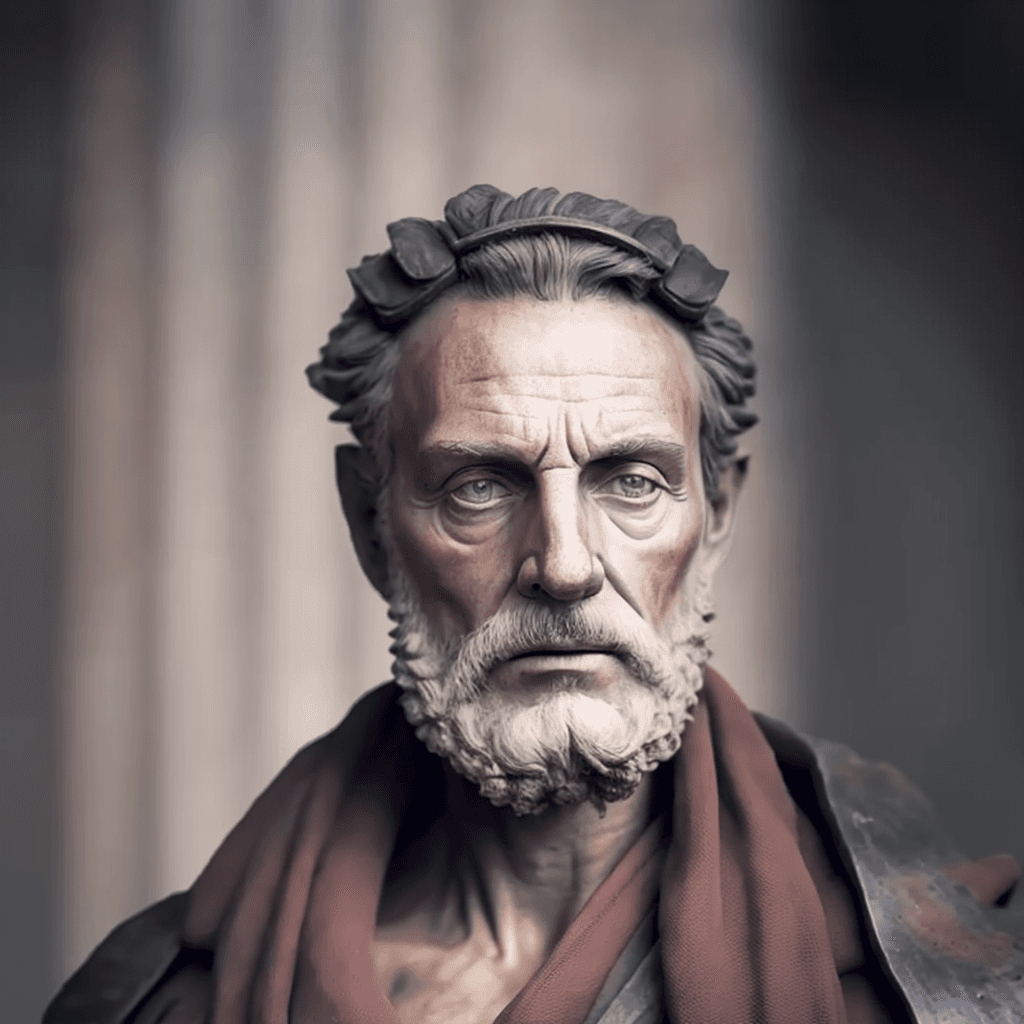
c. 570–478 BC
Philosopher • Poet • Critical Thinker
Nacido alrededor de 570 a.C. en Colofón, Ionia, Xenophanes dejó su ciudad tras la conquista persa y pasó gran parte de su larga vida como un poeta-filósofo viajero en las colonias griegas de Sicilia y el sur de Italia. Recitó elegías en simposios, criticando a Homero y Hesíodo por atribuir robo y adulterio a los dioses y argumentando que si el ganado pudiera pintar, representarían a los dioses como ganado.
Xenophanes propuso un único dios supremo que no se asemeja a los mortales en cuerpo o mente—'todo ojo, toda mente, todo oído'—quien mueve todas las cosas solo por pensamiento. Esta crítica teológica anticipó el posterior monoteísmo filosófico y el naturalismo científico. También observó conchas fósiles en el interior y dedujo que la tierra había estado alguna vez bajo el mar, ofreciendo una temprana visión geológica.
Aunque ninguna de sus obras sobrevive completa, fragmentos citados por autores posteriores revelan a un pensador que unió poesía y filosofía. Influyó en la escuela eleática, especialmente en Parménides, y sus ataques al antropomorfismo divino resonaron a través de Sócrates, Platón y la tradición occidental de religión racional.
Momentos clave en la vida y el legado de esta figura
c. 570 BCE
Grew up in Ionia during the flourishing of Pre-Socratic inquiry before Persian expansion disrupted the region.
c. 540 BCE
Left Colophon after Persian takeover, performing poetry in Greek cities of Sicily and Magna Graecia.
c. 500 BCE
Wrote satirical elegies and hymns proposing a unified, non-human god governing by mind alone.
c. 480 BCE
Noted marine fossils inland, inferring geological change—a rare empirical insight in early Greek thought.
c. 478 BCE
Tradition places his long life at roughly a century; fragments preserved by Simplicius and others ensured his posthumous influence.
Hitos que definen la contribución de esta figura a la historia
Argued that humans project their own forms onto gods, undermining traditional Greek mythology's moral authority.
Described a single greatest god unlike mortals, moving the divine toward abstract unity and moral perfection.
Interpreted fossil impressions of seaweed and fish as evidence that land was once submerged, anticipating paleontology.
His rational method and emphasis on unity influenced Parmenides and the development of metaphysics.
Detalles notables sobre esta figura
Cómo esta figura moldeó el mundo que heredamos
Xenophanes abrió el camino desde la narración mítica hacia la teología crítica y la explicación natural. Su insistencia en que el conocimiento crece a través de la indagación en lugar de la tradición influyó en el nacimiento de la filosofía occidental y continúa informando los debates sobre religión, ciencia y los límites de la proyección humana al describir lo divino.
Influencia duradera a través de generaciones
Xenophanes opened the path from mythic storytelling to critical theology and natural explanation. His insistence that knowledge grows through inquiry rather than tradition influenced the birth of Western philosophy and continues to inform debates about religion, science, and the limits of human projection in describing the divine. Death in Elea or Syracuse (c. 478 BCE) remains a defining moment in Xenophanes's enduring reputation.
Más perfiles de la misma época o campo
Recursos educativos seleccionados para profundizar
Inicia una conversación privada con Historical Collection AI.