Model T Mass Production
Built over fifteen million affordable cars between 1908 and 1927, motorizing rural and urban America.

1863–1947
Industrialist • Pioneer of Mass Production
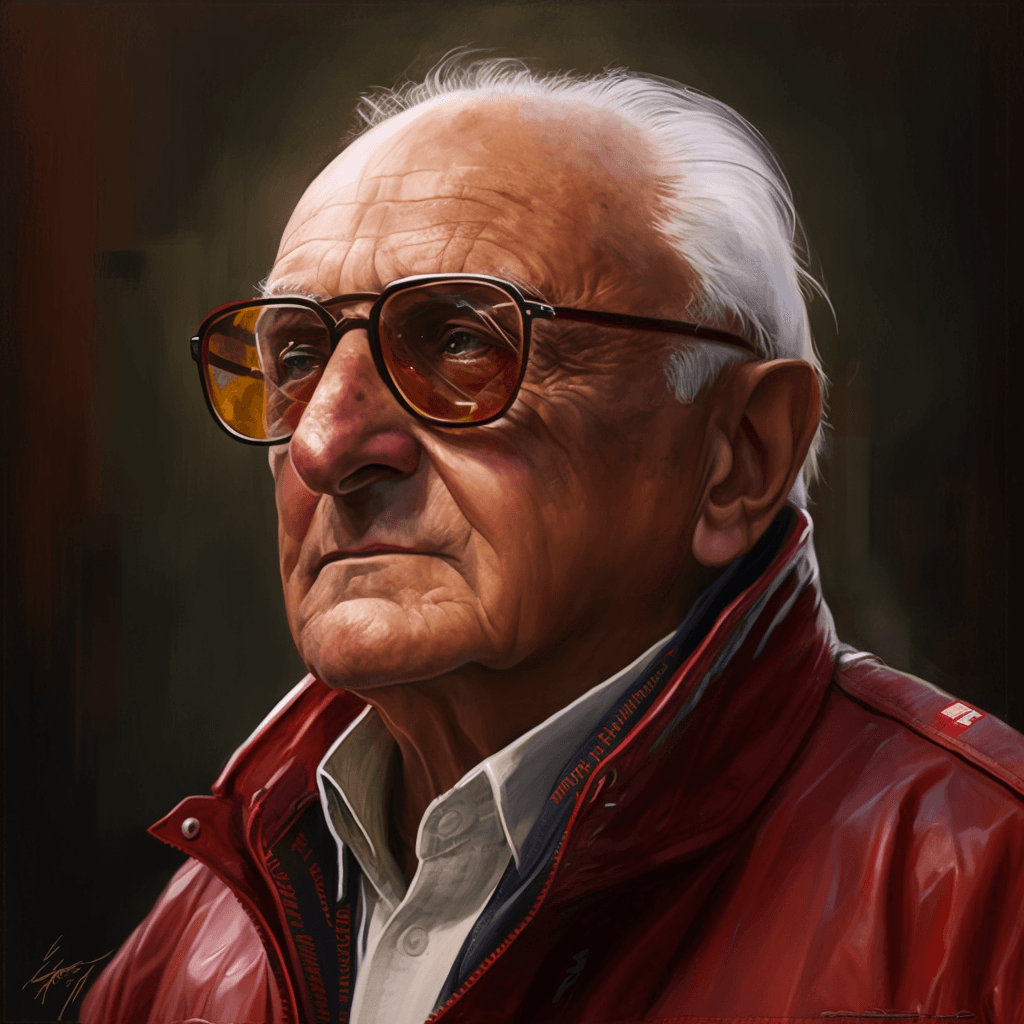
Henry Ford was born in 1863 on a farm near Dearborn, Michigan, the eldest son of William and Mary Ford. He disliked agrarian routine and left home at sixteen for an apprenticeship in Detroit machine shops, where he learned to service Westinghouse steam engines and dreamed of self-propelled vehicles. After experimenting in a backyard shed and working briefly for the Edison Illuminating Company, Ford built his first gasoline carriage in 1896 and founded the Detroit Automobile Company in 1899, though early ventures struggled with cost and quality. His breakthrough came with the Ford Motor Company, incorporated in 1903 with investors who backed his vision of a reliable car priced for ordinary buyers.
The Model T, introduced in 1908, combined simplicity, durability, and interchangeable parts. Ford consolidated production at the Highland Park plant, introducing a moving assembly line by 1913 that slashed assembly time from hours to minutes and drove the car's price downward year after year. He doubled wages to five dollars a day in 1914, partly to reduce turnover on monotonous lines and partly to create customers who could afford the product they built. By the 1920s the Model T dominated American roads, and Ford's vertical integration— including rubber plantations, steel mills, and a vast River Rouge complex—made the firm a symbol of industrial modernity. Yet Ford resisted updating the Model T too long, allowing General Motors to capture variety-seeking buyers with annual styling changes.
Ford's influence extended beyond manufacturing. He published antisemitic articles in The Dearborn Independent during the 1920s, a moral stain that historians continue to confront alongside his technical achievements. He opposed labor unions until late in his career, experimented with paternalistic village industries in Brazil, and briefly explored political influence. When he died in 1947, more than fifteen million Model Ts had been built, and the assembly line he popularized had become the template for factories producing everything from appliances to aircraft. Ford did not invent the automobile or the conveyor system, but he demonstrated how scale, standardization, and wage policy could democratize a luxury into a mass habit.
1863 — Born near Dearborn. Raised on a Michigan farm before leaving for Detroit machinist training.
1903 — Ford Motor Company Founded. Incorporated with partners after earlier automotive ventures faltered.
1908 — Model T Introduced. Launched the car that would define affordable personal transportation.
1913 — Assembly Line at Highland Park. Adopted moving-line production, transforming factory speed and cost structure.
1947 — Death in Dearborn. Died at his Fair Lane estate after decades reshaping global manufacturing culture.
Key moments across this figure's life and legacy
1863
Raised on a Michigan farm before leaving for Detroit machinist training.
1903
Incorporated with partners after earlier automotive ventures faltered.
1908
Launched the car that would define affordable personal transportation.
1913
Adopted moving-line production, transforming factory speed and cost structure.
1947
Died at his Fair Lane estate after decades reshaping global manufacturing culture.
Landmarks that define this figure's contribution to history
Built over fifteen million affordable cars between 1908 and 1927, motorizing rural and urban America.
Implemented continuous-flow manufacturing at Highland Park, cutting Model T assembly time dramatically.
Introduced a landmark wage increase in 1914 that influenced industrial labor markets and consumer demand.
Integrated steel, glass, and component production into one of the world's largest industrial campuses.
Notable details about this historical figure
How this figure shaped the world we inherit
Ford's assembly methods and pricing strategy accelerated the shift from craft production to mass consumption, reshaping cities, suburbs, and supply chains across the globe. The Model T and Highland Park line became reference points for industrial managers from Tokyo to Detroit, even as later historians debate the human costs of speed-ups, union battles, and Ford's prejudiced writings.
Enduring influence across generations
Ford's assembly methods and pricing strategy accelerated the shift from craft production to mass consumption, reshaping cities, suburbs, and supply chains across the globe. The Model T and Highland Park line became reference points for industrial managers from Tokyo to Detroit, even as later historians debate the human costs of speed-ups, union battles, and Ford's prejudiced writings. Death in Dearborn (1947) remains a defining moment in Henry Ford's enduring reputation.
Explore more profiles from the same era or field
Curated educational resources for further study
Start a private conversation and explore their wisdom through Historical Collection AI.