Extraordinary Voyages Series
More than fifty novels and stories projected readers into balloon flights, polar exploration, underground worlds, and futuristic transport.
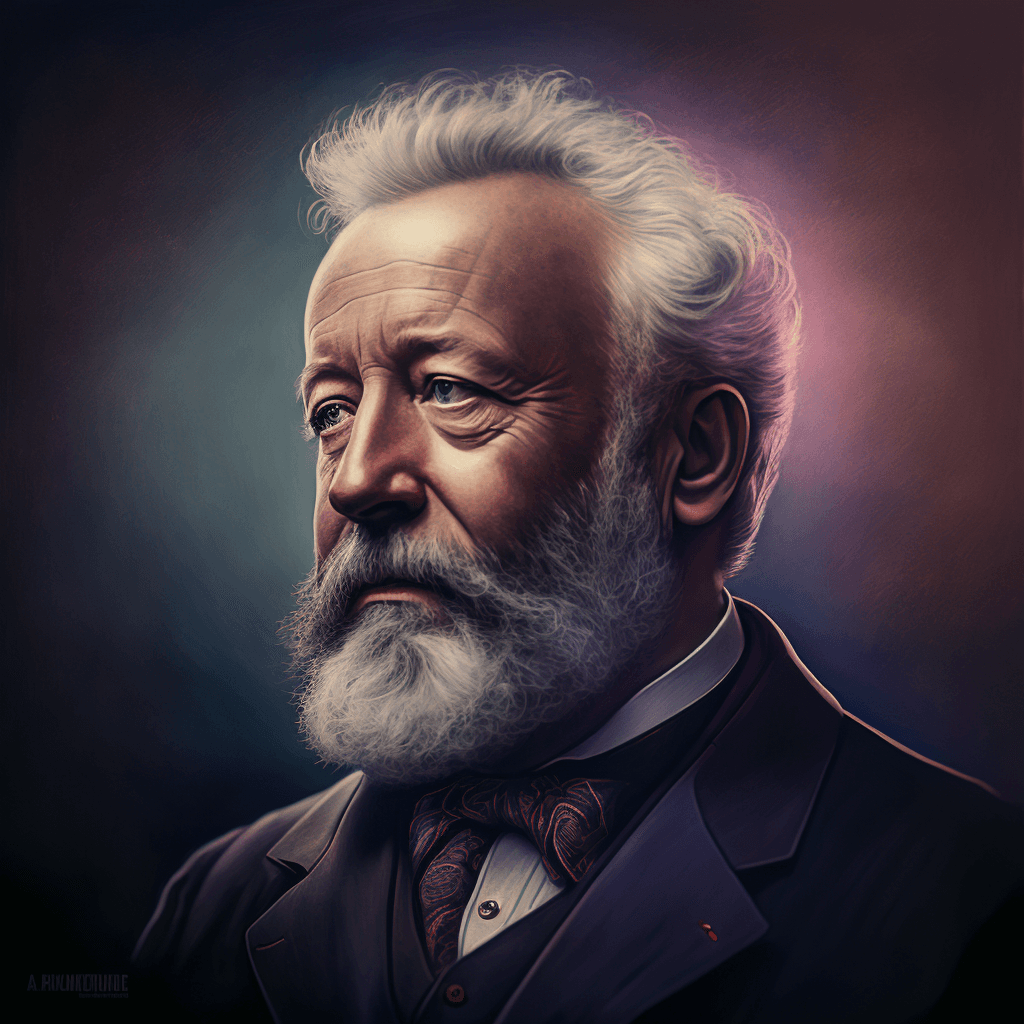
1828–1905
Novelist • Visionary • Father of Science Fiction
Jules Verne was born in 1828 in Nantes, a port city whose ships and tides fed his imagination. Expected to follow his father into law, he moved to Paris and worked as a stockbroker while writing plays and stories. Association with publisher Pierre-Jules Hetzel gave him a platform for the 'Extraordinary Voyages'—a series blending meticulous research with bold extrapolation.
Verne mapped fictional expeditions onto real geography and emerging technology. Twenty Thousand Leagues Under the Sea (1870) imagined submarine travel before practical vessels existed; From the Earth to the Moon (1865) calculated a lunar voyage by cannon; Around the World in Eighty Days (1873) turned the new global rail and steam network into a race against the clock. His narratives popularized science for mass audiences and influenced engineers who later realized similar machines.
Verne's politics shifted toward nationalism after the Franco-Prussian War, and late works grew darker, yet his reputation as a prophet of technology endured. Translated worldwide, he became one of the most widely read French authors and a founding voice of modern science fiction.
1828 — Birth in Nantes. Verne grew up watching ships on the Loire and began writing adventure tales while studying law in Paris.
1863 — Five Weeks in a Balloon. His first major success with Hetzel launched the Extraordinary Voyages and established his formula of researched adventure.
1870 — Twenty Thousand Leagues. Published during the Franco-Prussian War, the novel became one of his most enduring works and introduced Captain Nemo.
1873 — Eighty Days. The globe-circling race cemented Verne's fame and was adapted countless times for stage and screen.
1905 — Death in Amiens. Verne died from complications of diabetes; he was mourned as France's master of imaginative travel literature.
Key moments across this figure's life and legacy
1828
Verne grew up watching ships on the Loire and began writing adventure tales while studying law in Paris.
1863
His first major success with Hetzel launched the Extraordinary Voyages and established his formula of researched adventure.
1870
Published during the Franco-Prussian War, the novel became one of his most enduring works and introduced Captain Nemo.
1873
The globe-circling race cemented Verne's fame and was adapted countless times for stage and screen.
1905
Verne died from complications of diabetes; he was mourned as France's master of imaginative travel literature.
Landmarks that define this figure's contribution to history
More than fifty novels and stories projected readers into balloon flights, polar exploration, underground worlds, and futuristic transport.
Captain Nemo's Nautilus introduced submarine adventure to global popular culture and reflected contemporary interest in oceanography.
Phileas Fogg's wager dramatized the shrinking globe created by railways and steamships in the late nineteenth century.
Verne embedded contemporary geography, physics, and engineering into fiction, making technical ideas accessible to non-specialist readers.
Notable details about this historical figure
How this figure shaped the world we inherit
Verne showed that fiction could carry scientific curiosity to millions of readers and shape expectations about technology's future. Submarines, space travel, and global tourism all entered popular imagination through his plots, influencing later science fiction writers and generations of engineers.
Enduring influence across generations
Verne showed that fiction could carry scientific curiosity to millions of readers and shape expectations about technology's future. Submarines, space travel, and global tourism all entered popular imagination through his plots, influencing later science fiction writers and generations of engineers. Death in Amiens (1905) remains a defining moment in Jules Verne's enduring reputation.
Explore more profiles from the same era or field
Curated educational resources for further study
Start a private conversation and explore their wisdom through Historical Collection AI.