I Know Why the Caged Bird Sings
Her 1969 memoir broke silence around race, gender, and trauma and is widely taught in American schools and universities.
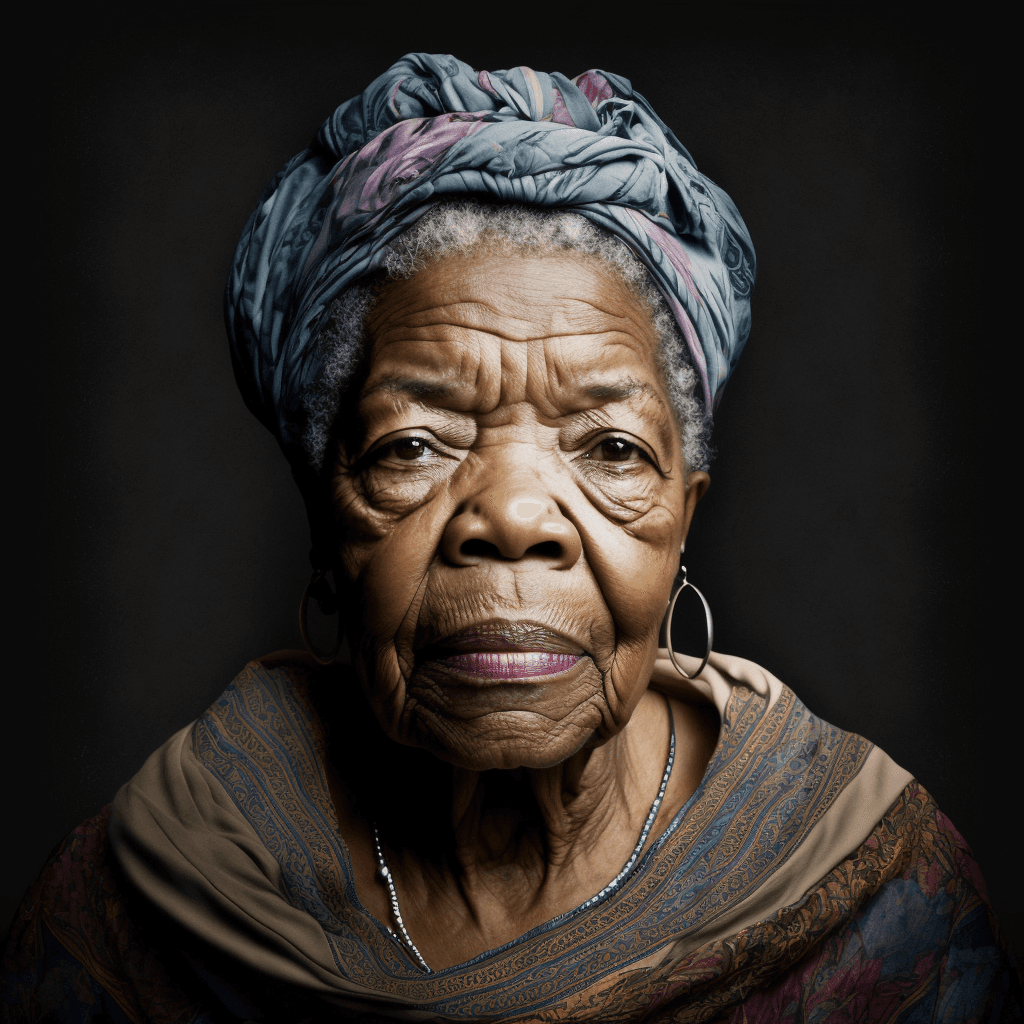
1928–2014
Poet • Memoirist • Civil Rights Voice
Marguerite Annie Johnson was born in 1928 in St. Louis and raised in Stamps, Arkansas, by her grandmother after parental separation. Trauma and selective mutism in childhood preceded her rediscovery of voice through literature. She worked as a dancer, singer, and actress, taking the name Maya Angelou during her performing years, and toured Europe in a production of Porgy and Bess.
Angelou joined the Harlem Writers Guild and worked with Martin Luther King Jr. in the Southern Christian Leadership Conference. Her first memoir, I Know Why the Caged Bird Sings (1969), described Southern segregation, sexual assault, and personal recovery with unflinching honesty. Six subsequent autobiographies, poetry collections such as And Still I Rise, and essays made her a bestselling author. She composed and recited 'On the Pulse of Morning' at President Bill Clinton's 1993 inauguration.
Teaching at Wake Forest University and receiving the Presidential Medal of Freedom capped a career that linked art to activism. Angelou died in 2014 in Winston-Salem, North Carolina, celebrated for transforming private pain into public wisdom.
1928 — Birth in St. Louis. Marguerite Johnson spent formative years in Arkansas, where she witnessed Jim Crow segregation firsthand.
1959 — Harlem Writers Guild. Angelou began serious literary work in New York, mentored by figures including James Baldwin and John Killens.
1969 — Caged Bird Published. The memoir's candid account of racism and survival became a bestseller and National Book Award nominee.
1993 — Clinton Inauguration. Her televised inaugural poem reached a global audience and renewed public interest in American poetry.
2014 — Death in North Carolina. Angelou died at eighty-six; tributes emphasized her role as poet, teacher, and witness to twentieth-century Black experience.
Key moments across this figure's life and legacy
1928
Marguerite Johnson spent formative years in Arkansas, where she witnessed Jim Crow segregation firsthand.
1959
Angelou began serious literary work in New York, mentored by figures including James Baldwin and John Killens.
1969
The memoir's candid account of racism and survival became a bestseller and National Book Award nominee.
1993
Her televised inaugural poem reached a global audience and renewed public interest in American poetry.
2014
Angelou died at eighty-six; tributes emphasized her role as poet, teacher, and witness to twentieth-century Black experience.
Landmarks that define this figure's contribution to history
Her 1969 memoir broke silence around race, gender, and trauma and is widely taught in American schools and universities.
The 1978 poetry collection, especially its title poem, became an anthem of Black dignity and perseverance.
She recited 'On the Pulse of Morning' at Bill Clinton's 1993 inauguration, the second poet so honored after Robert Frost.
President Barack Obama awarded her the nation's highest civilian honor in 2011 for literature and civil rights advocacy.
Notable details about this historical figure
How this figure shaped the world we inherit
Angelou opened autobiographical space for Black women writers and made discussions of sexual violence and racism part of mainstream literary conversation. Her poetry and memoirs continue to anchor classrooms, ceremonies, and movements invoking dignity under oppression.
Enduring influence across generations
Angelou opened autobiographical space for Black women writers and made discussions of sexual violence and racism part of mainstream literary conversation. Her poetry and memoirs continue to anchor classrooms, ceremonies, and movements invoking dignity under oppression. Death in North Carolina (2014) remains a defining moment in Maya Angelou's enduring reputation.
Explore more profiles from the same era or field
Curated educational resources for further study
Start a private conversation and explore their wisdom through Historical Collection AI.