Extragalactic Universe Proven
Demonstrated that spiral nebulae are independent galaxies, vastly enlarging cosmic scale.
Discover
Explore influential historical figures from science, philosophy, leadership, art, and culture.
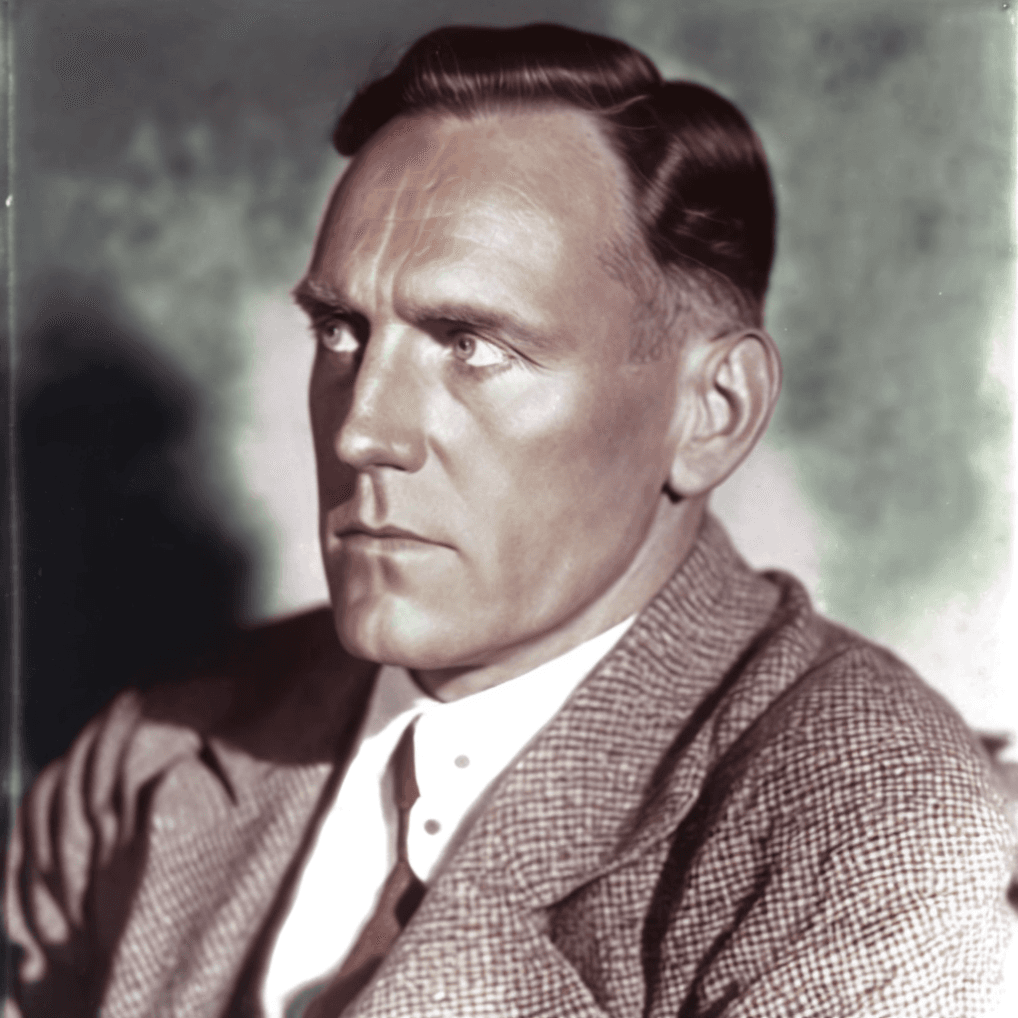
1889–1953
Astronomer • Cosmology Pioneer
This is a read-only educational profile. Chat, Council Mode, and AI features are not available for historical figures.
Edwin Powell Hubble was born in 1889 in Missouri, excelled as a student athlete at the University of Chicago, and studied law at Oxford on a Rhodes Scholarship before returning to astronomy—a field he pursued after a brief legal career dissatisfied him. At Mount Wilson Observatory in California he gained access to the 100-inch Hooker telescope, then the largest in the world, and used it to settle questions that had divided astronomers for decades.
In 1924 Hubble identified Cepheid variable stars in the Andromeda Nebula, calculating distances that proved it was a separate galaxy millions of light-years away, not a nearby gas cloud within our own Milky Way. The discovery enlarged the universe overnight. Working with Milton Humason, he then analyzed galactic redshifts and found a linear relationship between distance and recessional velocity—the observation later enshrined as Hubble's Law and foundational evidence for an expanding universe.
Hubble's meticulous plates and classifications also produced the tuning-fork diagram of galaxy shapes still used in astrophysics courses. Though he never received the Nobel Prize— astronomy was not yet eligible— his name was attached to the Hubble Space Telescope launched in 1990. He died in San Marino, California, in 1953, having turned cosmology from a speculative branch of philosophy into an observational science.
Key moments across this figure's life and legacy
1919
Joined the observatory where he would conduct his landmark extragalactic research.
1924
Resolved Cepheid variables in Andromeda, proving it lies outside the Milky Way.
1929
Reported the linear relation between galaxy distance and recessional velocity.
1948
Contributed to commissioning the 200-inch Hale telescope at Palomar Observatory.
1953
Died of a cerebral thrombosis; asteroid and space telescope later bore his name.
Landmarks that define this figure's contribution to history
Demonstrated that spiral nebulae are independent galaxies, vastly enlarging cosmic scale.
Documented the redshift-distance relation that supports an expanding universe.
Developed the Hubble sequence categorizing elliptical and spiral galaxies.
How this figure shaped the world we inherit
Hubble's plates forced humanity to accept that the Milky Way is one galaxy among billions in an expanding cosmos. His law gave observational footing to theories of cosmic evolution from the Big Bang to present structure. Every major cosmological model since the 1920s engages with data he and his contemporaries first pulled from the California sky.
Explore more profiles from the same era or field
Curated educational resources for further study
Discover historical art and educational content on our media channels