Das Kapital
Authored a multi-volume critique analyzing commodity production, labor value, and capitalist crisis tendencies.
Discover
Explore influential historical figures from science, philosophy, leadership, art, and culture.
1818–1883
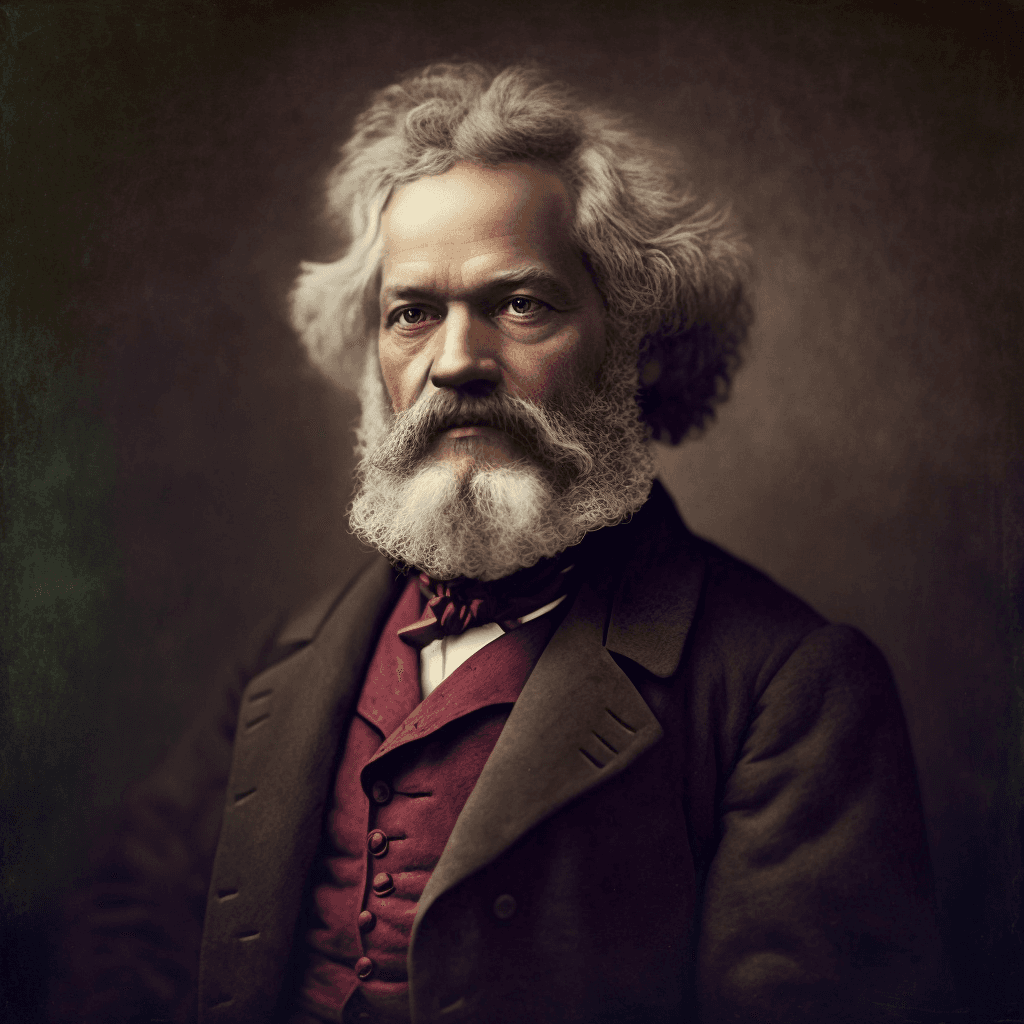
Philosopher • Economist • Author of Capital
This is a read-only educational profile. Chat, Council Mode, and AI features are not available for historical figures.
Karl Marx was born in 1818 in Trier, a Rhineland city recently absorbed into Prussia, where his father Heinrich, a converted Jewish lawyer, practiced under Napoleonic legal reforms. Karl studied law at Bonn and Berlin, fell under the influence of Hegelian philosophy, and edited radical newspapers until censorship drove him into exile. In Paris he met Friedrich Engels, whose reports on Manchester factory conditions supplied empirical ballast for abstract theory. Together they drafted the Communist Manifesto in 1848 amid revolutions sweeping Europe, urging workers to unite against bourgeois property relations.
After expulsion from several countries Marx settled in London in 1849, living largely in Soho and later Kentish Town while working in the British Museum Reading Room. Poverty, chronic illness, and the death of children marked domestic life with his wife Jenny von Westphalen, yet he persisted on Capital, analyzing commodity fetishism, surplus value, and the cyclical crises he believed inherent to capitalist production. The first volume appeared in 1867; volumes two and three were edited posthumously by Engels from sprawling manuscripts. Marx also helped build the International Workingmen's Association, debating anarchists such as Mikhail Bakunin over revolutionary strategy.
Marx died in 1883 and was buried in Highgate Cemetery, attended by fewer than a dozen mourners, but his ideas acquired global afterlives through socialist parties, Soviet revolutionaries, anti-colonial leaders, and academic sociology. Twentieth-century regimes invoked his name while often diverging from his textual emphasis on class analysis and critique of the state. Contemporary economists still debate his labor theory of value, while cultural theorists apply his concepts of alienation and ideology to media and labor markets. Marx did not invent socialism, yet his synthesis of German philosophy, British political economy, and French utopianism produced a analytical toolkit that remains unavoidable when discussing inequality, exploitation, and historical change.
Key moments across this figure's life and legacy
1818
Raised in the Rhineland during post-Napoleonic political reaction.
1848
Published with Engels as revolutions erupted across Europe.
1849
Settled in Britain after expulsion from continental Europe.
1867
Released the first volume of his magnum opus on political economy.
1883
Died in Kentish Town; Engels delivered a graveside eulogy at Highgate.
Landmarks that define this figure's contribution to history
Authored a multi-volume critique analyzing commodity production, labor value, and capitalist crisis tendencies.
Co-wrote the 1848 pamphlet that became the most widely read revolutionary text of the nineteenth century.
Proposed that economic relations and class conflict drive historical development, reshaping social theory.
Helped organize nineteenth-century worker solidarity across national borders.
How this figure shaped the world we inherit
Marx reframed modern history as a struggle over production and surplus, supplying vocabulary—class, capital, ideology—that politicians, unions, and scholars still deploy whether praising or condemning him. No other nineteenth-century thinker so thoroughly linked philosophical critique to economic data and revolutionary practice, and the political movements spawned in his name reshaped the twentieth century even when they departed from his writings.
Explore more profiles from the same era or field
Curated educational resources for further study
Discover historical art and educational content on our media channels