Unified the German Empire
Orchestrated the diplomatic and military sequence that merged German states into a single empire under Prussian dominance in 1871.
Discover
Explore influential historical figures from science, philosophy, leadership, art, and culture.
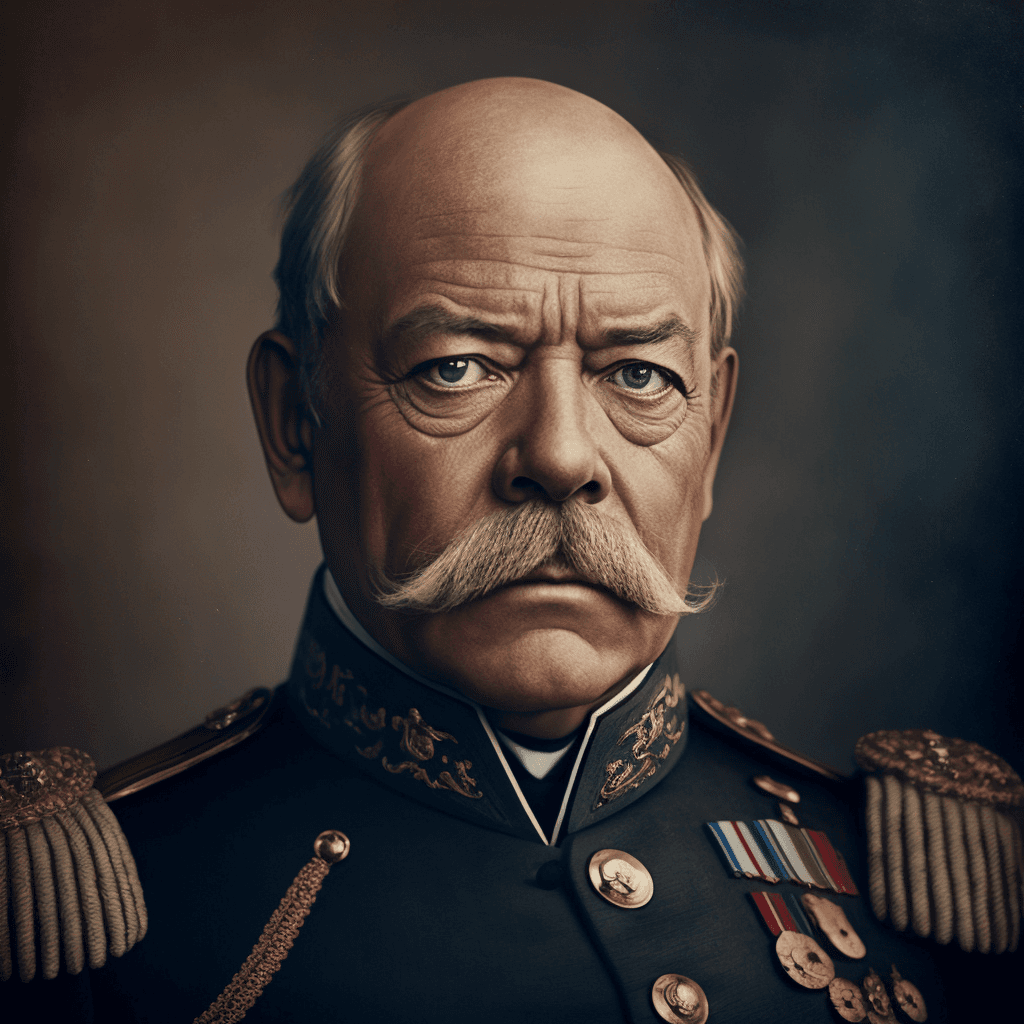
1815–1898
Statesman • Architect of German Unity
This is a read-only educational profile. Chat, Council Mode, and AI features are not available for historical figures.
Born in 1815 to a Junker family in Prussia, Otto von Bismarck entered politics as a conservative deputy who initially resisted liberal nationalism. His appointment as Prussian ambassador to Paris and St. Petersburg taught him to read the balance of power with cold precision, skills he would wield ruthlessly once King Wilhelm I made him minister-president in 1862.
Bismarck engineered three swift wars—against Denmark, Austria, and France—that cleared the path to German unification under Prussian leadership. Proclaimed German Emperor at Versailles in 1871, he built a constitutional empire that preserved royal authority while channeling nationalist energy into a modern state apparatus.
As chancellor until 1890, he pioneered social insurance, manipulated alliances to isolate France, and treated parliamentary debate as a tool rather than a constraint. Dismissed by Wilhelm II, he spent his final years warning against reckless imperial ambition, leaving a unified Germany whose power and tensions would reshape the twentieth century.
Key moments across this figure's life and legacy
1815
Raised in the Prussian aristocracy, studying law before entering conservative politics in the fragmented German Confederation.
1862
Took control of Prussian government and declared that great questions would be settled by 'iron and blood,' not speeches.
1871
After defeating France, Wilhelm I was proclaimed German Emperor in the Hall of Mirrors, completing unification.
1884
Acquired protectorates in Africa and the Pacific, extending German influence overseas while maintaining continental priorities.
1890
Forced from office after clashing with the new emperor, ending an era of cautious balance in European diplomacy.
Landmarks that define this figure's contribution to history
Orchestrated the diplomatic and military sequence that merged German states into a single empire under Prussian dominance in 1871.
Pioneered a foreign policy based on shifting alliances and calculated force, keeping France isolated while avoiding general European war for two decades.
Introduced health, accident, and old-age insurance in the 1880s, partly to undercut socialist appeal and stabilize industrial society.
Balanced monarchical authority, bureaucratic efficiency, and limited parliamentarism in a constitutional order that endured until 1918.
How this figure shaped the world we inherit
Bismarck's unification of Germany redrew the map of Europe and created a industrial powerhouse whose rivalry with Britain and France helped set the stage for World War I. His blend of authoritarian governance and social reform influenced statecraft far beyond Germany, making 'Realpolitik' a permanent term in diplomatic vocabulary.
Explore more profiles from the same era or field
Curated educational resources for further study
Discover historical art and educational content on our media channels