Liberation Campaigns
Led armies that freed Venezuela, Colombia, Ecuador, Peru, and Bolivia from Spanish control.
Discover
Explore influential historical figures from science, philosophy, leadership, art, and culture.
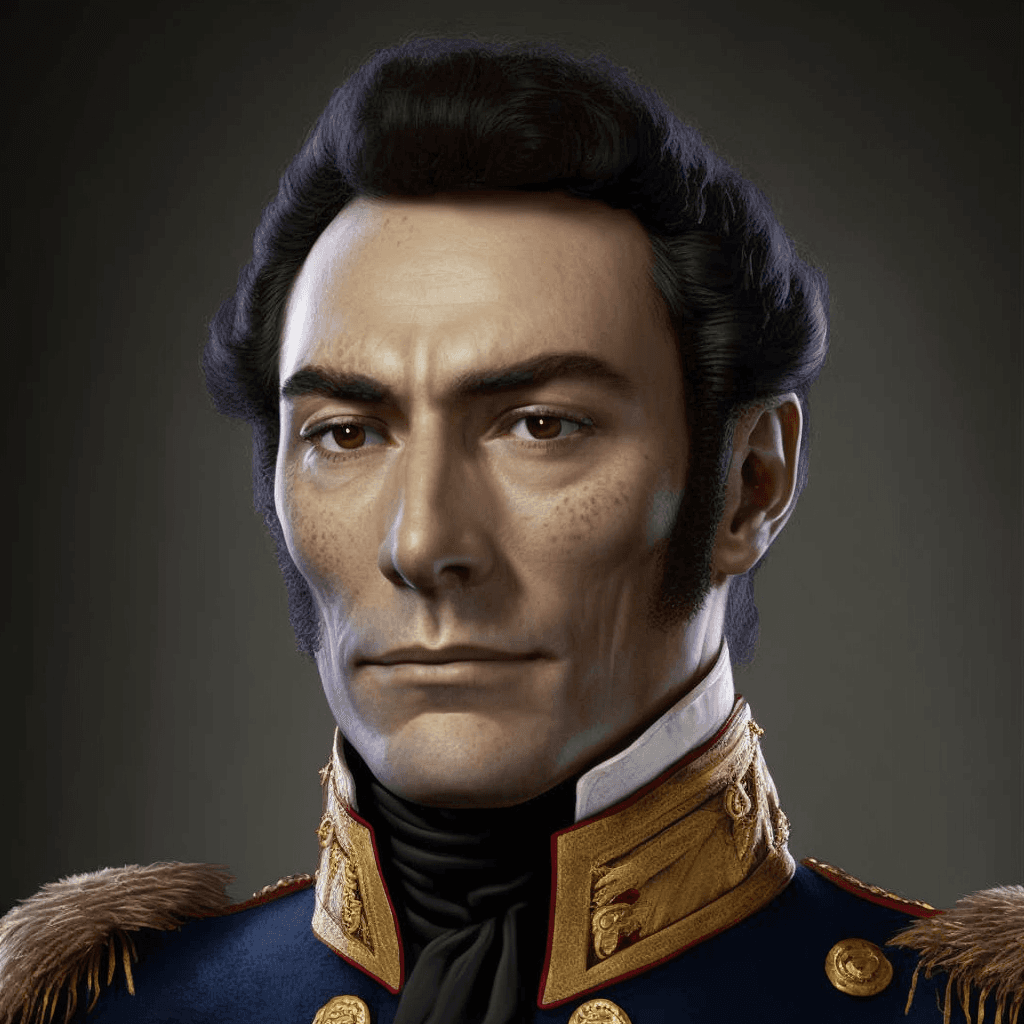
1783–1830
Liberator • Founder of Gran Colombia
This is a read-only educational profile. Chat, Council Mode, and AI features are not available for historical figures.
Simón José Antonio de la Santísima Trinidad Bolívar y Palacios was born on 24 July 1783 in Caracas into a wealthy creole family of the Venezuelan elite. Orphaned young, he was educated in Europe, where tutors and the example of Napoleon's rise impressed him with Enlightenment ideals and the possibility of sweeping political change. He swore on Rome's Monte Sacro in 1805 to liberate his homeland from Spanish rule, returning to join early independence movements that initially failed and forced him into exile in Haiti and the Caribbean.
Bolívar learned from defeat, building alliances with llanero horsemen, British legionnaires, and regional caudillos. His campaigns crossed the Andes in freezing conditions to surprise Spanish forces at Boyacá and Pichincha, liberating New Granada and Quito. He declared Gran Colombia—a union of Venezuela, Colombia, Ecuador, and Panama—with himself as president, and his lieutenant Antonio José de Sucre secured Peru and Upper Peru, renamed Bolivia in his honor. Bolívar's political writings, including the Angostura Address and Jamaica Letter, argued for republican government adapted to Latin America's racial complexity, yet he also advocated strong executive power to prevent fragmentation.
By the 1820s factional rivalry, assassination plots, and regional separatism eroded his authority; he resigned the presidency in 1830 and died of tuberculosis on 17 December that year near Santa Marta, Colombia, disillusioned yet still famous. Six nations now claim him as liberator; streets, currencies, and a country bear his name. His dream of continental unity collapsed into separate republics, yet his military campaigns ended three centuries of Spanish colonial rule in northern South America. Modern leaders invoke and contest his legacy across ideological lines, and historians debate whether his authoritarian tendencies were pragmatic or betrayed republican principles.
Key moments across this figure's life and legacy
1783
Born into the Venezuelan creole elite on the eve of Atlantic revolutions.
1813
Reentered Venezuela and won early victories before royalist counterattack.
1819
Secured independence for New Granada through a decisive Andean campaign.
1824
His movement achieved decisive victory in Peru through Sucre's command.
1830
Died while resigning power amid the dissolution of Gran Colombia.
Landmarks that define this figure's contribution to history
Led armies that freed Venezuela, Colombia, Ecuador, Peru, and Bolivia from Spanish control.
Founded a short-lived union of Andean republics aimed at continental integration.
Articulated republican ideals and constitutional proposals for postcolonial Latin America.
Executed daring mountain campaigns that turned the tide against royalist forces.
How this figure shaped the world we inherit
Bolívar ended Spanish rule across much of northern South America and articulated a vision of republican liberty adapted to the continent's diversity, even as his unified state dissolved. He remains the symbolic father of Andean independence, and debates over integration, strong leadership, and equality still reference his campaigns and writings.
Explore more profiles from the same era or field
Curated educational resources for further study
Discover historical art and educational content on our media channels