Square Deal Reforms
Pursued antitrust enforcement, labor mediation, and consumer protection as president.
Discover
Explore influential historical figures from science, philosophy, leadership, art, and culture.
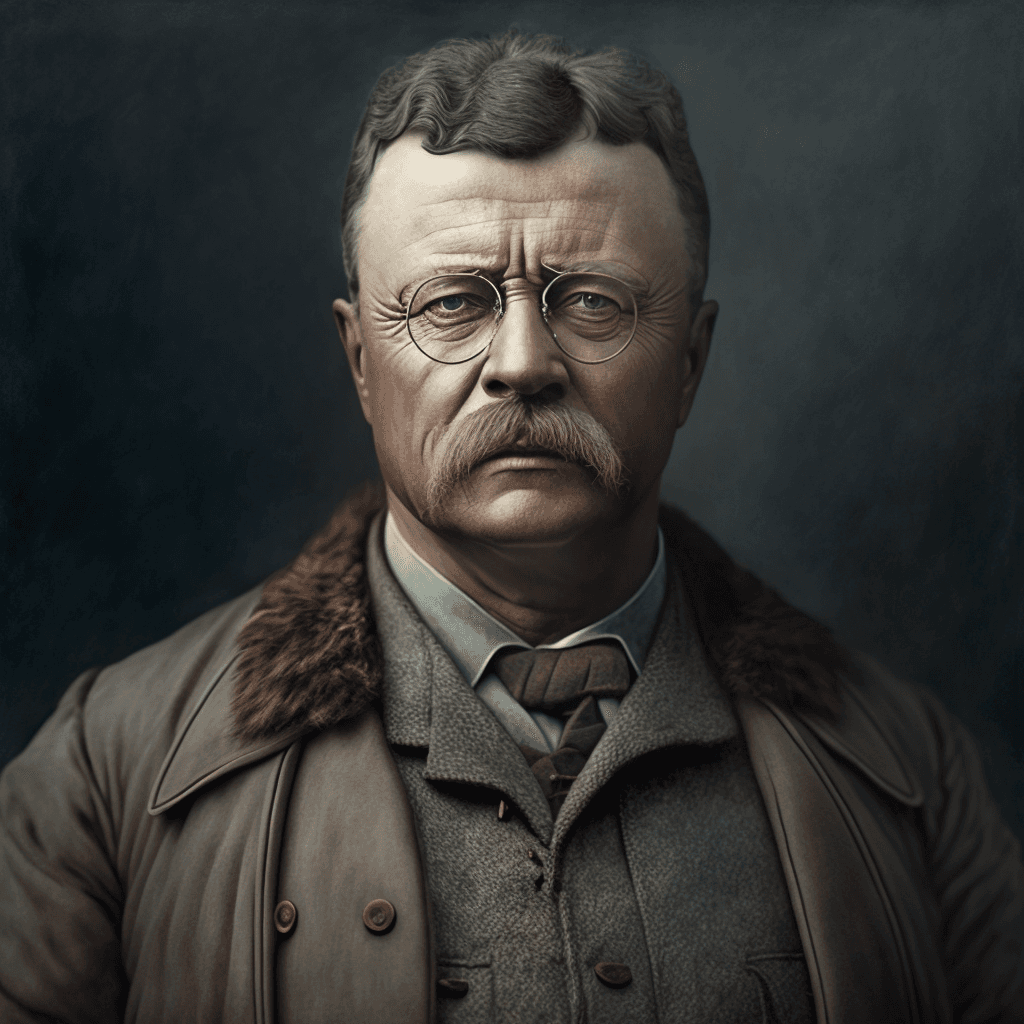
1858–1919
26th U.S. President • Progressive Reformer
This is a read-only educational profile. Chat, Council Mode, and AI features are not available for historical figures.
Theodore Roosevelt was born on 27 October 1858 in New York City into a wealthy Dutch-American family, a sickly asthmatic child who built body and will through boxing, hiking, and relentless self-discipline. He graduated from Harvard, published naval history, entered politics young, and lost his wife and mother on the same day in 1884—a grief that drove him to a Dakota ranch before returning to public life. As New York City police commissioner he reformed nightstick culture; as assistant secretary of the navy he advocated expansion; as colonel of the Rough Riders he charged San Juan Hill during the Spanish-American War, crafting an image of martial vigor that propelled him to the governorship and vice presidency.
When William McKinley was assassinated in 1901, Roosevelt became president at forty-two, the youngest ever to hold the office. He pursued antitrust prosecutions against railroad and meatpacking combines, mediated the 1902 coal strike, and championed the Square Deal balancing labor, business, and consumers. Conservation defined his domestic agenda: he created national forests, wildlife refuges, and parks totaling millions of acres, often over mining and logging opposition. Foreign policy mixed Big Stick diplomacy—supporting Panama's separation from Colombia to build the canal—with Nobel Peace Prize-winning mediation ending the Russo-Japanese War. He declined to run again in 1908, then bolted the Republican Party in 1912 to lead the Progressive Bull Moose campaign after failing to reclaim the nomination from William Howard Taft.
Roosevelt's post-presidency included an Amazon expedition that nearly killed him, continued writing, and advocacy for American entry into World War I, where his son Quentin died in combat. He died on 6 January 1919 at Sagamore Hill, Oyster Bay, New York, having reshaped expectations of presidential energy and national stewardship of land. Historians credit him with inventing the modern bully pulpit, using office as platform for moral persuasion. Critics note imperial assumptions in Caribbean interventions and racial views typical of his class yet jarring today. Mount Rushmore enshrines his face beside Washington, Jefferson, and Lincoln; environmentalists invoke his conservation legacy even as they debate contradictions. Roosevelt remains the archetype of activist executive power in a century that would test such vigor through depression and global war.
Key moments across this figure's life and legacy
1858
Born into a prominent family and overcame childhood illness through rigorous exercise.
1898
Led volunteer cavalry in Cuba during the Spanish-American War.
1901
Assumed office after McKinley's assassination at age forty-two.
1906
Awarded for mediating peace between Russia and Japan.
1919
Died at sixty after decades of public service and exploration.
Landmarks that define this figure's contribution to history
Pursued antitrust enforcement, labor mediation, and consumer protection as president.
Protected millions of acres through national parks, forests, and wildlife refuges.
Facilitated canal construction through support for Panamanian independence and naval strategy.
Mediated end of the Russo-Japanese War, receiving the 1906 Nobel Peace Prize.
How this figure shaped the world we inherit
Roosevelt transformed the presidency into an engine of reform and conservation while projecting American naval power abroad, setting precedents for activist executive leadership. His land protections remain foundational to U.S. environmental policy, and his blend of progressivism and imperial ambition continues to frame debates over American statecraft.
Explore more profiles from the same era or field
Curated educational resources for further study
Discover historical art and educational content on our media channels