Canonical Tragedies and Comedies
Authored dramatic works that remain central to global theater repertoires.
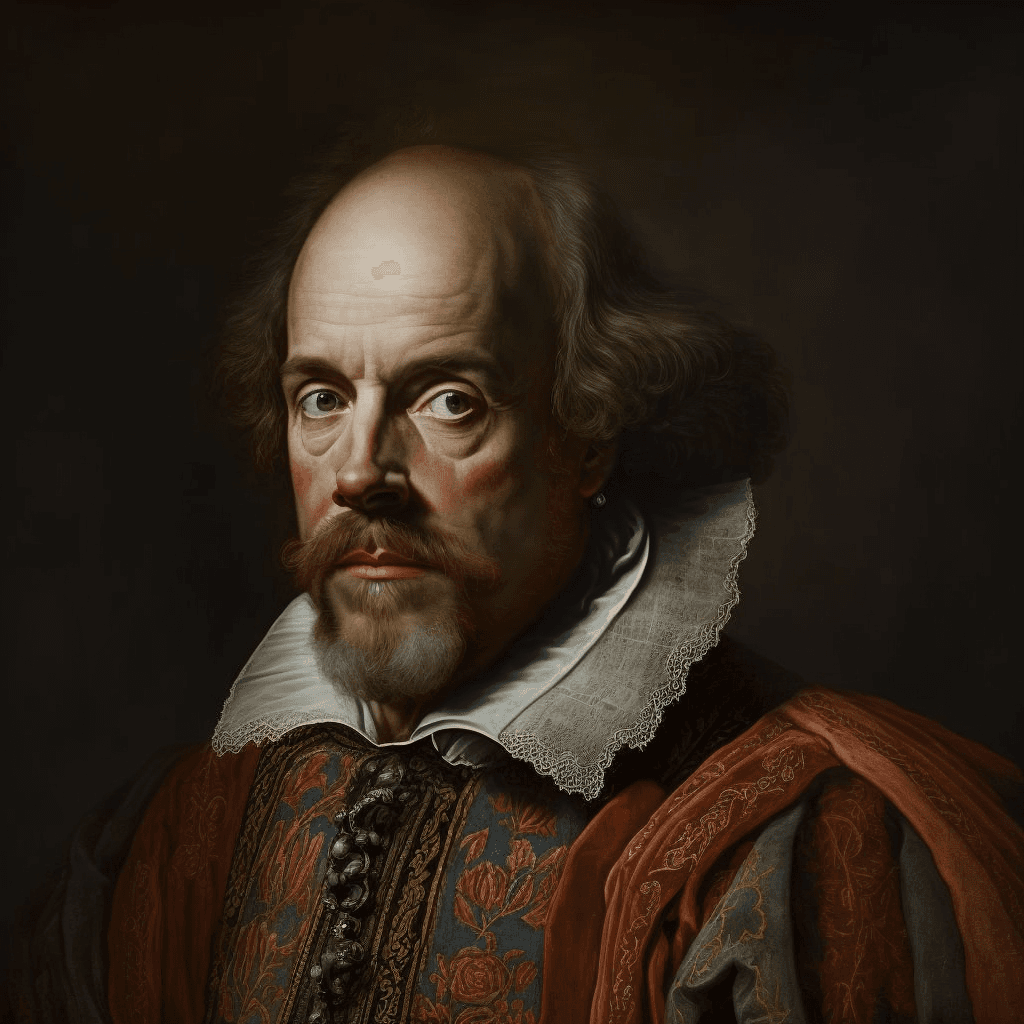
1564-1616
Playwright - Poet - Language Maker
Уильям Шекспир (William Shakespeare) родился в Стратфорде-на-Эйвоне и переехал в Лондон, где стал актером, акционером и главным драматургом труппы Лорда-камергера, позже известной как Королевская труппа. Работая в конкурентной театральной среде, он писал для публичных театров, обращаясь как к аристократической, так и к королевской аудитории. Его карьера развивалась на фоне политической напряженности, религиозной неопределенности и расцвета гуманизма эпохи Ренессанса.
Пьесы Шекспира охватывают трагедию, комедию, историю и романтику, среди которых такие значимые произведения, как «Гамлет», «Макбет», «Король Лир», «Отелло» и «Сон в летнюю ночь». Его драматургическое мастерство сочетает психологическую глубину, риторическое блеск и структурные эксперименты, в то время как его сонеты остаются центральными в английской лирической поэзии. Он расширил выразительный диапазон английского языка, создавая и популяризируя бесчисленные фразы и семантические конструкции.
Впервые собранные в 1623 году в «Первом фолио», его пьесы пережили текстовую нестабильность и стали основополагающими в образовании, театральном искусстве и глобальном переводе. Шекспир был адаптирован на разных языках, в различных медиа и политических контекстах, от колониальных классов до современного кино. Его неугасимое присутствие отражает несравненную способность выражать амбиции, любовь, насилие, совесть и власть.
Ключевые моменты жизни и наследия этой личности
1564
Baptized in April and raised in a market town in Warwickshire.
1590s
Established reputation as playwright and performer in major companies.
1599
Company opened the Globe, staging many of his most famous plays.
1603
Received royal patronage under James I, strengthening company prestige.
1616
Died at fifty-two; legacy secured by later publication of the First Folio.
Вехи, определяющие вклад этой личности в историю
Authored dramatic works that remain central to global theater repertoires.
Composed 154 sonnets that reshaped English lyric form and voice.
Expanded English vocabulary and idiom through inventive poetic diction.
Succeeded as both writer and company shareholder in London's stage economy.
Примечательные детали об этой личности
Как эта личность изменила мир, который мы унаследовали
Письмо Шекспира глубоко сформировало литературный язык, театральную практику и глобальную культурную память. Его персонажи и мотивы стали общими точками отсчета для психологии, политики и права, в то время как адаптации продолжают переосмыслять его творчество в изменяющихся социальных контекстах. Немногие авторы оказали сопоставимое влияние на разные языки, века и художественные формы.
Влияние на последующие поколения
Shakespeare's writing profoundly shaped literary language, theatrical practice, and global cultural memory. His characters and motifs became shared reference points for psychology, politics, and law, while adaptations keep reinterpreting his work in changing social contexts. Few authors have exercised comparable influence across languages, centuries, and artistic forms. Death in Stratford (1616) remains a defining moment in William Shakespeare's enduring reputation.
Другие профили той же эпохи или области
Подобранные образовательные ресурсы для дальнейшего изучения
Начните беседу и изучите мудрость через Historical Collection AI.